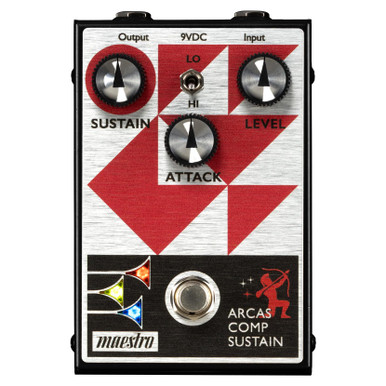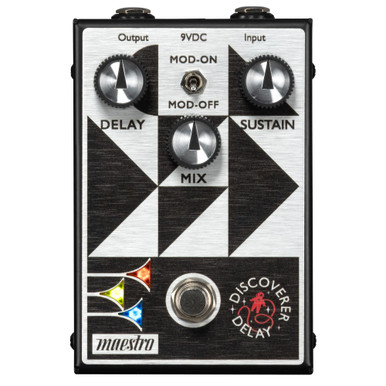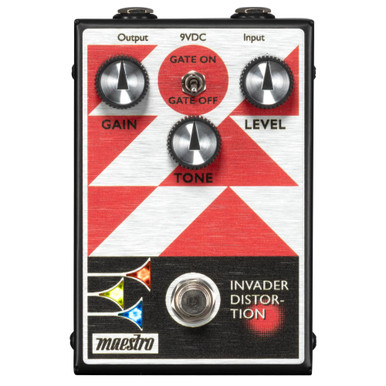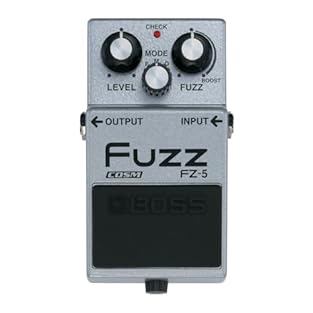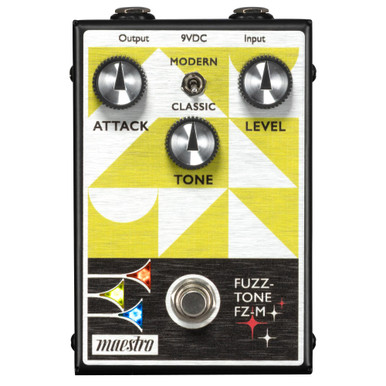


Maestro Fuzz-Tone FZ-M Pedal

£154.99

Also available on — Andertons, Gear4music, Reverb, Amazon, eBay

Fresh on the menu for 2026 are the Maestro Guitar Pedals, freshly added and carefully selected. These New units are available to order online with fast, secure delivery from trusted UK retailers. Read on for full details, specifications, demos, videos, reviews, and the best places to buy the Maestro Guitar Pedals today.


Description

Fresh on the menu for 2026 are the Maestro Guitar Pedals, freshly added and carefully selected. These New units are available to order online with fast, secure delivery from trusted UK retailers. Read on for full details, specifications, demos, videos, reviews, and the best places to buy the Maestro Guitar Pedals today.

Maestro created the world’s first fuzz pedal, the Maestro Fuzz-Tone FZ-1. Introduced in 1962, the Fuzz-Tone became the sound of rock and roll and a must-have accessory for guitarists everywhere after the success of 1965’s “(I Can’t Get No) Satisfaction” by The Rolling Stones, which prominently featured its cutting-edge sound. Maestro has brought the fun and sonic fury of those early Fuzz-Tones back with their Fuzz-Tone FZ-M.

This all-analogue pedal boasts a Mode toggle switch that provides two-pedals-in-one functionality for increased sonic versatility, with both an FZ-1 inspired fuzz sound and a thicker, more modern fuzz tone. Its 3-knob control layout gives you intuitive control. The Attack knob controls the amount of fuzz. The Tone control lets you adjust the timbre from bright and raspy to warm and wooly, and anywhere in between. Then use the Level control to set the output volume (it can go way beyond unity gain when desired).

Key Features

  • Controls: Attack, Tone and Level.
  • Switches: True Bypass footswitch and Modern/Classic Mode toggle switch.
  • LED Indicators: Red, yellow and blue bugles in the Maestro logo illuminate when the pedal is active.

Specifications

  • Signal Processing: All-analogue
  • Power Requirements: 9V battery or regulated 9V DC power supply (5.5 x 2.1 mm plug, wired centre-negative)
  • Current Draw: 21 mA
  • Input Impedance: 32 kOhms
  • Output Impedance: 5 kOhms
  • Switching: True Bypass
  • Dimensions (D x W x H): 5.04” x 3.45” x 2.50” (128 x 87.6 x 63.5 mm)
  • Weight: 1.23 lb.

Additional information

Weight 0.5 kg

Brand

Maestro

Maestro is a historic name in guitar effects, credited with some of the earliest and most influential stompboxes ever made. From the legendary fuzz tones of the 60s to modern reissues inspired by those original circuits, Maestro pedals capture vintage character with bold personality and unmistakable attitude.

Choose Maestro when you want classic flavour with real heritage behind it. Whether it’s gritty fuzz, expressive modulation, or retro-inspired tone shaping, their designs bring old-school vibe and musical warmth straight to your pedalboard.

Category

Guitar Pedals

Tags

Fuzz

A fuzz pedal is one of the earliest and most aggressive forms of distortion, turning your clean guitar signal into a thick, saturated wall of sound. It works by clipping the waveform almost flat, creating a compressed, gritty tone full of harmonic overtones. The result is raw, unruly, and unmistakable — from the sputtering breakup of vintage germanium circuits to the searing sustain of modern silicon designs. Fuzz pedals react strongly to your guitar’s volume and pickup choice, making them dynamic tools for expressive players.

Whether you’re chasing the classic tones of Hendrix and the Smashing Pumpkins or exploring heavy, experimental textures, fuzz remains a favourite for its personality and unpredictability. It can sound smooth and sustaining, or wild and velcro-like, depending on how it’s set up. A good fuzz pedal cuts through the mix while adding thickness and attitude, turning any riff or lead line into something bold and unmistakably alive.

New

This is brand new, fresh in, and a UK warranty is included. New Gear always comes from trusted UK music retailers.

Volume

Volume pedals control the output level of a guitar signal using a foot-operated treadle. They allow smooth volume swells, dynamic control during playing, and easy muting between songs. Volume pedals can be placed at different points in the signal chain to either control overall loudness or adjust gain and drive behaviour when positioned before distortion or overdrive pedals.