Brand
Ibanez is a renowned manufacturer of musical instruments, primarily known for its guitars and basses, as well as amplifiers, effects pedals, and accessories. Founded in 1957 in Japan by Hoshino Gakki, Ibanez has become one of the most recognized and respected brands in the music industry, offering a wide range of instruments that cater to musicians across genres and skill levels.
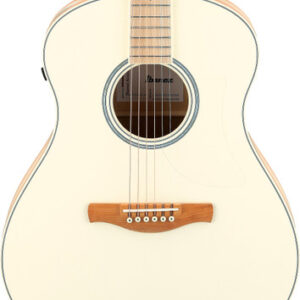
Ibanez guitars are celebrated for their craftsmanship, playability, and versatility. The company offers a diverse lineup of electric guitars, including signature models endorsed by famous artists, as well as acoustic guitars and basses. Models like the RG series, the S series, and the iconic Ibanez JEM are particularly popular among rock and metal players for their sleek designs, fast necks, and high-performance features.
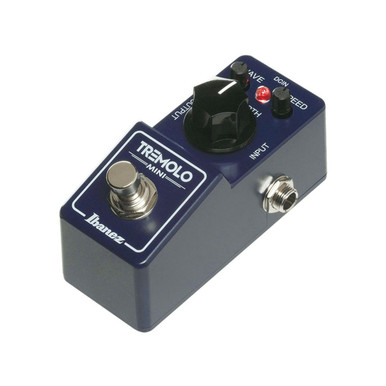
In addition to guitars and basses, Ibanez produces a variety of amplifiers and effects pedals designed to complement their instruments and provide musicians with a complete sound solution. The company’s amplifiers range from compact practice amps to powerful stage rigs, while their effects pedals offer a wide range of tones and effects for guitarists to explore.
With a legacy of innovation and a commitment to quality, Ibanez continues to be a trusted name in the music industry, providing musicians with high-quality instruments and equipment that inspire creativity and deliver exceptional performance.
Category
Tags
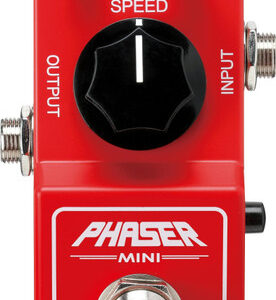
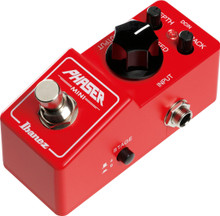
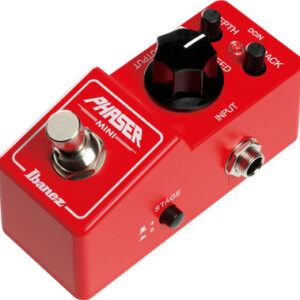
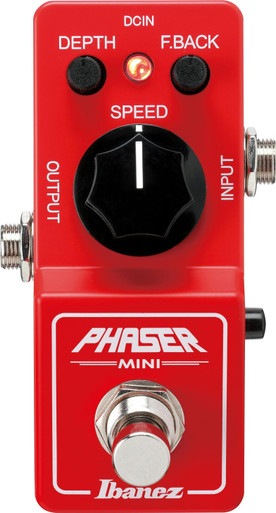
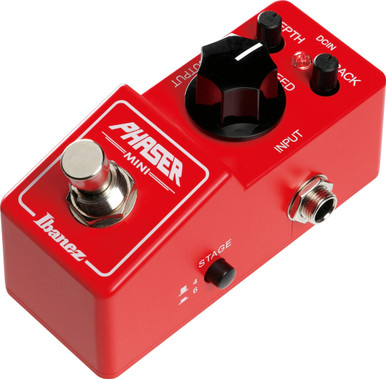
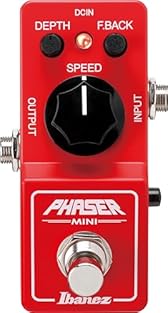
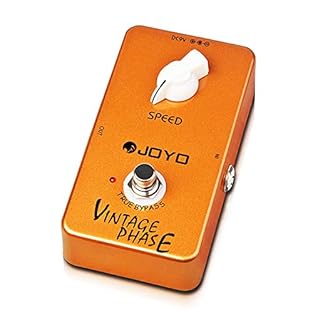
A phaser is a type of guitar effects pedal that creates a swirling, sweeping sound by modulating the phase of the audio signal. It works by splitting the incoming signal into two paths, shifting the phase of one path, and then recombining them. This creates peaks and troughs in the frequency spectrum, resulting in a distinctive, “phasing” effect characterized by moving notches in the frequency response.
Here’s how a phaser pedal typically works and some common features:
1. **Rate**: The rate control adjusts the speed at which the phase-shifting effect oscillates. Increasing the rate produces faster modulation, creating a more pronounced swirling effect, while decreasing the rate slows down the modulation for a smoother, more subtle effect.
2. **Depth**: The depth control adjusts the intensity or depth of the phase-shifting effect. Higher depth settings result in more pronounced peaks and troughs in the frequency response, while lower settings produce a more subtle modulation.
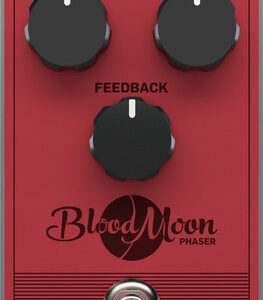
3. **Feedback (or Regeneration)**: Some phaser pedals feature a feedback control that determines the amount of modulated signal fed back into the effect. Increasing the feedback creates more pronounced peaks and troughs in the frequency spectrum, resulting in a more intense and resonant phasing effect.
4. **Stages**: Phasers typically have multiple stages (usually four, six, or eight), each of which contributes to the overall phase-shifting effect. More stages generally result in a more complex and textured phasing sound.
5. **Sweep (or Manual)**: The sweep control adjusts the center frequency of the phase-shifting effect. This allows you to focus the phasing effect on specific frequency ranges, altering the tonal character of the modulation.
6. **Resonance (or Feedback)**: Some phaser pedals feature a resonance control that emphasizes the peaks and troughs in the frequency response, creating a more pronounced and resonant effect. This control can add richness and depth to the phasing sound.
Phaser pedals are commonly used in various music genres, including rock, funk, and psychedelic music, to add movement, depth, and texture to guitar tones. They can be used to create swirling, swirling effects on rhythm parts, add dynamics to lead lines, or create atmospheric textures for ambient music. Overall, phaser pedals offer guitarists a versatile tool for shaping their tone and adding expressive modulation effects to their playing.