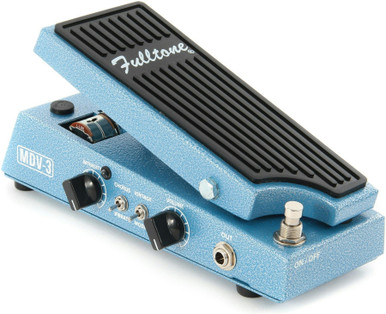
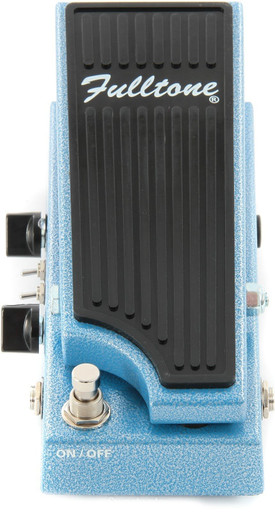
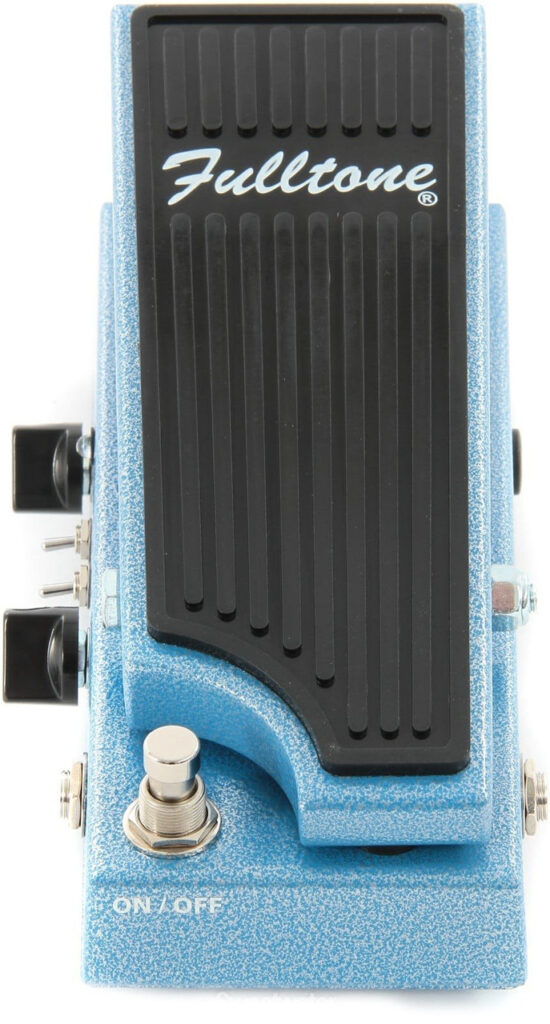
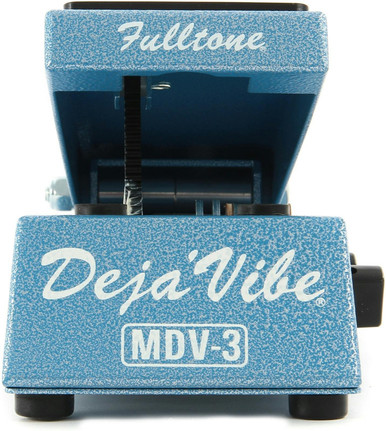
Fulltone MDV3 Mini Deja Vibe 3 V2

£389.00

On the Menu for January 2026 are the Fulltone Guitar Pedals. These are fresh in, hand picked by the chef, & cooked to perfection. A tasty number we can deliver straight to your door, serving orders quickly and securely. For more info on Fulltone New Guitar Pedals, please read on for full details, demos, videos, reviews & to order online


Spread the love

Description

Spread the love

The Fulltone Guitar Pedals are fresh in for Jan. The Just Pedals Chef is dishing up hot gear all over the UK, served straight to your door, quickly and securely, For more info on tasty Fulltone New Guitar Pedals, please read on for full details, ingredients, reviews and where to order in the UK.

Please NoteThis pedal requires an 18V centre-negative power supply to operate correctly.

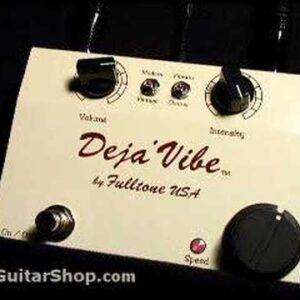
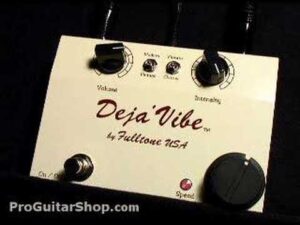
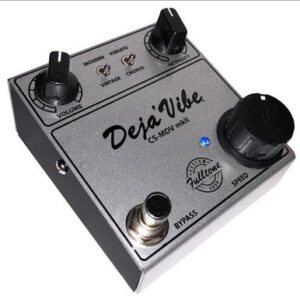
Do you long to replicate the recognizable sound of the vintage Univibe Pedal? If so, look no further than the spectacular Fulltone MDV-3 pedal, this really is about as close as you can get to its original sound!

Fulltone went to extraordinary lengths to use components that are as close to the original ones as possible, even cloning 1960s photocells to achieve the correct rise and fall durations. With this said though, all you need to do is plug your axe into it and turn up the volume and you’ll care less about the inside of this pedal and will just be blown away by its sound! Creating the throbbing, intense modulations the Univibe holds legendary status for, the Fulltone Custom Shop MDV-3 is an unbelievable pedal to get creative with!

Key Features:

  • Guitar modulation effect pedal based on 1960s Univibe effect pedals
  • Completely discrete electronics for a pure signal path and maximum signal clarity
  • Uses same preamp transistor as original Univibes, a very important tonal factor
  • Custom speed potentiometer is designed to give you long-lasting durability

Specifications:

  • Type: Gain Boost/Overdrive
  • Inputs: 1 x Instrument
  • Outputs: 1 x 1/4″
  • Power Supply Included: No
  • Power Requirements: This pedal requires an 18V centre-negative power supply to operate correctly. 
  • Height: 2.75″
  • Depth: 4″
  • Width: 5.75″
  • Weight: 2 lbs.

What Fulltone say about the MDV3 Mini Deja Vibe 3 Pedal:

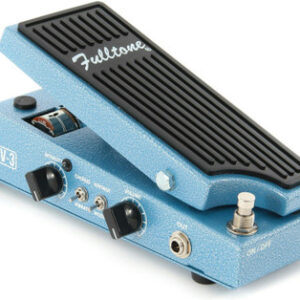
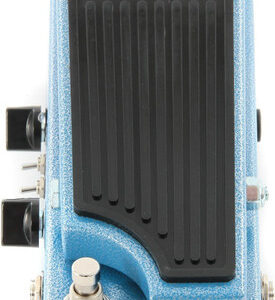
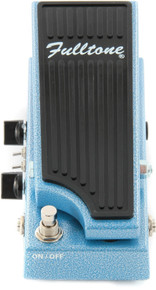
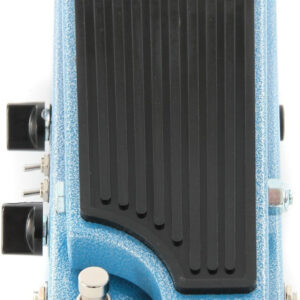
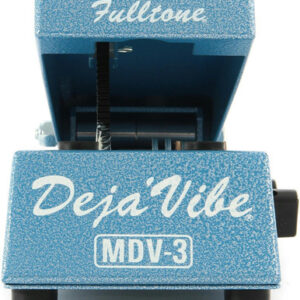
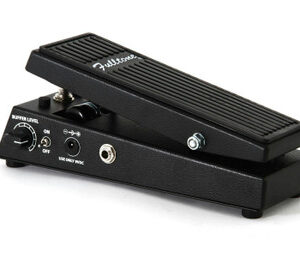
Real Estate is precious, especially on your pedalboard, but the lush organic sounds of a perfect “authentic vintage Univibe clone” are a necessity, and they are now attainable in a space now smaller than a standard wah wah pedal… the Mini-Deja’Vibe3, MDV-3 for short. With a Hammertone Blue powder coated finish, White lettering, and a Blue LED that throbs to the beat of the pedal’s hypnotic, asymmetrical rhythm. The MDV-3 has a new heel or toe activated True-Bypass footswitch that is perfect for the person who rarely changes speeds and just wants to turn it on or off with his toe, but also perfect for the person who rides it like a Gas-pedal and wants to turn the pedal on/off with a simple flick of the heel (see the MDV-3 video at youtube.com/fulltoneeffects)

There are a LOT of pedals claiming to be “authentic vintage Univibe clones” on the market….all of the small ones are merely a glorified MXR phaser with a few changes. That’s not a Univibe! So how is one to know which pedals are real and which ones are just a cheap shortcut circuit that will satisfy you only until you get a chance to play pedal like the Fulltone MDV & MDV-3, both of which sport a “100% real vintage circuit.”

A real Univibe clone will have:

4 x glass covered/hermetically-sealed photocells and an incandescent bulb on the circuit board. I go one step further…and NO ONE else does this, I took many real 1960’s ‘cells and had them cloned for not only dark/bright resistance, but also cloned the all-important rise and fall times of the cells as they react to the light turning on and off. Nobody else even knows about this, let alone bothers with it. They just buy whatever off-the-shelf photocells they can get, oblivious to these specs. Yes, even those forum-worshipped wait-list builders.

Totally discrete electronics, i.e. NO OPAMPS in the audio path! I go even further by only using New Old Stock (N.O.S) Panasonic Matsushita 2SC828 transistors for all stages, and the same metal-can 2SC539 transistor as original Univibes had for the preamp… this really makes a difference in the sound! You think those are cheap or easy to find?

In typical Fulltone fashion, I also manufacture my own speed potentiometer… it’s a dual pot with a gear on it like wah-wah pot, and with a special taper. (same as original Univibes) The only change made is I up’d the resistance to 200K to get you better slow speeds, and double screen the carbon composition track to last years beyond what the old ones lasted.

I’ve been building “authentic vintage Univibe clones” longer than anyone, since 1993. Mine are used by Robin Trower, Peter Frampton, Doyle Bramhall II, and countless others… by the people who know great sound and won’t settle for less.

I make tools for people who play… so go to a Fulltone Custom Shop dealer, plug in and listen for yourself, you’ll walk out with Fulltone more often than not.
Ingredient Allergy Warning : Product may contain nuts.

Additional information

Weight 0.5 kg

Brand

Fulltone

Fulltone is a boutique guitar effects pedal manufacturer known for its high-quality, hand-built pedals designed to replicate vintage tones while incorporating modern features and reliability. Founded by musician and engineer Michael Fuller in 1991, Fulltone initially gained recognition with its flagship product, the Full-Drive overdrive pedal, which offered players a versatile range of overdriven tones inspired by classic tube amplifiers.

Since then, Fulltone has expanded its product line to include a variety of effects pedals such as fuzz, distortion, delay, modulation, and more. Each Fulltone pedal is meticulously crafted using top-quality components and circuit designs, resulting in pedals that are celebrated for their rich sound, responsiveness, and durability. Notable offerings include the OCD (Obsessive Compulsive Drive) overdrive/distortion pedal, the ’69 fuzz, and the TTE (Tube Tape Echo) tape echo emulator.

Fulltone’s commitment to excellence and its dedication to preserving the sonic legacy of vintage gear have made it a favorite among discerning guitarists and musicians seeking premium effects pedals. With a reputation for delivering exceptional tone and craftsmanship, Fulltone continues to be a prominent player in the boutique pedal market.

Category

Fulltone

Fulltone is a boutique guitar effects pedal manufacturer known for its high-quality, hand-built pedals designed to replicate vintage tones while incorporating modern features and reliability. Founded by musician and engineer Michael Fuller in 1991, Fulltone initially gained recognition with its flagship product, the Full-Drive overdrive pedal, which offered players a versatile range of overdriven tones inspired by classic tube amplifiers.

Since then, Fulltone has expanded its product line to include a variety of effects pedals such as fuzz, distortion, delay, modulation, and more. Each Fulltone pedal is meticulously crafted using top-quality components and circuit designs, resulting in pedals that are celebrated for their rich sound, responsiveness, and durability. Notable offerings include the OCD (Obsessive Compulsive Drive) overdrive/distortion pedal, the ’69 fuzz, and the TTE (Tube Tape Echo) tape echo emulator.

Fulltone’s commitment to excellence and its dedication to preserving the sonic legacy of vintage gear have made it a favorite among discerning guitarists and musicians seeking premium effects pedals. With a reputation for delivering exceptional tone and craftsmanship, Fulltone continues to be a prominent player in the boutique pedal market.

Tags

Guitar Pedals

Your pedal is like a signature dish for your sound — a flavour-packed creation that transforms the bland ingredients of your guitar into something unforgettable. Each one adds its own seasoning, texture, and heat, turning a simple meal into a feast of tone.

These tasty little boxes sit in a row, like plates on a buffet, letting you mix and match flavours as you play. With one tap of your foot, you can swap sweet for spicy, subtle for smoky, and serve up something completely new. From the comfort food of warm overdrive to the fiery kick of fuzz, from smooth jazz sauce to heavy-metal spice, pedals give players a full menu of options to express their taste.  And just like with food, once you’ve tried one dish, you’ll want to sample them all.

Collecting, trading, and discovering new flavours soon becomes part of the joy of being a tone-loving gourmet geek with a guitar.

New

This is brand new, fresh in, and a UK warranty is included. New Gear always comes from trusted UK music retailers.

Overdrive

Like a golden layer of melted cheese — warm, gooey, and just put it all over. It adds just the right amount of richness and grit, turning a clean signal into something smooth and savoury. Designed to mimic the natural breakup of a tube amp pushed to its sweet spot, overdrive delivers the flavour of classic rock and blues in every bite. From creamy mid-gain warmth to crisp edge-of-breakup sparkle, it’s the comfort food of guitar tone — simple, satisfying, and endlessly versatile. Whether it’s a mild crunch or a full-bodied roar, overdrive is where good taste begins.

Phaser

A phaser is a type of guitar effects pedal that creates a swirling, sweeping sound by modulating the phase of the audio signal. It works by splitting the incoming signal into two paths, shifting the phase of one path, and then recombining them. This creates peaks and troughs in the frequency spectrum, resulting in a distinctive, “phasing” effect characterized by moving notches in the frequency response.

Here’s how a phaser pedal typically works and some common features:

1. **Rate**: The rate control adjusts the speed at which the phase-shifting effect oscillates. Increasing the rate produces faster modulation, creating a more pronounced swirling effect, while decreasing the rate slows down the modulation for a smoother, more subtle effect.

2. **Depth**: The depth control adjusts the intensity or depth of the phase-shifting effect. Higher depth settings result in more pronounced peaks and troughs in the frequency response, while lower settings produce a more subtle modulation.

3. **Feedback (or Regeneration)**: Some phaser pedals feature a feedback control that determines the amount of modulated signal fed back into the effect. Increasing the feedback creates more pronounced peaks and troughs in the frequency spectrum, resulting in a more intense and resonant phasing effect.

4. **Stages**: Phasers typically have multiple stages (usually four, six, or eight), each of which contributes to the overall phase-shifting effect. More stages generally result in a more complex and textured phasing sound.

5. **Sweep (or Manual)**: The sweep control adjusts the center frequency of the phase-shifting effect. This allows you to focus the phasing effect on specific frequency ranges, altering the tonal character of the modulation.

6. **Resonance (or Feedback)**: Some phaser pedals feature a resonance control that emphasizes the peaks and troughs in the frequency response, creating a more pronounced and resonant effect. This control can add richness and depth to the phasing sound.

Phaser pedals are commonly used in various music genres, including rock, funk, and psychedelic music, to add movement, depth, and texture to guitar tones. They can be used to create swirling, swirling effects on rhythm parts, add dynamics to lead lines, or create atmospheric textures for ambient music. Overall, phaser pedals offer guitarists a versatile tool for shaping their tone and adding expressive modulation effects to their playing.

power supply

Preamp

A preamp pedal shapes and boosts your guitar’s signal before it reaches your amp or recording interface, giving you control over tone, gain, and headroom. It acts as the first stage of amplification, adding warmth, clarity, and character while preparing your signal for the next part of the chain. Some preamps emulate the response of classic valve circuits, while others offer clean, transparent tone shaping ideal for acoustic instruments or direct recording setups.

Used on its own, a preamp pedal can serve as the foundation of your tone, providing a consistent core sound wherever you play. When combined with other effects, it enhances dynamics and helps each pedal sound more defined and natural. Whether you’re looking to push your amp harder, bring life to a dull signal, or refine your sound for the studio, a good preamp pedal adds presence, punch, and musicality to any rig.

used

Volume

Volume pedals control the output level of a guitar signal using a foot-operated treadle. They allow smooth volume swells, dynamic control during playing, and easy muting between songs. Volume pedals can be placed at different points in the signal chain to either control overall loudness or adjust gain and drive behaviour when positioned before distortion or overdrive pedals.

Wah

Wah refers to an expressive filter effect that sweeps through a range of frequencies, creating a vocal-like “wah” sound. Controlled in real time with a foot-operated treadle, it allows players to emphasise different parts of the frequency spectrum as they play. Wah pedals are commonly used for lead guitar, funk rhythm work, and expressive solos, responding closely to picking dynamics and foot movement.

Available for Amazon Prime