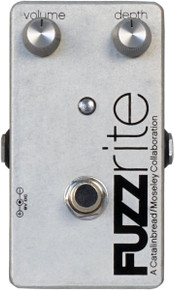
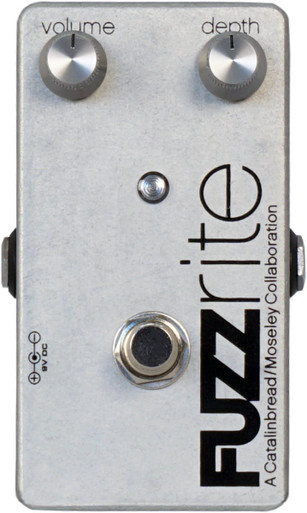
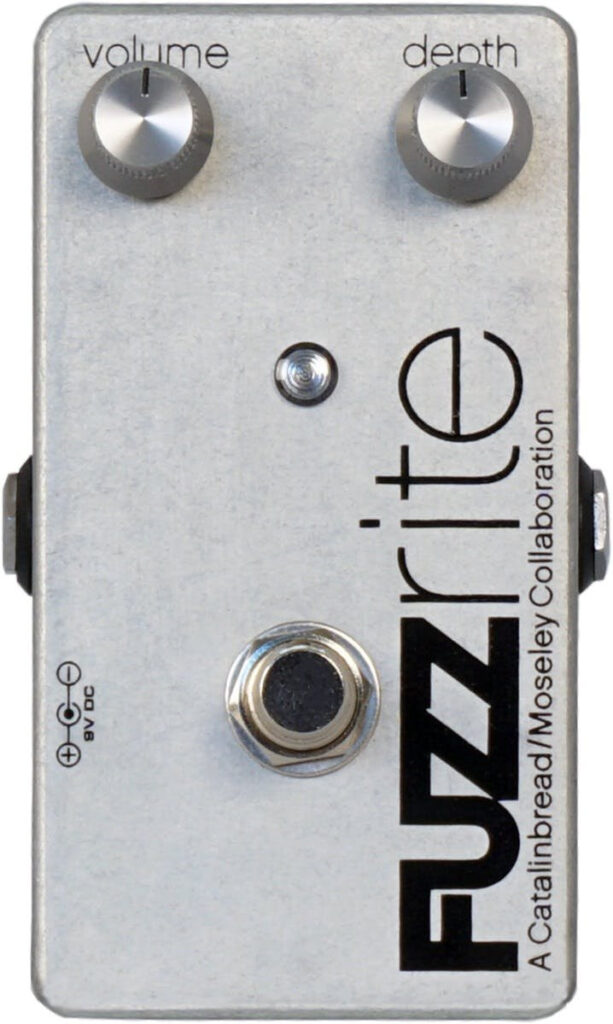
Catalinbread Fuzzrite

£119.99

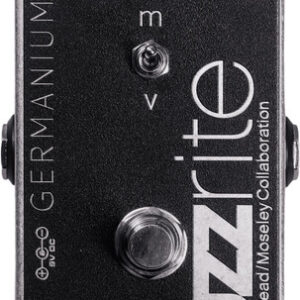
This is a New Catalinbread Fuzzrite from Catalinbread, listed in Specialist Effects Pedals on Just Pedals. Read More below.

View Just
more

Catalinbread have recently been working closely with the Moseley (Mosrite) family to bring back the fuzzrite as an officially sanctioned Moseley-backed pedal. The Fuzzrite is now an exact sonic replica of the original vintage silicon Fuzzrite from the 1960’s.

So you can plug in the fuzzrite to get any of those 60s style fuzz effects. It only uses 2 transistors to get its sound and can go from wild screeching fuzz tones to warm, rich fuzz. It has a fantastic rasp in the mid-range and will cut through the mix unlike a lot of other fuzz pedals that get drowned out by their own wooly fuzz tones.

Here’s what Catalinbread  say about the Fuzzrite

Classic gnarly garage fuzz.

THE STORY

From The Ventures’ “2,000 Pound Bee”, and Iron Butterfly’s “In-A-Gada-Da-Vida”, to the Black Keys, the Fuzzrite has a rich history of taking guitar tones to new levels. We’ve brought the classic silicon circuit back, and added a 9v power supply.

OVERVIEW

The Catalinbread Fuzzrite is a faithful reproduction of the classic circuit of the 60s. It’s splatty, raw, and unapologetic. The Depth control adds brightness and gain, while the Volume knob controls your overall output volume.
Related videos

Brand

Catalinbread

Catalinbread began in 2003 when Nic Harris built a pedal on his kitchen table; the company has made its pedals in Portland, Oregon since 2006, building more than 30 designs by hand. Its catalogue often reworks characterful studio and amplifier circuits for a pedalboard. JustPedals listings include the Adineko oil-can delay, Echorec multi-tap echo, Epoch Bias preamp and Sinkhole reverb. These models show the brand’s interest in distinctive delay, preamp and ambience sounds, with each product built around a particular vintage reference or circuit idea.

Category

Specialist Effects Pedals

Specialist effects alter the signal in ways that do not sit cleanly inside one established family. They may use granular processing, frequency shifting, resonators, freeze or sustain, bit reduction, ring modulation, feedback networks or combinations of several techniques. The relevant distinction is the underlying process, its tracking or latency, and how completely the dry signal can be blended or replaced.