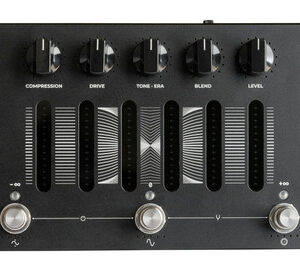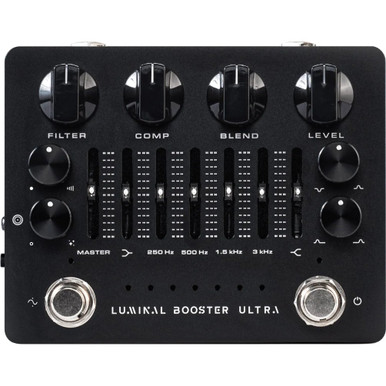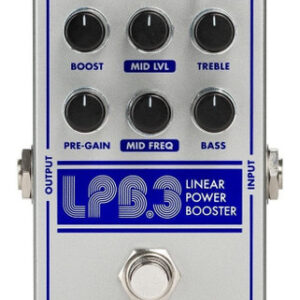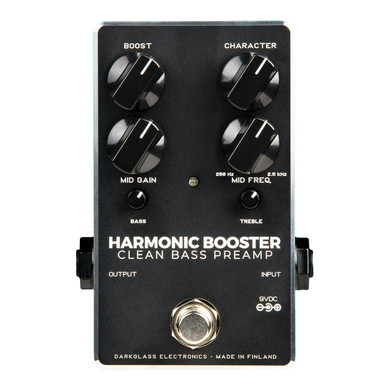
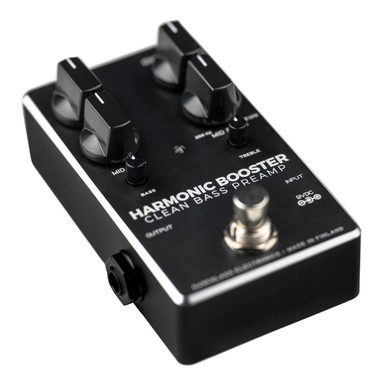
Darkglass Harmonic Booster 2.0 Clean Bass Preamp & Boost Pedal

Retailing in the region of £219.00

On the menu for January 2026 are the Darkglass Guitar Pedals, freshly added and carefully selected. These New units are available to order online with fast, secure delivery from trusted UK retailers. Read on for full details, specifications, demos, videos, reviews, and the best places to buy the Darkglass Guitar Pedals today.


Spread the love

Description

Spread the love

On the menu for January 2026 are the Darkglass Guitar Pedals, freshly added and carefully selected. These New units are available to order online with fast, secure delivery from trusted UK retailers. Read on for full details, specifications, demos, videos, reviews, and the best places to buy the Darkglass Guitar Pedals today.

Darkglass Electronics are renowned for their high-gain distortion and fuzz stompboxes. However, before dabbling with the innovative Microtubes technology that is used in many of their current products, Darkglass launched the Harmonic Booster – their first ever pedal design. Heavily sought after, the Harmonic Booster is finally back and better than ever before!

Just like the original, the Darkglass Harmonic Booster 2.0 is primarily a clean preamp that offers plenty of tone-shaping potential with its 'Bass' and 'Treble' controls, and most notably – a sweepable parametric mid-range. Letting you find the sweet-spot, this flexible active EQ section as a whole offers mixing desk-level precision, especially in conjunction with the 'Character' control that allows you to determine how much of the EQ circuitry affects your core sound.

The 'Boost' knob delivers up to 20 dB cut/boost, but apart from simply affecting volume, the boost function also introduces extra harmonics to create a richer sound; akin to an exciter. The Darkglass Electronics Harmonic Booster 2.0 can therefore serve as an "always on" pedal that'll guarantee excellent tone no matter what you plug it into!

Here's what Darkglass Electronics says about the Harmonic Booster 2.0:

The original Harmonic Booster was Darkglass Electronics’ first ever pedal design. Now with the Harmonic Booster 2.0 the mythical product that started it all is back, but with major improvements over the original.

In the quest to design the perfect bass distortion, you first have to master the control of harmonics and filtering, which are crucial to sculpting the character and texture of a distortion circuit at will. It was when testing the first few gain and filter stages of what would later become the core of Darkglass’ overdrive technology, that it was realised that the harmonic excitation circuitry could yield amazing results on a clean signal at lower gain levels!

The result was a clean preamplifier that enhances attack and presence, while sculpting the mids for a very percussive and aggressive character and now rare examples of this early design are highly sought after. Darkglass Electronics has picked up a few tricks over the past decade, which translates into several improvements over the original design.

Aside from a new comprehensive EQ section for additional flexibility, noise performance and headroom are all vastly improved in V2.0. The unique tone-shaping engine can be controlled with the Character knob, which at minimum leaves your signal completely flat, providing absolute control from subtle to extreme enhancement. In addition, the new 3-band active equalizer, with bass and treble knobs, also features a semi-parametric mid control – a first for Darkglass!

Although Harmonic Booster 2.0 is designed to be the perfect complement to the line-up of Darkglass distortion circuits, its incredible flexibility and portability makes it the perfect one-stop solution for gigging musicians in search of a precise, yet harmonically rich clean preamplifier.

Features

  • Clean Harmonic-Excitation Preamp
  • Boost control – +/- 20 dB cut/boost
  • 3 band Active EQ with Parametric Mid
  • Character control – allows blending in the perfect amount of the tone-shaping circuitry 
  • Made in Finland
  • Powered by regular 9V PSU (9V DC, centre -, 2,1 mm, ~30 mA current draw)
Additional information

Weight 0.5 kg

Brand

Darkglass

Category

Guitar Pedals

Tags

Boost

Distortion

Distortion pedals take your clean guitar signal and transform it into something bigger, bolder, and full of attitude. By clipping the waveform, they add sustain, bite, and aggression, creating that thick, compressed tone that’s powered rock music for decades. From the growling crunch of classic hard rock to the tight, saturated roar of modern metal, distortion is all about energy and presence. It gives every note weight and authority, pushing your amp to its limits and beyond.

There are countless flavours of distortion, each with its own texture and edge. Some sound smooth and creamy, others raw and gnarly like tearing fabric. It’s the sonic equivalent of turning up the heat until the sound cooks — rich, sizzling, and perfectly seasoned to taste. Whether used for rhythm muscle or soaring leads, a good distortion pedal doesn’t just add volume; it adds personality, grit, and that unmistakable sense of power under your fingers.

EQ

While Ed Sheeran primarily relies on the natural sound of his acoustic guitar and vocals, he occasionally uses EQ (Equalization) to shape and enhance his tone during live performances or in the studio. EQ pedals or onboard preamps can allow him to adjust the frequency response of his guitar signal to suit the acoustics of different venues or to achieve specific tonal characteristics. Here’s how EQ might be utilized in Ed Sheeran’s setup:

1. **Tonal Shaping**: EQ can be used to adjust the balance of frequencies in the guitar signal, allowing Ed Sheeran to shape his tone to his liking. For example, he might boost the midrange frequencies to bring out the warmth and presence of his acoustic guitar, or cut certain frequencies to reduce any harshness or mud in the sound.

2. **Feedback Control**: In a live setting, EQ can help control feedback by notching out problematic frequencies that might cause the guitar signal to feed back through the amplification system. This can be particularly useful when performing in venues with challenging acoustics or high volume levels.

3. **Room Correction**: In situations where the venue’s acoustics are less than ideal, EQ can be used to compensate for any deficiencies in the sound. By adjusting the EQ settings, Ed Sheeran can tailor the guitar tone to sound more balanced and natural, regardless of the room’s acoustic properties.

4. **Matching Gear**: EQ can also be used to match the tone of Ed Sheeran’s guitar to the sound of other instruments or equipment in his setup. For example, he might adjust the EQ to complement the tonal characteristics of his vocal microphone or to blend seamlessly with backing tracks or other instruments.

Overall, while EQ may not be a central component of Ed Sheeran’s guitar effects setup, it can still play a valuable role in shaping his tone and ensuring that he achieves the desired sound in different performance environments. Whether used subtly for tonal shaping or more aggressively for feedback control, EQ allows Ed Sheeran to tailor his guitar tone to suit his musical vision and performance needs.

Filter

Fuzz

A fuzz pedal is one of the earliest and most aggressive forms of distortion, turning your clean guitar signal into a thick, saturated wall of sound. It works by clipping the waveform almost flat, creating a compressed, gritty tone full of harmonic overtones. The result is raw, unruly, and unmistakable — from the sputtering breakup of vintage germanium circuits to the searing sustain of modern silicon designs. Fuzz pedals react strongly to your guitar’s volume and pickup choice, making them dynamic tools for expressive players.

Whether you’re chasing the classic tones of Hendrix and the Smashing Pumpkins or exploring heavy, experimental textures, fuzz remains a favourite for its personality and unpredictability. It can sound smooth and sustaining, or wild and velcro-like, depending on how it’s set up. A good fuzz pedal cuts through the mix while adding thickness and attitude, turning any riff or lead line into something bold and unmistakably alive.

New

This is brand new, fresh in, and a UK warranty is included. New Gear always comes from trusted UK music retailers.

Overdrive

Like a golden layer of melted cheese — warm, gooey, and just put it all over. It adds just the right amount of richness and grit, turning a clean signal into something smooth and savoury. Designed to mimic the natural breakup of a tube amp pushed to its sweet spot, overdrive delivers the flavour of classic rock and blues in every bite. From creamy mid-gain warmth to crisp edge-of-breakup sparkle, it’s the comfort food of guitar tone — simple, satisfying, and endlessly versatile. Whether it’s a mild crunch or a full-bodied roar, overdrive is where good taste begins.

Preamp

A preamp pedal shapes and boosts your guitar’s signal before it reaches your amp or recording interface, giving you control over tone, gain, and headroom. It acts as the first stage of amplification, adding warmth, clarity, and character while preparing your signal for the next part of the chain. Some preamps emulate the response of classic valve circuits, while others offer clean, transparent tone shaping ideal for acoustic instruments or direct recording setups.

Used on its own, a preamp pedal can serve as the foundation of your tone, providing a consistent core sound wherever you play. When combined with other effects, it enhances dynamics and helps each pedal sound more defined and natural. Whether you’re looking to push your amp harder, bring life to a dull signal, or refine your sound for the studio, a good preamp pedal adds presence, punch, and musicality to any rig.

used

Volume

Volume pedals control the output level of a guitar signal using a foot-operated treadle. They allow smooth volume swells, dynamic control during playing, and easy muting between songs. Volume pedals can be placed at different points in the signal chain to either control overall loudness or adjust gain and drive behaviour when positioned before distortion or overdrive pedals.