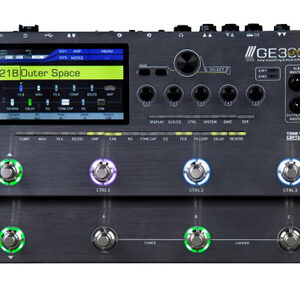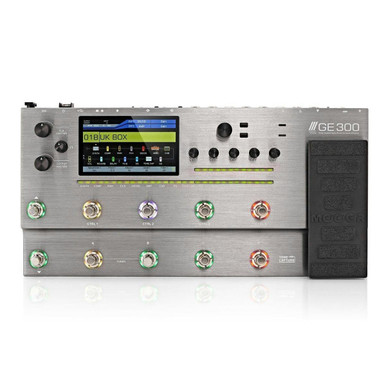
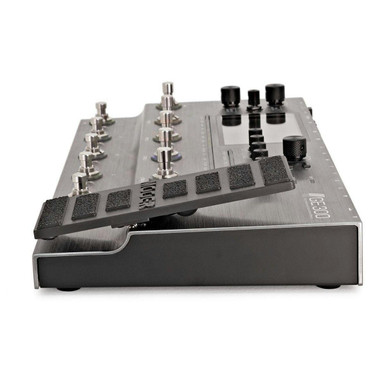
Mooer GE300 Multi Effects Processor

Retailing in the region of £499.00

On the menu for January 2026 are the Mooer Guitar Pedals, freshly added and carefully selected. These New units are available to order online with fast, secure delivery from trusted UK retailers. Read on for full details, specifications, demos, videos, reviews, and the best places to buy the Mooer Guitar Pedals today.


Spread the love

Description

Spread the love

On the menu for January 2026 are the Mooer Guitar Pedals, freshly added and carefully selected. These New units are available to order online with fast, secure delivery from trusted UK retailers. Read on for full details, specifications, demos, videos, reviews, and the best places to buy the Mooer Guitar Pedals today.

Mooer made a name for themselves with their range of compact pedals, paving the way for a surge in micro pedal popularity. The GE300 signals a huge leap for the company, offering an unprecedented set of features and one of the slickest user interfaces they’ve ever designed.

By combining just about every aspect of their tonal knowledge and pedal manufacture experience, they’ve created a true flagship. Dual DSP processors, Tone Capture technology, polyphonic synth mode, impulse response loader – it ticks just about every box.

Key Features

  • All-encompassing amp modelling & multi-FX powerhouse
  • Tone Capture technology for literally sampling your favourite guitar, amp, cab or pedal sounds
  • 108 built-in preamp presets
  • 43 built-in impulse response presets with 20 user slots for your own preferred sounds
  • 164 built-in pro-grade effects including ambience, modulation, filters and much more
  • Tri-voice polyphonic synthesizer module for abstract guitar-synth tones
  • 30 minutes built-in looper with undo/redo, direct dubbing, reverse, 1/2 time and more
  • Extensive connectivity including midi in/out/thru, stereo outputs, low-latency USB audio and more
  • FX loop with optional signal chain routing
  • Programmable footswitches with user-selectable LED colours and total customisation/mapping

Here’s What Mooer Say:

The GE300 from Mooer is the flagship multi-effect instrument processor. By combining the well-received Micro Preamp series, Tone Capture instrument matching technology, tri-voice polyphonic synthesizer module, and a wide-range of guitar effects and tools, the GE300 embellishes every single motive for creation from your mind with nuanced details.

The GE300 contains dual-DSP processors delivering the fastidious detailed characterizes of every delay, reverb, modulation or amp model inside. Thanks to the intuitive and simple UI, controls, and connection ports, the GE300 is an all-in-one working station for musicians whether in a live situation, at home, or in the studio.

Built-in Synth Module

With the synth module, your instrument will be transformed into an electronic synthesizer without the need for special pickups or instrument modifications, allowing you to spark your creativity with more possibilities. 

As you can see from the diagram, the synth engine has 3 independent voices with their own parameters for waveform, pitch, attack, level, filter and arpeggiator. The signal path from the instrument input is split and routed directly to the front of each synth voice so they remain completely parallel and independent from one another. The thru dry signal can also be mixed parallel to the entire synth effect block, so you can opt for synth only or mix it with your guitar signal.

Tone Capture Technology

Tone Capture is an intelligent learning and comparison engine that can be used to create your very own digital models by sampling real-life equipment. The GE300 is the only Mooer product that features three different Tone Capture modes:

Amp & Stomp mode can be used to sample your favourite stomp box or amplifier. This can then be applied to an existing amp or drive pedal model within a preset to transform it into your sample.

Guitar Mode allows you to capture the EQ characteristics of your instrument. Have you ever found yourself searching for a single instrument that has all the different guitar sounds you need? Be it classic country twang, warm ballsy blue tones, the funkadelic “4-position”, tight thrashing djent, Piezo acoustic-electric – Guitar Mode can sample any guitar, provided it has some form of pickup, and create a detailed digital guitar model using Mooer’s proprietary non-linear IR technology.

Cab Mode allows you to create your own Impulse Response models of speaker cabinets to use instead of using the CAB effect block already installed on the GE300.

Specifications

Connectivity

  • Aux in: Connect external media devices for audio playback by 1/8” stereo jack. 
  • Input: Instrument input, ¼” mono jack with Guitar/Line level switch.
  • Output: 2 x ¼” mono jack.
  • XLR output: 2 x Balanced XLR output with Ground lift switch.
  • USB: Type-B USB. Connect to a computer to record direct digital audio. Interface with official Mooer software to edit and import/export presets. Support firmware update via USB.
  • MIDI in: For providing channel selection via MIDI commands from external devices.
  • MIDI out: For controlling external devices with GE300 and creating effects presets for each preamp channel.
  • Phones: Dedicated headphone output. ¼” stereo jack
  • Send/return: Integrated stereo effects loop.
  • Exp2: External expression pedal input. This can also be used as an external switching output. ¼” stereo jack

Algorithm

  • No. of Effect Blocks: 15
  • No. of Effect Types: 317
  • Patches: 256 (Preset)
  • IR Loading: 20 slots
  • IR Format: .wav
  • IR Sampling Rate: 44.1kHz(Full Sampling rate supported)
  • IR Sampling Accuracy: 24 Bits
  • IR Sampling Points: 512 / 1024 / 2018 Points

Input – Input

  • Type: 1/4” unbalanced mono audio jack
  • Impedance: Guitar: 1Meg ohm; Line: 10k ohm
  • Maximum Input Level: +12 dBu

Input – Return

  • Type: 1/4” unbalanced mono audio jack X 2
  • Impedance: 1Meg ohm
  • Maximum Input Level: +12 dBu

Input – Aux In

  • Type: 1/8” unbalanced Stereo audio jack
  • Impedance: 100k ohm
  • Maximum Input Level: +12 dBu

Input – A/D Conversion

  • Sampling Rate: 44.1 kHz
  • Sampling Accuracy: 24bit
  • Dynamic: 114 dB
  • Frequency: 20Hz – 20kHz, +0 / -1 dB

Output – Output

  • Type: 1/4” unbalanced mono audio jack X 2
  • Impedance: 470 ohm
  • Maximum Output Level: +12 dBu

Output – XLR Output

  • Type: XLR balanced output X 2
  • Impedance: 300 ohm
  • Maximum Output Level: +18 dBu

Output – Send

  • Type: 1/4” unbalanced mono audio jack X 2
  • Impedance: 100 ohm
  • Maximum Output Level: +12 dBu

Output – Phones

  • Type: 1/4” unbalanced Stereo audio jack
  • Impedance: 16 ohm
  • Maximum Output Level: +12 dBu

Output – D/A Conversion

  • Dynamic: 114 dB
  • Frequency: 20Hz – 20kHz, +0 / -1 dB

Others – MIDI

  • MIDI in/out (thru): 5 Pin Female Connector

Others – USB

  • Type: USB Type B
  • USB Audio: USB 2.0, 2 in 2 out, 44.1kHz, 24bit

Others – EXP2 External Expression Jack

  • Type: 1/4” TRS jack
  • Impedance: 10k – 100k ohm

Power Supply

  • DC 9V, 3A

Dimensions

  • 410mm x 201mm x 62mm

Weight

  • 3.0 kg

Accessories

  • Power Supply, USB Cable, Quick Guide manual.
Additional information

Weight 2.25 kg

Brand

Mooer

Mooer is a Chinese company that produces affordable, compact guitar effects pedals and other music equipment.

Established in 2010, Mooer quickly gained popularity for its “Micro-Series” pedals, which are small but deliver a wide range of effects, from overdrive and distortion to reverb, delay, and modulation. Despite their budget-friendly price, Mooer pedals are appreciated for their solid build quality, ease of use, and impressive sound.

The company also offers multi-effects units, amplifiers, and accessories, catering to both beginner and experienced musicians who seek reliable gear without breaking the bank. Mooer’s products are widely used by guitarists worldwide, particularly those who value portability and versatility in their setups.

Category

Guitar Pedals

Tags

Delay

A delay pedal records your signal and plays it back after a set time, creating echoes that can range from tight, slapback repeats to long, atmospheric trails. It’s one of the most versatile effects, used to thicken tones, add rhythmic depth, or build spacious, ambient layers. Analogue delays offer warm, decaying repeats that blend naturally with your tone, while digital units provide pristine echoes with precise control over time, feedback, and mix levels.

From classic rockabilly and tape-style echoes to modern looping and shimmer effects, delay pedals have become essential tools for shaping sound. They can make solos soar, rhythms pulse, or transform simple chord progressions into cinematic textures. Whether used subtly to add dimension or boldly to create soundscapes, a good delay pedal can completely redefine the feel and atmosphere of your music.

EQ

While Ed Sheeran primarily relies on the natural sound of his acoustic guitar and vocals, he occasionally uses EQ (Equalization) to shape and enhance his tone during live performances or in the studio. EQ pedals or onboard preamps can allow him to adjust the frequency response of his guitar signal to suit the acoustics of different venues or to achieve specific tonal characteristics. Here’s how EQ might be utilized in Ed Sheeran’s setup:

1. **Tonal Shaping**: EQ can be used to adjust the balance of frequencies in the guitar signal, allowing Ed Sheeran to shape his tone to his liking. For example, he might boost the midrange frequencies to bring out the warmth and presence of his acoustic guitar, or cut certain frequencies to reduce any harshness or mud in the sound.

2. **Feedback Control**: In a live setting, EQ can help control feedback by notching out problematic frequencies that might cause the guitar signal to feed back through the amplification system. This can be particularly useful when performing in venues with challenging acoustics or high volume levels.

3. **Room Correction**: In situations where the venue’s acoustics are less than ideal, EQ can be used to compensate for any deficiencies in the sound. By adjusting the EQ settings, Ed Sheeran can tailor the guitar tone to sound more balanced and natural, regardless of the room’s acoustic properties.

4. **Matching Gear**: EQ can also be used to match the tone of Ed Sheeran’s guitar to the sound of other instruments or equipment in his setup. For example, he might adjust the EQ to complement the tonal characteristics of his vocal microphone or to blend seamlessly with backing tracks or other instruments.

Overall, while EQ may not be a central component of Ed Sheeran’s guitar effects setup, it can still play a valuable role in shaping his tone and ensuring that he achieves the desired sound in different performance environments. Whether used subtly for tonal shaping or more aggressively for feedback control, EQ allows Ed Sheeran to tailor his guitar tone to suit his musical vision and performance needs.

Expression

Expression pedals allow real-time control over specific parameters on compatible guitar pedals, such as volume, delay time, modulation depth, or filter sweep. Used with an expression input, they let players shape effects dynamically with their foot, adding movement and performance control that cannot be achieved with fixed knob settings.

Filter

Looper

A looper pedal records and plays back sections of your playing, allowing you to layer sounds and build full arrangements on your own. By capturing short or long phrases, you can create rhythm parts, harmonies, or entire backing tracks in real time. Most loopers offer basic controls for record, overdub, and playback, while advanced models include multiple tracks, tempo syncing, and memory storage for saving your loops.

Loopers are invaluable for practice, songwriting, and live performance. They help you explore ideas, refine timing, and experiment with textures — from solo acoustic performances to complex ambient soundscapes. A good looper pedal becomes an instrument in itself, letting you improvise, arrange, and perform with creativity and freedom, turning one guitar into an entire band.

MIDI

MIDI pedals use the Musical Instrument Digital Interface standard to communicate with other guitar pedals, effects units, and hardware. They allow control over presets, parameters, and switching across multiple devices from a single controller. MIDI integration makes it possible to build complex, synchronised pedal setups while keeping control simple and consistent.

New

This is brand new, fresh in, and a UK warranty is included. New Gear always comes from trusted UK music retailers.

Pitch

Pitch pedals alter the frequency of your guitar signal, changing the perceived note or adding harmony. They can shift notes up or down by fixed intervals, create harmonies, or produce dive-bomb and whammy-style effects without a tremolo arm. Pitch shifters and harmonisers are great for thickening solos, simulating multiple guitars, or experimenting with creative, otherworldly sounds that expand your tonal range.

Reverb

A reverb pedal is like the rich sauce that ties every flavour on the plate into one smooth experience. It adds depth, warmth, and atmosphere — the sonic equivalent of a perfectly reduced glaze that lingers on the tongue. Whether you’re after the subtle ambience of a cosy café (spring or plate reverb) or the grand echoes of a cathedral (hall or shimmer reverb), this is where your tone breathes and expands. A touch of reverb can turn a dry sound into something lush and inviting — but pour on too much, and it’s all you can taste. Used with finesse, it’s the finishing touch that transforms your tone from plain to unforgettable.

Synth

A synth pedal transforms your guitar signal into rich, layered tones that mimic the sounds of a synthesiser. Using pitch tracking and waveform generation, it can produce everything from deep bass lines to shimmering pads and futuristic leads. Synth pedals open up a wide creative range, blending the expressiveness of guitar playing with electronic textures, making them ideal for experimental sounds, ambient music, or adding a modern edge to classic riffs.

used

Available for Amazon Prime