
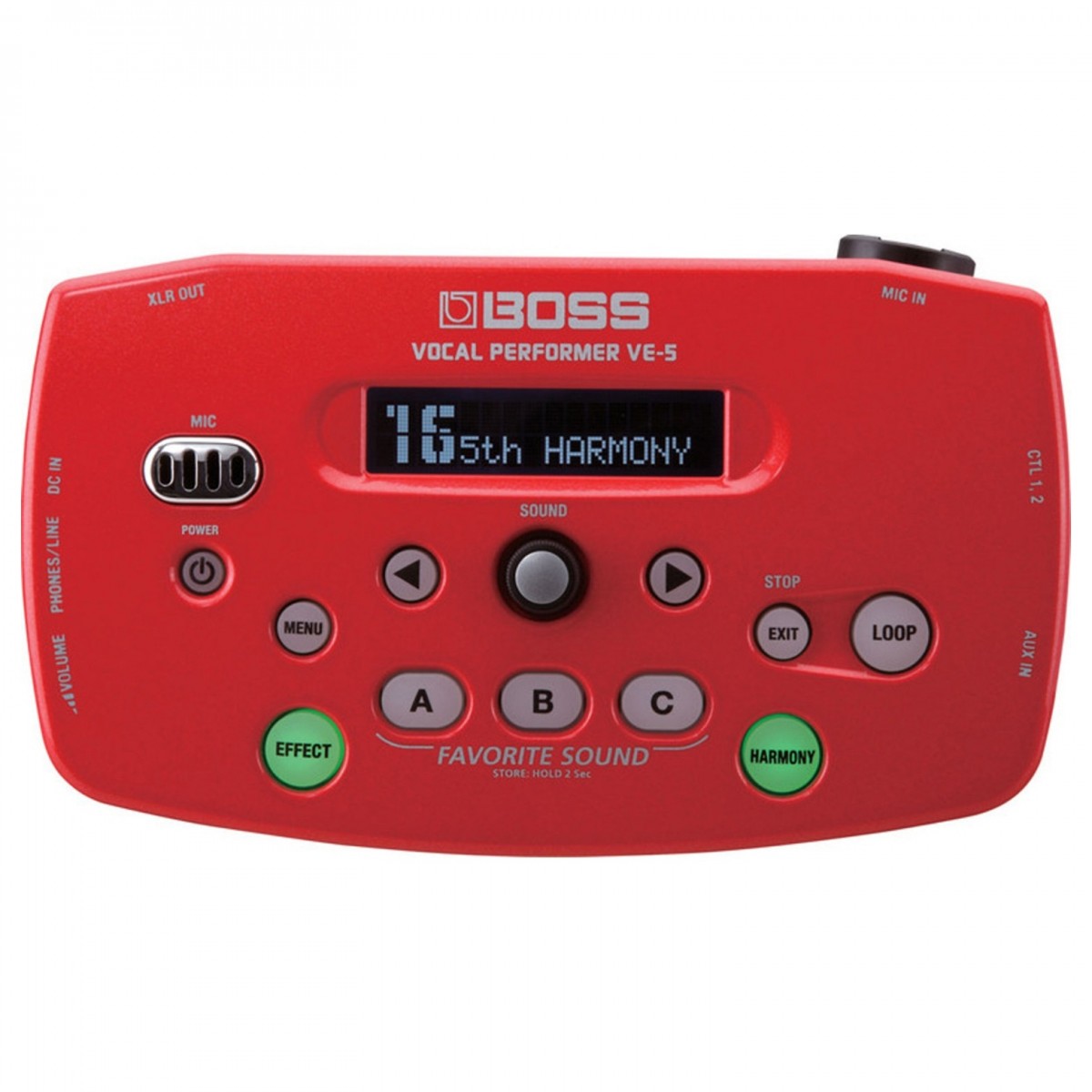
The Boss VE-5 is a flexible multi-effects unit for vocalists. Perfect for both live and studio use the VE-5 provides a wide range of high-grade effects for you to tailor your vocal sound. Add depth and space with time-based effects like reverb and delay thicken your voice with harmony or doubling level your volume with dynamics oontrol keep your voice on point or go into classic auto-tune effects with pitch control and add grit or colour with tone effects like distortion and radio. The included phrase looper also allows you to layer repeated effects as a sound bed perfect for reactive performances. Simple and intuitive to use the VE-5 will take input from your microphone and send out to a mixer or interface via XLR. This vocal effects pedal can even store your favourite effects chains so you can easily recall your favourite sounds when performing live or in writing sessions with your band. The VE-5 also provides battery power or mains AC power options (AC adapter sold separately) ensuring you can use it on your own terms perfect for touring or use in studios and home recording this vocal pedal will let you sound great no matter your needs.
Boss VE-5 Vocal Performer Vocal Processor Red
This is a New Boss VE-5 Vocal Performer Vocal Processor Red from Boss, listed in Vocal Effect Pedals on Just Pedals. Read More below.
As an affiliate partner, we may earn a small commission when you buy through our links — at no extra cost to you.
Related videos

Brand
Boss
In the current JustPedals catalogue, Boss is represented by Multi-Effects Pedals, Delay Pedals and Distortion Pedals. Current listings include PW-3 Wah, PX-1 Plugout FX and FZ-5 Fuzz. That makes the range relevant to players looking for drive, gain and clipping, plus time-based effects and ambience. Check each model for its exact circuit or processing platform, controls, power requirements and connections, particularly where the catalogue includes both pedals and supporting gear.
Category
Vocal Effect Pedals
Vocal processors accept a microphone-level signal and apply effects or pitch-aware processing to the voice. Reverb and delay add space, compression controls dynamics, harmony engines generate additional parts, and formant, doubling, distortion or vocoder processing changes vocal character. Microphone gain, phantom power, feedback control, harmony tracking, footswitch access and balanced connections distinguish a stage-ready processor from an instrument-level pedal.
Others Just Ordered :
- Mooer Meta FX – Review
- MOOER META FX Review: 3 Effects in 1—but Here’s the Problem

- I Wasn’t Expecting To Be Impressed – But What Is The Mooer Meta FX?

- Mooer // META FX Stereo Multi-Effect Platform (Demo)
- A NEW GENERATION OF PEDALS IS HERE – Mooer Meta FX Reverb Review

- Mooer META FX | All the REVERBS from subtle to WILD!