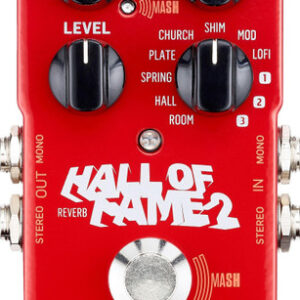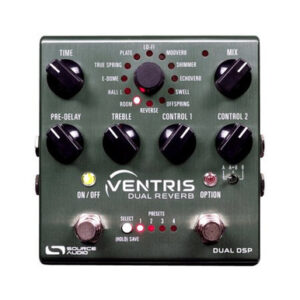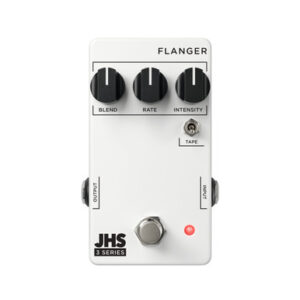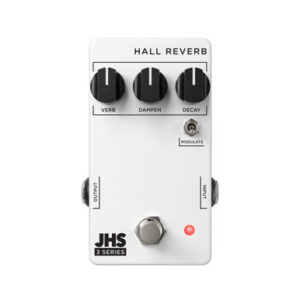
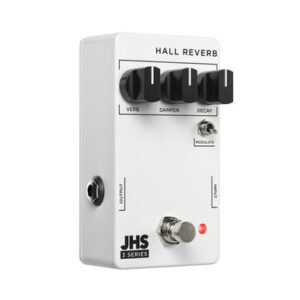
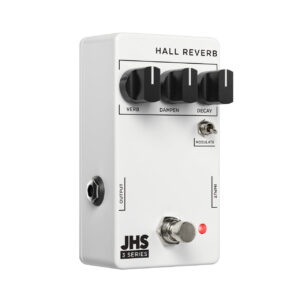
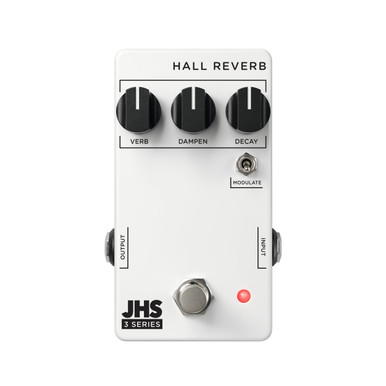
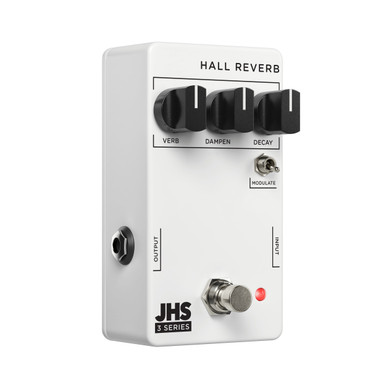
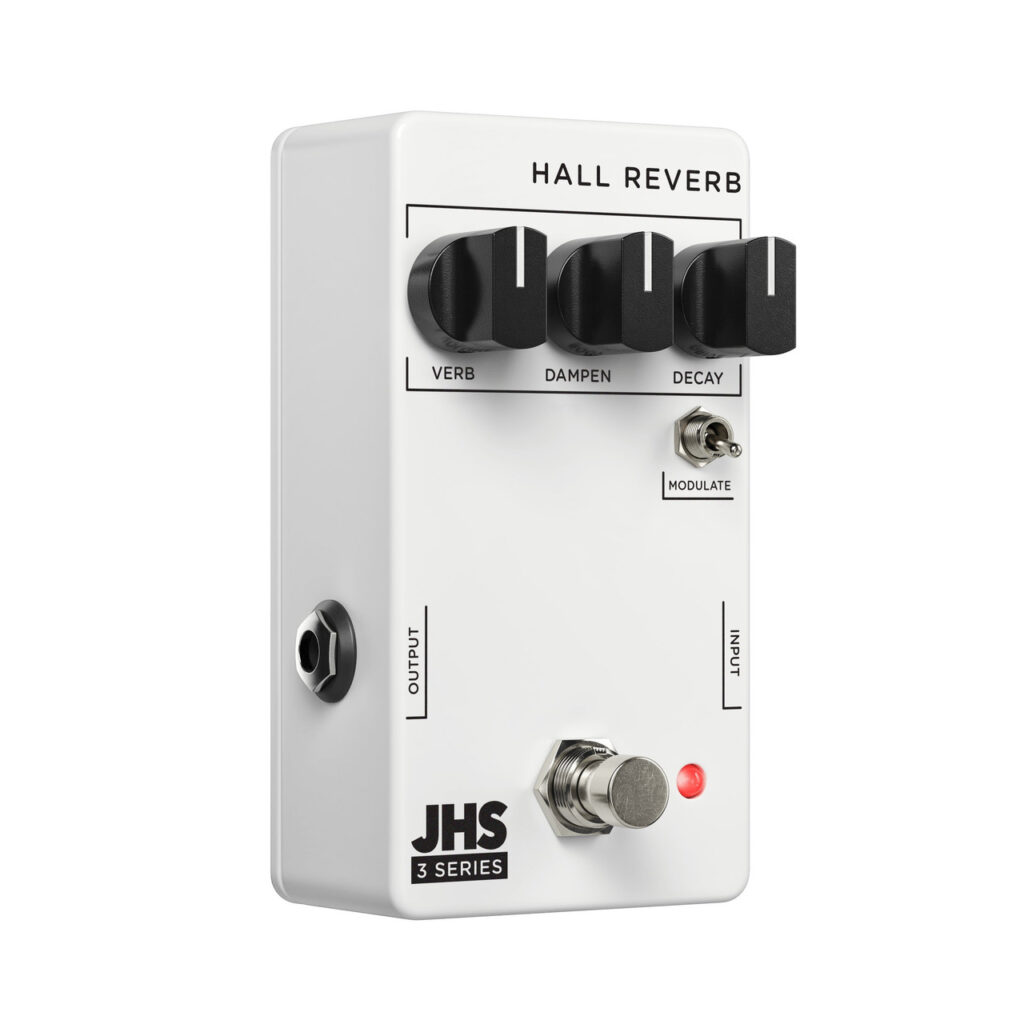
JHS 3 Series Hall Reverb Pedal

£89.99

This is a New JHS 3 Series Hall Reverb Pedal from JHS Pedals is in our Reverb Pedals category on Just Pedals. Read More below.

View Just
more

The 3 Series is JHS Pedals’ most affordable range yet, all the while packing their renowned high quality electronics for a supremely great tone! These are top notch effects made in the JHS Kansas City factory and are ideal for beginners and pros alike looking to expand their sonic options.

Raw JHS Pedals Tone

Gone are the array of dials found throughout the standard JHS pedal line-up. What you’re getting here is a refined, quality sound thanks to high-end electronic components and meticulous attention to detail from the Kansas City company. This is the ultimate plug-and-play pedal.

Here’s what JHS say about the 3 Series Hall Reverb

The 3-Series Hall Reverb is inspired by the sounds of large reverberated spaces, cathedrals and halls where the decay of natural reverb seemingly goes on forever. This pedal is perfect for players who are searching for massive, infinite and even otherworldly reverb. The ‘Modulate’ toggle emulates how large spaces can bend and reshape sound as it bounces off of corners, floors and hard angles. Toggle up activates the modulation or “movement” of the reverb decay, which creates a slightly detuned effect and adds an almost 3D feel to the sound. 
Related videos

Brand

JHS Pedals

JHS Pedals grew from Josh Scott’s pedal-modification work in 2007 into a Kansas City effects maker. Scott’s first original designs followed in 2008; the Morning Glory began as his reinvention of the Marshall Bluesbreaker. The JustPedals catalogue carries the Morning Glory V4 and Muffuletta, along with practical tools such as the Little Black Buffer, Buffered Splitter and Little Black Amp Box. JHS describes its guitar pedals as made in Kansas City, USA. The range mixes original drive and fuzz designs with utility pedals, so the current listings show more than a single “boutique overdrive” identity.

Category

Reverb Pedals

Reverb creates the dense pattern of reflections heard after sound enters a physical or imagined space. Room, hall, plate and spring models differ in reflection density, frequency decay and modulation, while ambient algorithms extend or transform the tail beyond natural acoustics. Decay, pre-delay, damping, diffusion and wet/dry balance define the apparent size, surface and distance of that space.