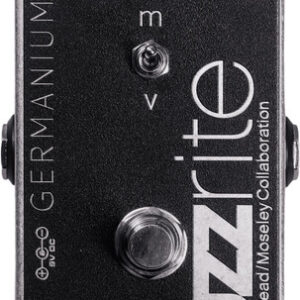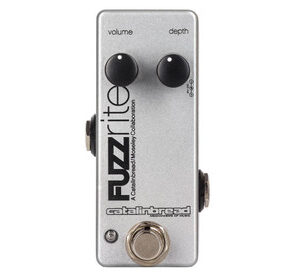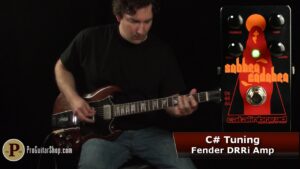
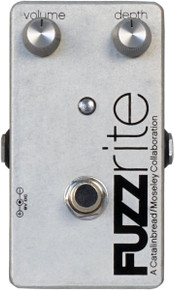

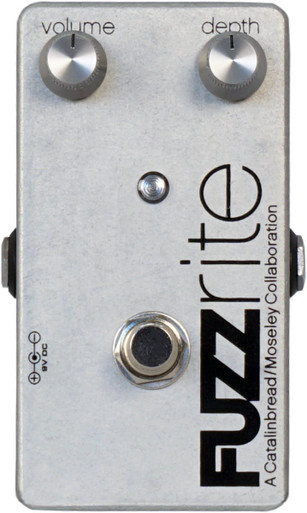
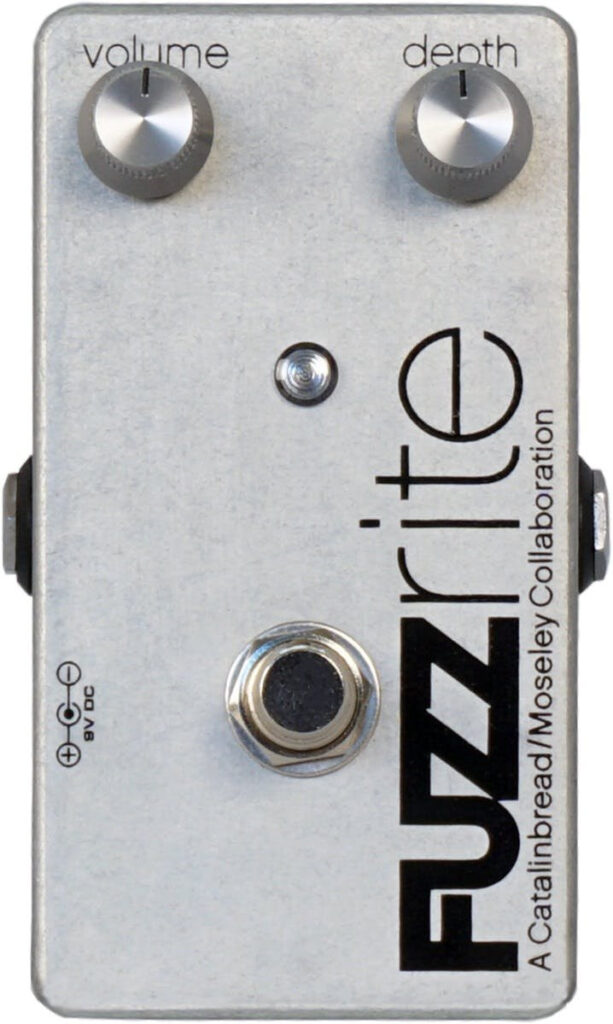
Catalinbread have recently been working closely with the Moseley (Mosrite) family to bring back the fuzzrite as an officially sanctioned Moseley-backed pedal. The Fuzzrite is now an exact sonic replica of the original vintage silicon Fuzzrite from the 1960’s.
So you can plug in the fuzzrite to get any of those 60s style fuzz effects. It only uses 2 transistors to get its sound and can go from wild screeching fuzz tones to warm, rich fuzz. It has a fantastic rasp in the mid-range and will cut through the mix unlike a lot of other fuzz pedals that get drowned out by their own wooly fuzz tones.
Here’s what Catalinbread say about the Fuzzrite
Classic gnarly garage fuzz.
THE STORY
From The Ventures’ “2,000 Pound Bee”, and Iron Butterfly’s “In-A-Gada-Da-Vida”, to the Black Keys, the Fuzzrite has a rich history of taking guitar tones to new levels. We’ve brought the classic silicon circuit back, and added a 9v power supply.
OVERVIEW
The Catalinbread Fuzzrite is a faithful reproduction of the classic circuit of the 60s. It’s splatty, raw, and unapologetic. The Depth control adds brightness and gain, while the Volume knob controls your overall output volume.