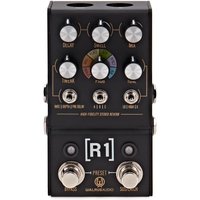
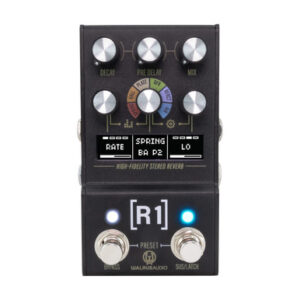
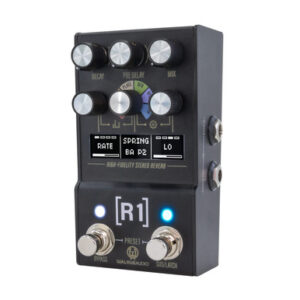
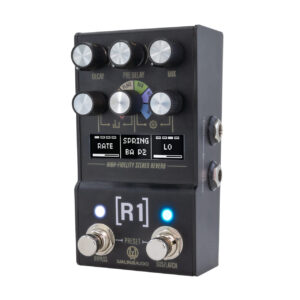
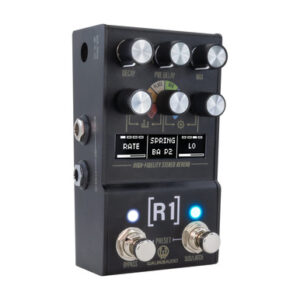
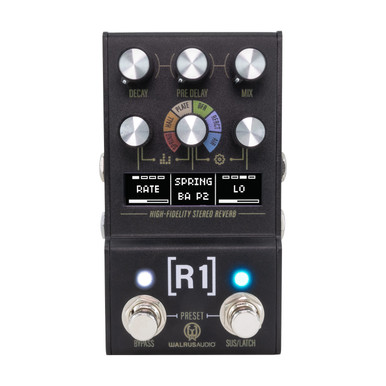
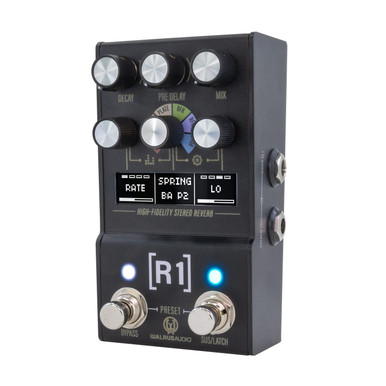
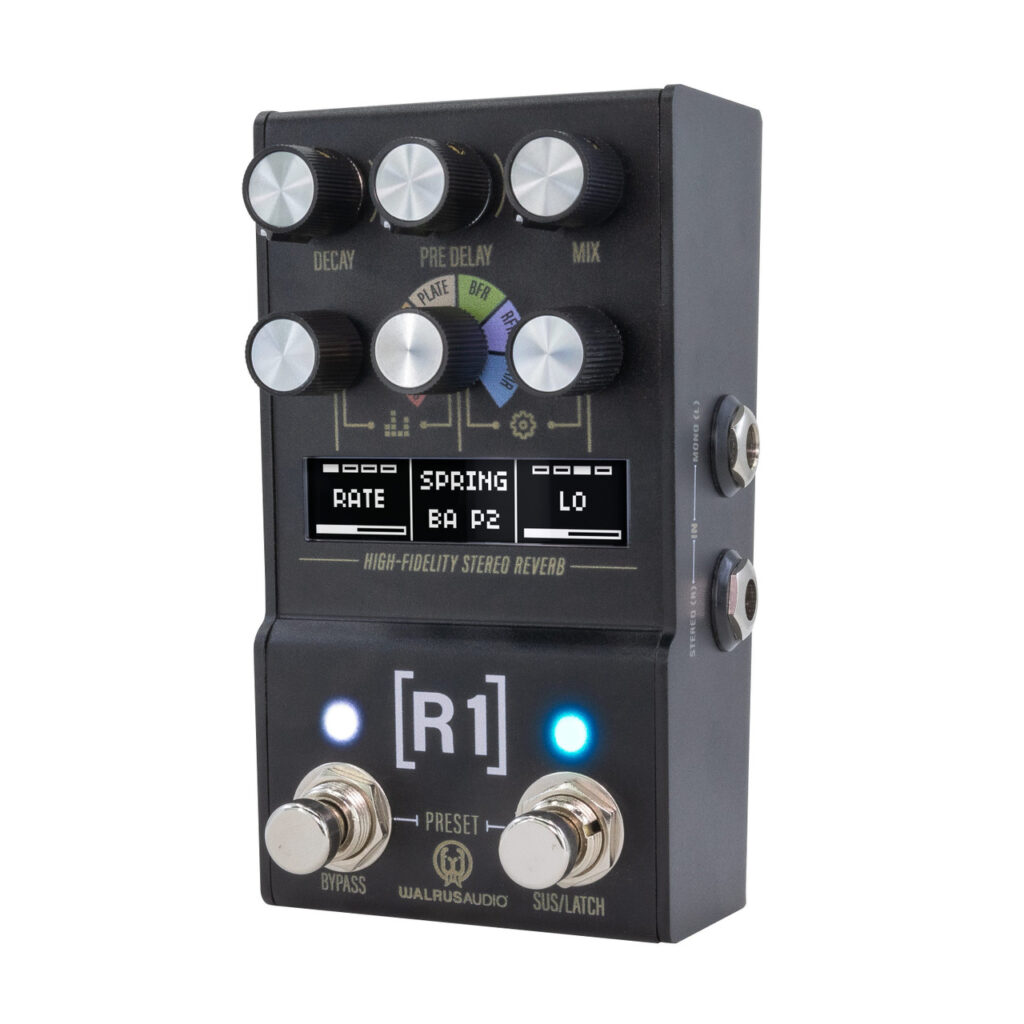
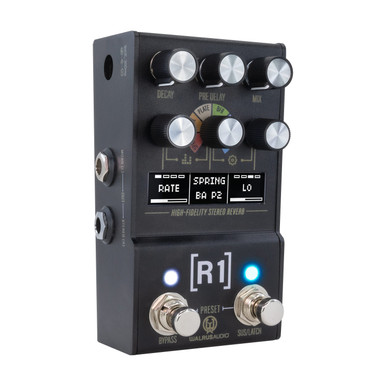
Walrus Audio Mako Series MKII R1 High-Fidelity Reverb Pedal

£379.00

This is a New Walrus Audio Mako Series MKII R1 High-Fidelity Reverb Pedal from Walrus Audio is in our Reverb Pedals category on Just Pedals. Read More below.

View Just
more
and , ,

Take full control of your Reverb like never before with the Walrus Audio Mako Series R1 High Fidelity Reverb Pedal! Continuing the success of the previous MK I model, the MK II features an easy-to-navigate display screen for near-unlimited access to just about every Reverb parameter you could dream of! Fully adjust the EQ of the reverb and control the trial’s smoothness. You can also introduce Ducking to any setting ensuring that no matter how big your reverb is, every note still gets heard. The Mako MK II R1 is Walrus Audio’s most versatile and flexible reverb yet!

  • High-Fidelity Stereo Reverb pedal
  • MK II version of the popular MAKO R1 with display and new features.
  • Stereo Inputs and Outputs
  • Let your sound evolve from subtle small-room reverb to huge, ethereal soundscapes.
  • 6 reverb programs: Spring, Hall, Plate, BFR, Refract, and Air
  • Ducking/Swelling feature adjusts reverb behavior for enhanced clarity or more pronounced effects
  • Size control adjusts the room or space simulation for each program
  • Diffuse control lets users tweak the smoothness or sharpness of the reverb tail
  • Feedback EQ control for shaping reverb tone
  • 128 onboard presets for saving and recalling custom sounds
  • Built-in menu screen for adjusting secondary controls like modulation rate and ducking
  • MIDI compatibility for external control and preset switching
  • Spring program emulates a tube amp’s spring reverb with a dripping, surf rock-inspired tone
  • Hall program provides large, immersive reverb spaces perfect for big, ambient washes
  • Plate program recreates the classic analog plate reverb for smooth diffusion
  • BFR program delivers a huge, lush reverb with cavernous decay and rich harmonics
  • Refract program adds glitchy, granular textures to the reverb, offering experimental soundscapes
  • Air program introduces a shimmering reverb with clear decay, ideal for ambient music
  • 1/8” MIDI IN & THRU connectors
  • USB-C port for firmware updates via dedicated web application
  • Power requirement: 9V, 300mA.
  • Dimensions (D x W x H): 12.5 x 6.7 x 6.4 cm.
  • Weight: 0.36 kg
  • Assembled in the USA

Related videos

Brand

Walrus Audio

Walrus Audio describes itself as a collective of artists, musicians and engineers, bringing circuit design together with distinctive pedal artwork. The company says its effects are hand-built and manufactured in the USA. JustPedals listings illustrate the variety: ARP-87 multi-function delay, Slö ambient reverb, Julia analog chorus and vibrato, and Polychrome flanger. Some models focus on direct, compact controls, while others provide broader modulation or atmospheric textures. Compare each model’s modes, stereo connections and control options; the artwork is a signature of the brand, while the circuit determines how it fits a rig.

Category

Reverb Pedals

Reverb creates the dense pattern of reflections heard after sound enters a physical or imagined space. Room, hall, plate and spring models differ in reflection density, frequency decay and modulation, while ambient algorithms extend or transform the tail beyond natural acoustics. Decay, pre-delay, damping, diffusion and wet/dry balance define the apparent size, surface and distance of that space.

Tags

MIDI

Sends, receives or responds to Musical Instrument Digital Interface messages rather than carrying the instrument audio itself. Program changes recall presets, continuous controllers move parameters, and MIDI clock or transport messages synchronise timing between devices.

Presets

Stores complete groups of parameter values for later recall. The number of locations, switching time, spillover behaviour and whether presets include routing, expression and MIDI assignments determine how completely one sound can change into another.

Stereo

Processes, creates or passes two audio channels. True stereo preserves separate left and right inputs, while mono-to-stereo effects generate spatial differences internally; routing, phase behaviour and whether trails remain stereo determine the resulting image. Some outputs sum to mono when only one socket is connected, which can change level or modulation depth.