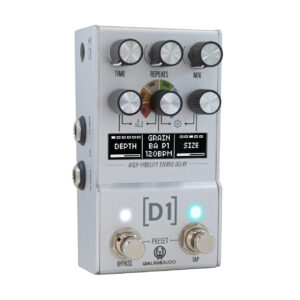
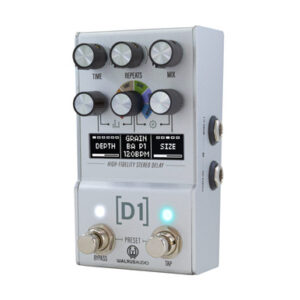
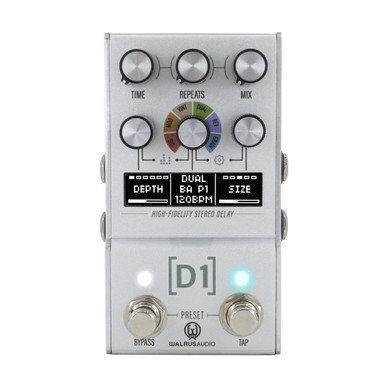
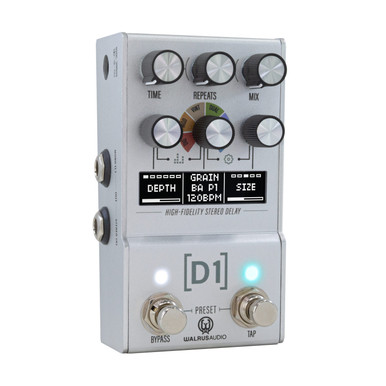
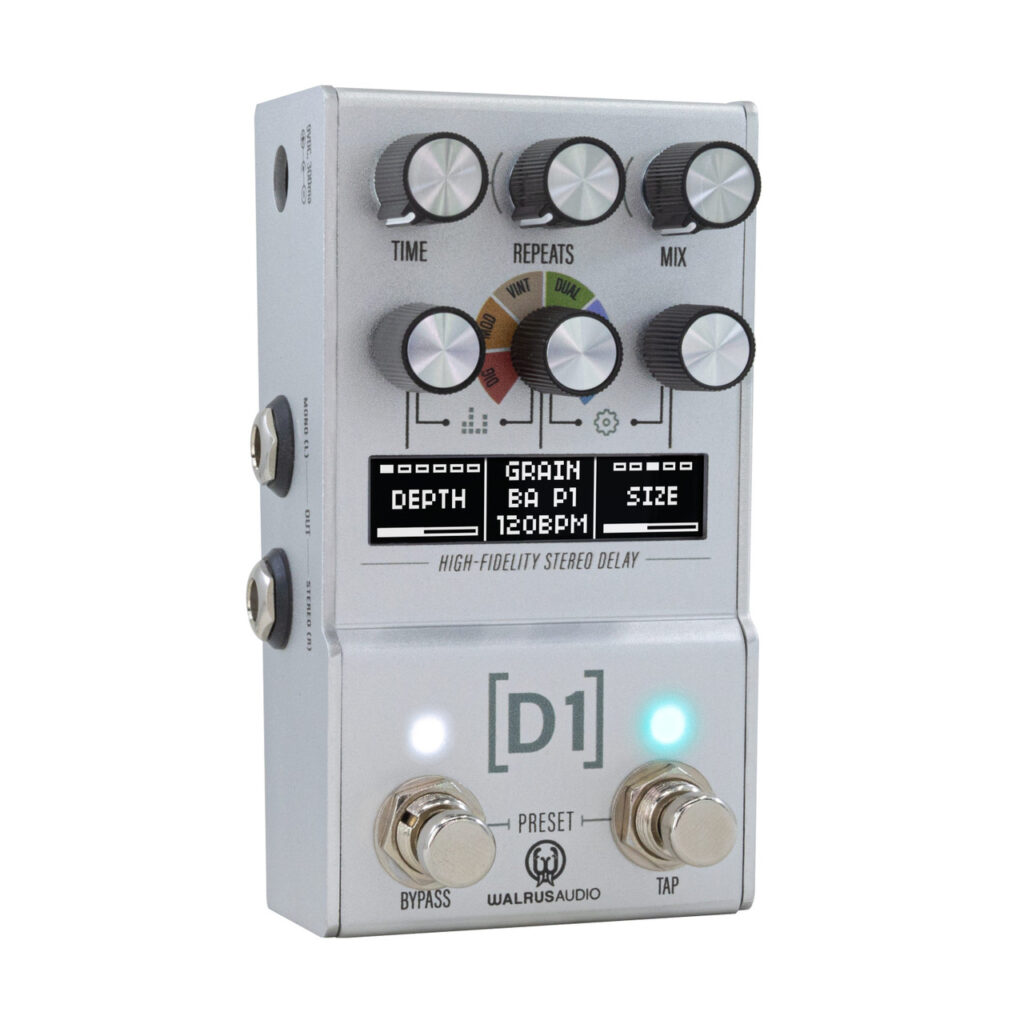
Walrus Audio Mako Series MKII D1 High Fidelity Delay Pedal

£299.00

This is the Walrus Audio Mako Series MKII D1 High Fidelity Delay Pedal from Walrus Audio, listed in Delay Pedals on Just Pedals. Read More below.

View Just
more
and , , , ,

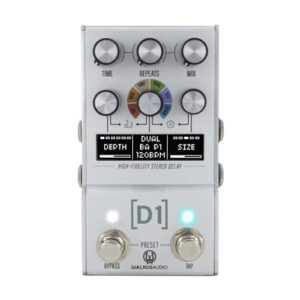
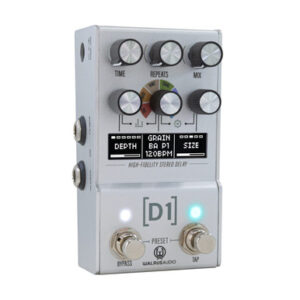
Continuing the success of the original MKI Walrus Audio Mako D1 High Fidelity Delay pedal, this MK II comes equipped with an additional delay algorithm, an easy-to-navigate display screen for improved flexibility and creativity on the fly as well as even more control over sounds including trials. The Mako D1 Delay pedal is Walrus Audio’s most feature-packed, flexible digital delay to date!

  • High-Fidelity Stereo Delay pedal.
  • MK II version of the popular MAKO D1 with display and new features.
  • Stereo Inputs and Outputs
  • 6 delay algorithms: Digital, Mod, Vintage, Dual, Reverse, and Grain.
  • Create everything from warm, analog sounds to rhythmic, clear echoes and bizarre glitchy trails.
  • Each program can be fully customized to taste and playing style
  • 128 onboard presets for easy recall of favorite sounds.
  • Complete BPM control with on-screen readout.
  • Dual mode allows unique tap divisions on each channel for stereo effects.
  • Add modulation to delay trails with six wave shapes: sine, square, triangle, ramp, reverse ramp, random.
  • Fully adjustable parameters for each program, including Depth, Rate, Shape, Age, Tone, and Spread.
  • BPM adjustment via right encoder knob, tap tempo switch, or MIDI.
  • Tap tempo, swell, and tap division control for further customization.
  • Navigation menu screen for easy tweaking of secondary controls and BPM, or accessing presets.
  • 1/8” MIDI IN & THRU connectors
  • USB-C port for firmware updates via dedicated web application
  • Power requirement: 9V, 300mA.
  • Dimensions (D x W x H): 12.5 x 6.7 x 6.4 cm.
  • Weight: 0.36 kg
  • Assembled in the USA

Related videos

Brand

Walrus Audio

Walrus Audio is an American boutique guitar effects pedal company based in Oklahoma City, known for its high-quality, innovative designs and artistic approach to pedal-making. Founded in 2011 by Brady Smith, the company quickly gained a reputation for creating pedals that offer a unique blend of rich, expressive tones and striking visual aesthetics.

Each Walrus Audio pedal is designed with meticulous attention to detail, often incorporating complex circuitry that allows for a wide range of sonic possibilities.

The pedals feature distinctive, hand-drawn artwork on their enclosures, making them visually appealing as well. Walrus Audio’s product lineup includes a variety of effects such as reverb, delay, overdrive, modulation, and more, and their pedals are widely appreciated by musicians for their creativity, durability, and superior sound quality.

Category

Delay Pedals

Delay records the incoming signal for a chosen interval and repeats it after the original note. Feedback returns repeats to the delay line, while tone, filtering, modulation and saturation determine whether echoes remain clear, darken progressively, wobble like tape or degrade like analogue bucket-brigade circuits. Delay time and rhythmic subdivisions govern the spacing and musical pattern of the repeats.

Tags

Analogue

The signal is shaped by continuously varying electronic circuitry rather than being converted into a digital effect algorithm. Component choice, operating voltage and circuit tolerances influence headroom, noise, clipping texture and the small variations in response between designs.

Digital

Converts the signal or control process into numerical data for algorithmic processing. Digital designs can provide precise timing, long memory, complex routing and repeatable presets; sample rate, conversion, internal resolution and latency influence fidelity and response.

MIDI

Sends, receives or responds to Musical Instrument Digital Interface messages rather than carrying the instrument audio itself. Program changes recall presets, continuous controllers move parameters, and MIDI clock or transport messages synchronise timing between devices.

Stereo

Processes, creates or passes two audio channels. True stereo preserves separate left and right inputs, while mono-to-stereo effects generate spatial differences internally; routing, phase behaviour and whether trails remain stereo determine the resulting image. Some outputs sum to mono when only one socket is connected, which can change level or modulation depth.

Tap Tempo

Measures repeated foot taps and converts their interval into an effect rate or delay time. Subdivisions translate that pulse into dotted, triplet or other rhythmic values, while averaging and range limits influence how quickly and accurately the tempo settles.