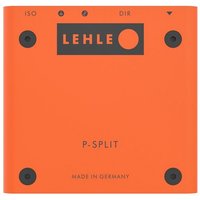
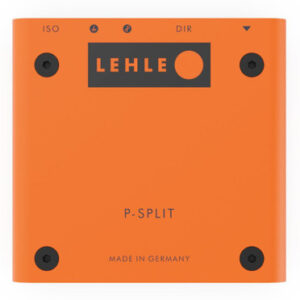
The LEHLE P-SPLIT III Passive Splitter and DI Box is an essential tool for musicians and audio technicians demanding the highest fidelity in signal management. This unit offers a seamless experience ensuring no signal loss or hum thanks to its high-end LEHLE TRANSFORMER HZ which provides impeccable clarity. Its passive design means it operates without the need for a power supply allowing for pure uninterrupted performance. Equipped with a phase and ground switch it can handle both balanced and unbalanced signals making it incredibly versatile.Applications of the LEHLE P-SPLIT III are diverse ranging from splitting signals for simultaneous output to different devices to serving as a high-quality DI box for recording or live performance setups. The device also features a ground loop noise elimination function critical for maintaining a clean sound environment. Its robust build and compact size make it an ideal choice for both studio and stage use ensuring reliable performance under various audio routing requirements.
Lehle P-Split III Passive Splitter and DI Box
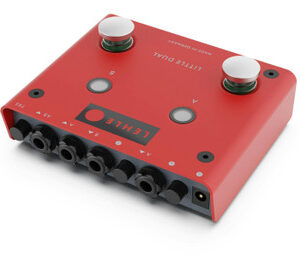
This is a New Lehle P-Split III Passive Splitter and DI Box from Lehle is in our Specialist Effects Pedals category on Just Pedals. Read More below.
As an affiliate partner, we may earn a small commission when you buy through our links — at no extra cost to you.
Brand
Lehle
In the current JustPedals catalogue, Lehle is represented by Volume Pedals, Expression Pedals and Preamp & DI Pedals. Current listings include DC-Filter, P-Split III and Stereo Volume. That makes the range relevant to players looking for modelling, direct rigs and multi-effects. Check each model for its exact circuit or processing platform, controls, power requirements and connections, particularly where the catalogue includes both pedals and supporting gear.
Category
Specialist Effects Pedals
Specialist effects alter the signal in ways that do not sit cleanly inside one established family. They may use granular processing, frequency shifting, resonators, freeze or sustain, bit reduction, ring modulation, feedback networks or combinations of several techniques. The relevant distinction is the underlying process, its tracking or latency, and how completely the dry signal can be blended or replaced.
Others Just Ordered :
- I Love A Happy Accident… – Animals Pedal
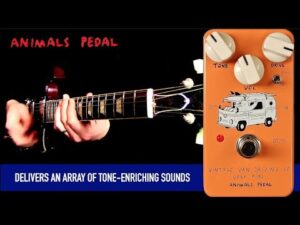
- Animals Pedal Vintage Van Driving is Very Fun Overdrive
- Animals Pedal Sunday Afternoon Is Infinity Bender
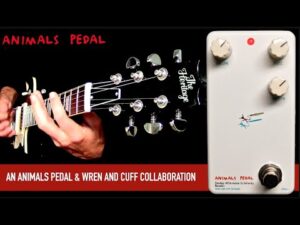
- Ninevolt Pedals | Bath Time Reverb (Animals Pedal)
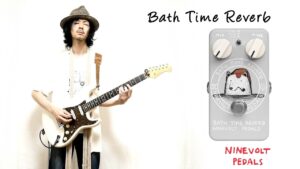
- This Fuzz Pedal Makes No Sense… But It Sounds Incredible

- ANIME Pedals | Animals Pedal Custom Illustrated Series