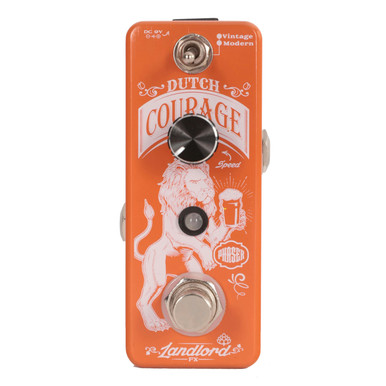
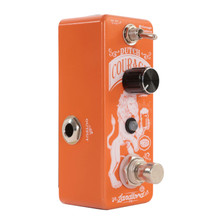
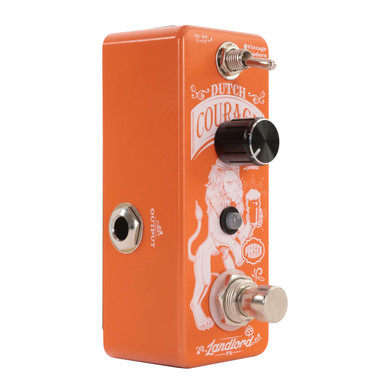
Landlord FX Dutch Courage Phaser Pedal

£29.99

The washy, spellbinding sound of a phaser pedal can add depth and intrigue to any guitar part. Think Eddie Van Halen, Tom Morello, Mike Einziger, or any ’90s guitarist in an alt-rock shoegaze band! And if you want a small, flexible phaser pedal that won’t break the bank, then the Landlord FX Dutch Courage is […]


Description

The washy, spellbinding sound of a phaser pedal can add depth and intrigue to any guitar part. Think Eddie Van Halen, Tom Morello, Mike Einziger, or any ’90s guitarist in an alt-rock shoegaze band! And if you want a small, flexible phaser pedal that won’t break the bank, then the Landlord FX Dutch Courage is probably the best option that you should consider!

Vintage & Modern Modes

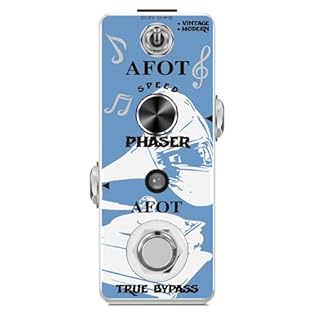
Offering two distinct phaser modes via an easy-to-access toggle switch, the Landlord FX Dutch Courage already goes beyond many existing phaser pedals that cost twice the price or even more. The Vintage mode achieves a warm, old-school sound akin to an iconic ’70s phaser unit, while the Modern setting provides a more contemporary, full-bodied tone with greater dimension.

Easy To Add To Your Setup

The Landlord FX Dutch Courage’s ultra-compact footprint makes it easy to fit the stompbox into any vacant crevice on your pedalboard! And while it doesn’t take batteries, its 9V power requirements and low current draw allow you to power the Dutch Courage from practically any standard pedal PSU.

Specifications

  • Bypass: True Bypass
  • Controls: Speed
  • Modes: Vintage, Modern
  • Input Impedance: 470k Ohms
  • Output Impedance: 10k Ohms
  • Current Draw: 13mA
  • Power Supply: 9V DC (Centre Negative)
  • Dimensions: 95mm (D) x 45mm (W) 48mm (H)
  • Weight: 240g

This pedal will not work with a 9V battery, and requires a 9V DC power supply (not included).
Brand

Landlord

Category

Landlord

Tags

Phaser

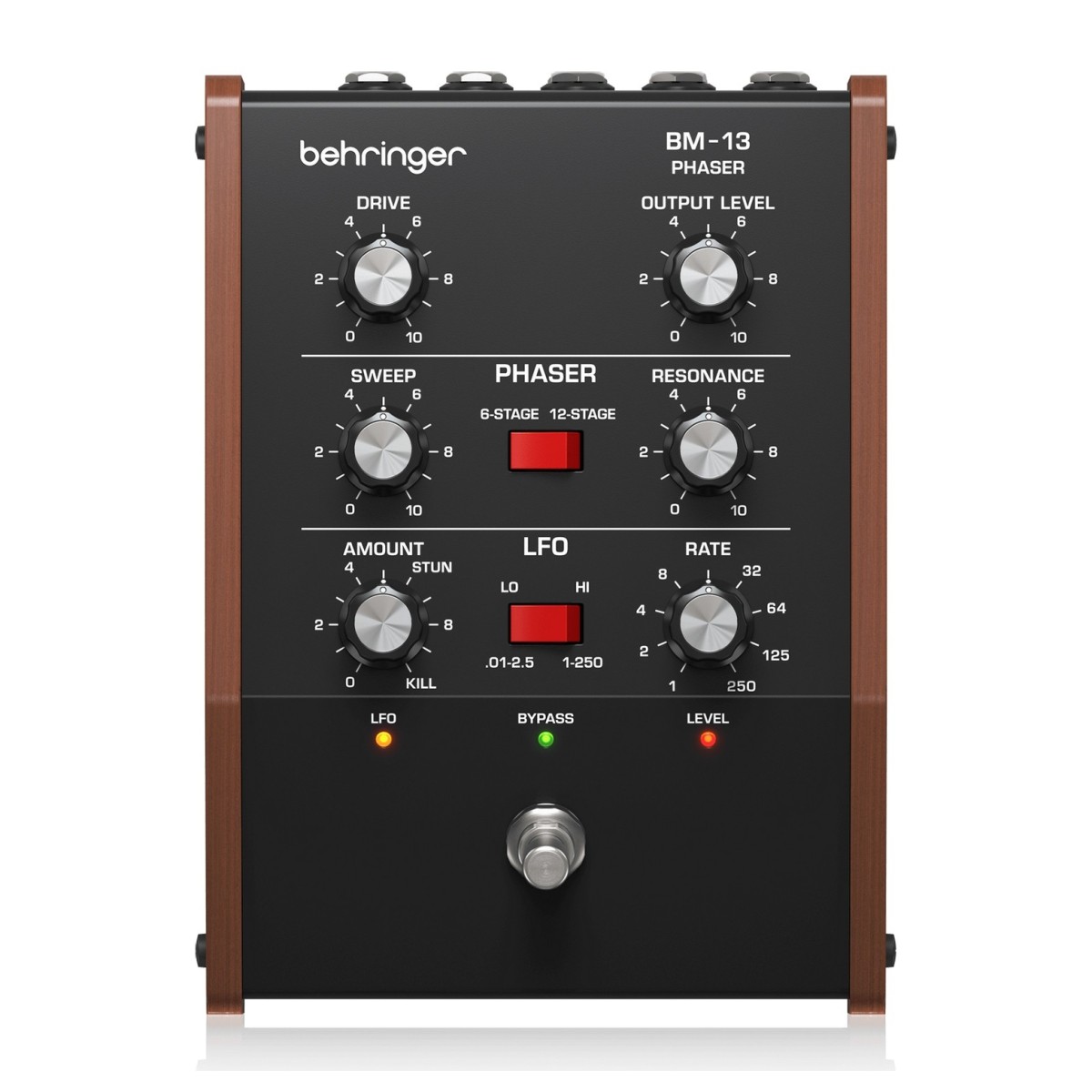
A phaser is a type of guitar effects pedal that creates a swirling, sweeping sound by modulating the phase of the audio signal. It works by splitting the incoming signal into two paths, shifting the phase of one path, and then recombining them. This creates peaks and troughs in the frequency spectrum, resulting in a distinctive, “phasing” effect characterized by moving notches in the frequency response.

Here’s how a phaser pedal typically works and some common features:

1. **Rate**: The rate control adjusts the speed at which the phase-shifting effect oscillates. Increasing the rate produces faster modulation, creating a more pronounced swirling effect, while decreasing the rate slows down the modulation for a smoother, more subtle effect.

2. **Depth**: The depth control adjusts the intensity or depth of the phase-shifting effect. Higher depth settings result in more pronounced peaks and troughs in the frequency response, while lower settings produce a more subtle modulation.

3. **Feedback (or Regeneration)**: Some phaser pedals feature a feedback control that determines the amount of modulated signal fed back into the effect. Increasing the feedback creates more pronounced peaks and troughs in the frequency spectrum, resulting in a more intense and resonant phasing effect.

4. **Stages**: Phasers typically have multiple stages (usually four, six, or eight), each of which contributes to the overall phase-shifting effect. More stages generally result in a more complex and textured phasing sound.

5. **Sweep (or Manual)**: The sweep control adjusts the center frequency of the phase-shifting effect. This allows you to focus the phasing effect on specific frequency ranges, altering the tonal character of the modulation.

6. **Resonance (or Feedback)**: Some phaser pedals feature a resonance control that emphasizes the peaks and troughs in the frequency response, creating a more pronounced and resonant effect. This control can add richness and depth to the phasing sound.

Phaser pedals are commonly used in various music genres, including rock, funk, and psychedelic music, to add movement, depth, and texture to guitar tones. They can be used to create swirling, swirling effects on rhythm parts, add dynamics to lead lines, or create atmospheric textures for ambient music. Overall, phaser pedals offer guitarists a versatile tool for shaping their tone and adding expressive modulation effects to their playing.

Phaser Pedals