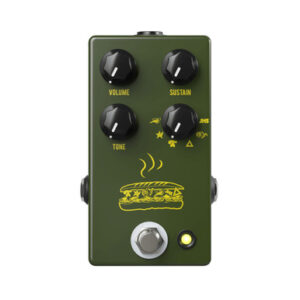
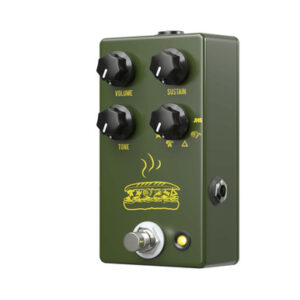

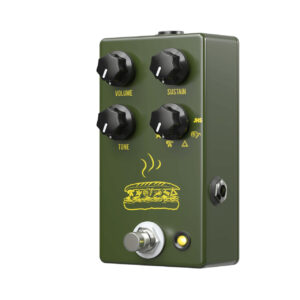
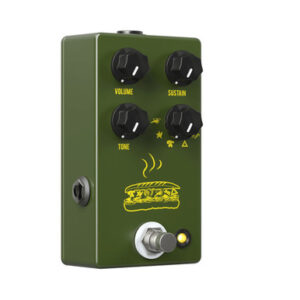
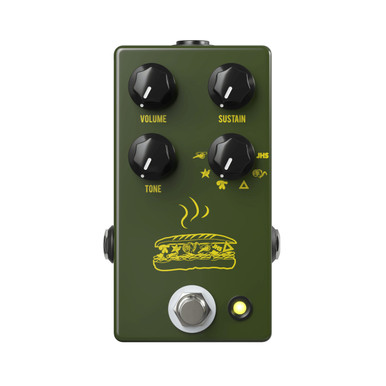
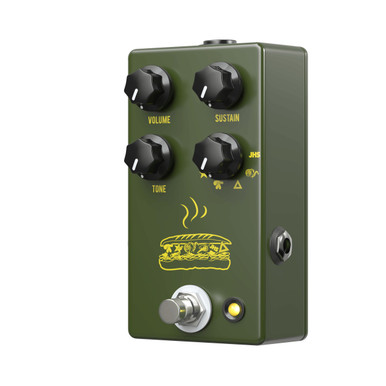
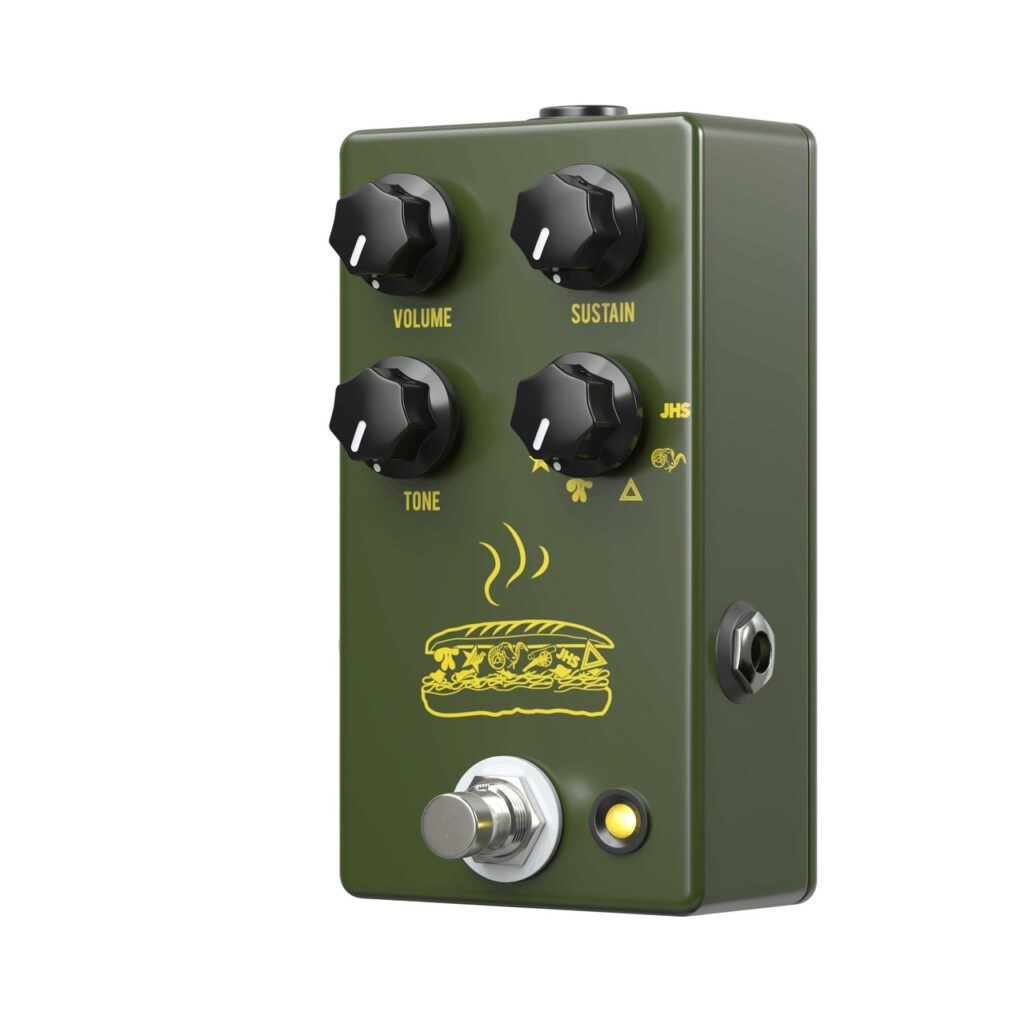
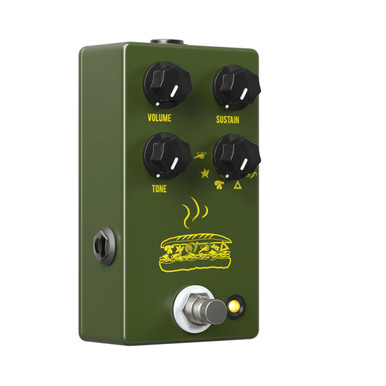
The Big Muff has been around since the 60’s and has inspired countless different guitarists throughout the years. One of the biggest questions when looking for one of these legendary fuzzes is “Which one do I go for?” Now you no longer need to choose between a myriad of different versions when you have the JHS Muffuletta delivering them all at once.
New for 2021, the JHS Muffuletta has been refinished in a cool Army Green livery. Everything else remains the same as on the previous model so don’t worry, you’ll still find all the same tones you know and love!
Analogue Circuits
There are of course digital pedals that claim to have all the fuzz sounds you will ever need. They never react or respond like a real big muff circuit though. Knowing this, JHS fought to fit six completely analogue fuzz circuits all in one pedal. With this you get the real response and tone you have been hunting for.
6 Modes
If you wanted to get each of these circuits individually not only would it take a lot of time but it would also cost an incredible amount of money due to the rarity of some models. The JHS matches 5 classic Big Muff circuits part for part, value for value so you get the same tone as the legends that used them before.
Ranging from beautifully bright and tight fuzzes to glitchy wonders, JHS have gone through all of the best versions of this circuit throughout history.
- The Civil War – Midrange heave with a bright tone. relatively low gain in comparison
- The Pi – The best known big muff circuit. Very aggressive and tight.
- ’73 Rams Head – Lower gain with a darker tone. Scooped midrange.
- The Triangle – Very articulate with a lot of low end punch.
- The Russian – Not very clear and without much low end.
- JHS 2015 – Much more powerful with less compression and a tonne of midrange. The best option for bassists.
The Controls
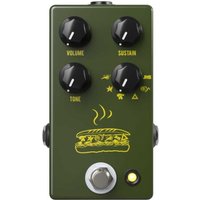
Big Muff fuzzes always had 3 controls. Volume, Sustain and Tone. The tone controls however were normally really shoddy with either a shallow range overall or only sounded good in one position. JHS wanted to avoid this issue so they went hunting and found an old Russian Big Muff that had a really smooth tone taper. This means a more usable tone control on all of the circuits in this pedal. Every spot on this tone control has a use.