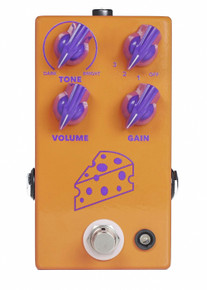
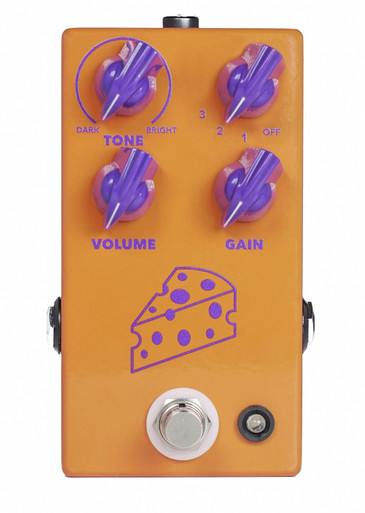
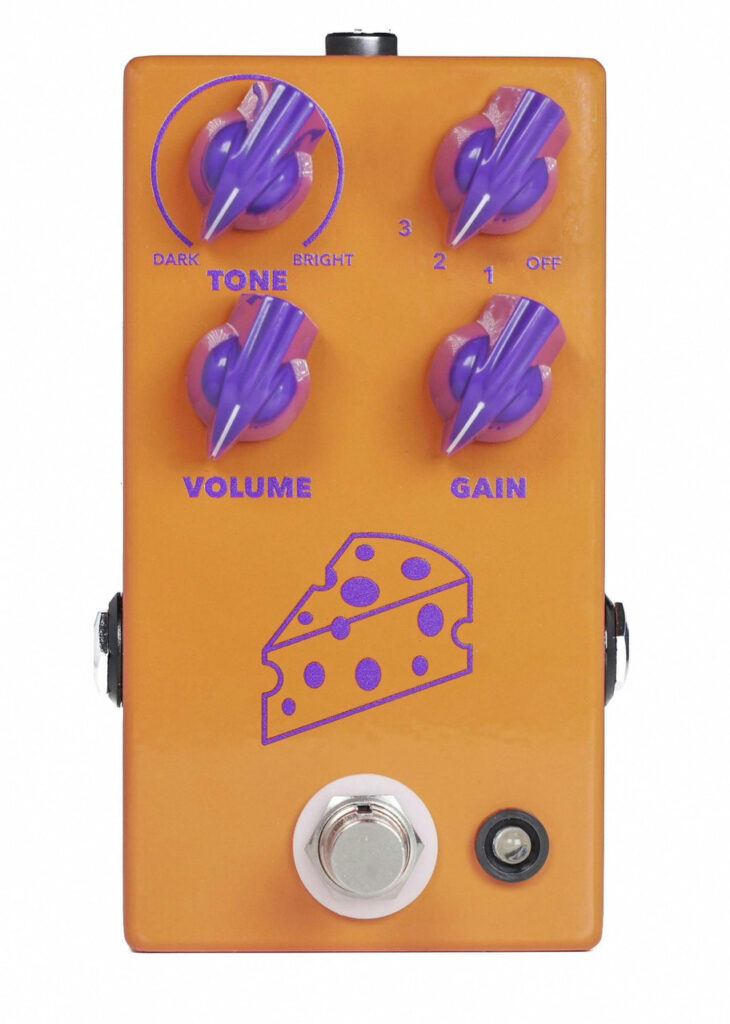
JHS Pedals Cheese Ball Fuzz/Distortion

£149.99

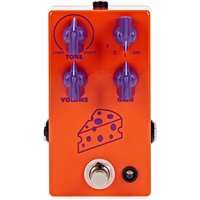
This is a New JHS Pedals Cheese Ball Fuzz/Distortion from JHS Pedals is in our Distortion Pedals category on Just Pedals. Read More below.

View Just
more
and

You’d feta brielieve it. The JHS Cheese Ball is a (fr)homage to the legendary 1990s Lovetone Big Cheese. That means big, raspy, grated fuzzy distortion in the bucketloads. The Cheese Ball is the answer to all the much of a muchness recycled fuzz sounds.

That original tone was the cornerstone of alternative, indie and shoegaze guitar tone. Jimmy Page, The Edge, Radiohead, My Bloody Valentine and Wilco were all massive advocates of the Big Cheese.

Sounds

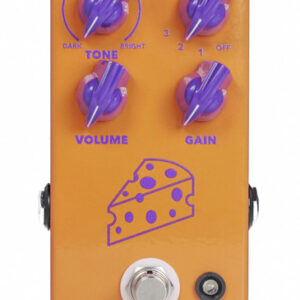
It’s incredibly easy to get a great sound out the Cheese Ball. First off is the mode selector dial, which switches you between four unique tones.

In the ‘off’ position, the Cheese Ball is a bright and dirty delight, bridging both fuzz and distortion. Position 1 scoops the mids in a wide frequency Big Muff style. Position 2 boosts the mids for a stronger cut. Last but not least, position 3 is a far from mature heavily gated, gritty affair, which deliver in exploding spits and spurts.

From there, it’s up to you how you customise your sound using the dark-to-bright tone knob, sensitive gain control and volume level.
Related videos

Brand

JHS Pedals

JHS Pedals grew from Josh Scott’s pedal-modification work in 2007 into a Kansas City effects maker. Scott’s first original designs followed in 2008; the Morning Glory began as his reinvention of the Marshall Bluesbreaker. The JustPedals catalogue carries the Morning Glory V4 and Muffuletta, along with practical tools such as the Little Black Buffer, Buffered Splitter and Little Black Amp Box. JHS describes its guitar pedals as made in Kansas City, USA. The range mixes original drive and fuzz designs with utility pedals, so the current listings show more than a single “boutique overdrive” identity.

Category

Distortion Pedals

Distortion clips the waveform more firmly than overdrive, generating dense upper harmonics, longer sustain and a more compressed response. Circuit topology and filtering decide whether the sound is tight and focused, broad and aggressive, smooth or deliberately abrasive. Gain sets the amount of clipping, while pre- and post-distortion tone controls strongly influence low-end definition, midrange presence and high-frequency texture.

Tags

Fuzz

Pushes the signal into extreme clipping, often approaching a square wave and producing dense harmonics. Transistor type, bias, input loading and filtering govern whether the texture is smooth, woolly, gated, spluttering, octave-rich or highly responsive to the instrument volume.