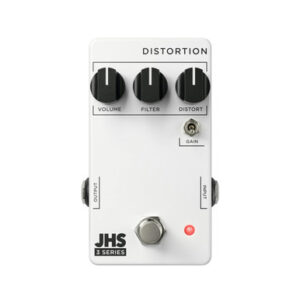
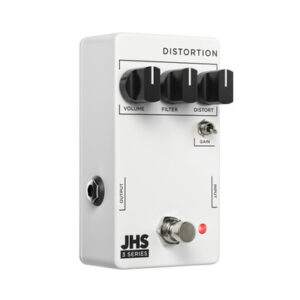
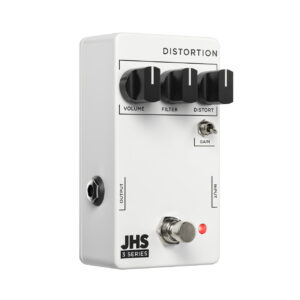
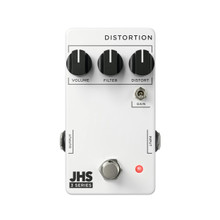
JHS 3 Series Distortion Pedal

£89.99

This is a New JHS 3 Series Distortion Pedal from JHS Pedals is in our Distortion Pedals category on Just Pedals. Read More below.

View Just
more
and

JHS Pedals are renowned for tonal excellence. Their premium stompboxes are packed full of gizmos galore and options aplenty – but they’ve taken a very different approach with the 3 Series Distortion. These affordable effects have been stripped back for pure, unadulterated JHS tone suited to both beginners and pros alike.

Raw JHS Pedals tone

Gone are the array of dials found throughout the standard JHS pedal line-up. What you’re getting here is a refined, quality sound thanks to high-end electronic components and meticulous attention to detail from the Kansas City company. This is the ultimate plug-and-play pedal.

Sound

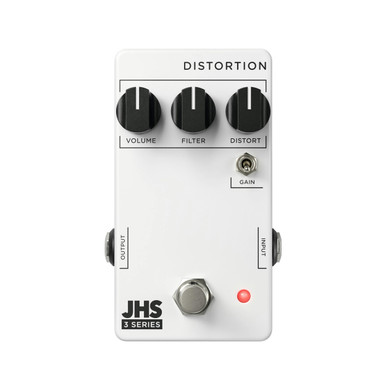
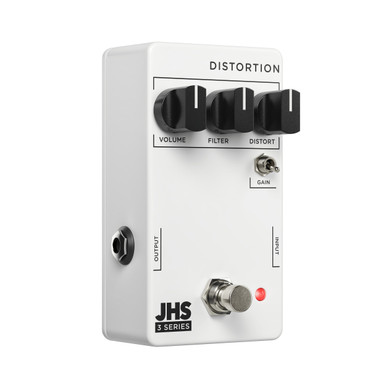
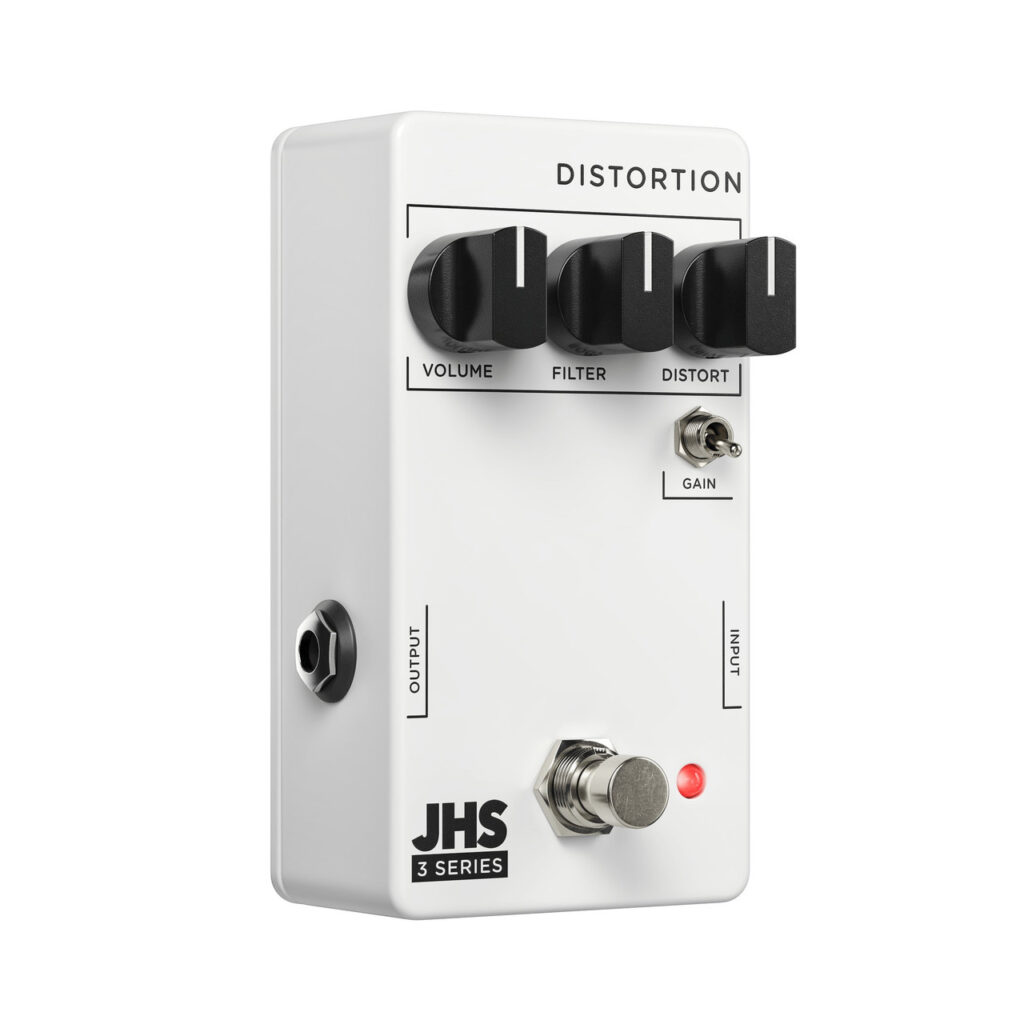
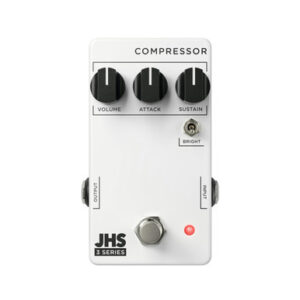
Distortion and drive are firmly in JHS’ wheelhouse – the 3 Series Distortion being no exception. Crammed into the analogue pedal are a host of medium gain crunch tones, thick overdrive, distortion, and even some fuzzy goodness. You get a lot out of the three volume, filter and distort controls. Filter is like a one-knob EQ, setting the treble attack when turned up or darker character reduced.

Unique to the Series 3 Distortion is a gain voicing toggle, which changes how the effect reacts to your playing.
Related videos

Brand

JHS Pedals

JHS Pedals grew from Josh Scott’s pedal-modification work in 2007 into a Kansas City effects maker. Scott’s first original designs followed in 2008; the Morning Glory began as his reinvention of the Marshall Bluesbreaker. The JustPedals catalogue carries the Morning Glory V4 and Muffuletta, along with practical tools such as the Little Black Buffer, Buffered Splitter and Little Black Amp Box. JHS describes its guitar pedals as made in Kansas City, USA. The range mixes original drive and fuzz designs with utility pedals, so the current listings show more than a single “boutique overdrive” identity.

Category

Distortion Pedals

Distortion clips the waveform more firmly than overdrive, generating dense upper harmonics, longer sustain and a more compressed response. Circuit topology and filtering decide whether the sound is tight and focused, broad and aggressive, smooth or deliberately abrasive. Gain sets the amount of clipping, while pre- and post-distortion tone controls strongly influence low-end definition, midrange presence and high-frequency texture.

Tags

Analogue

The signal is shaped by continuously varying electronic circuitry rather than being converted into a digital effect algorithm. Component choice, operating voltage and circuit tolerances influence headroom, noise, clipping texture and the small variations in response between designs.