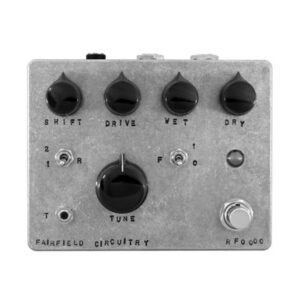
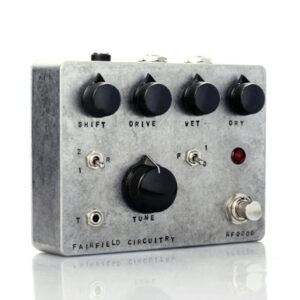

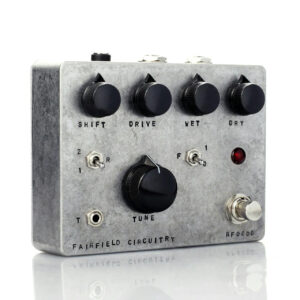
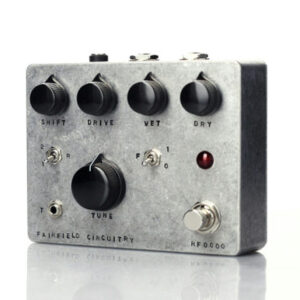
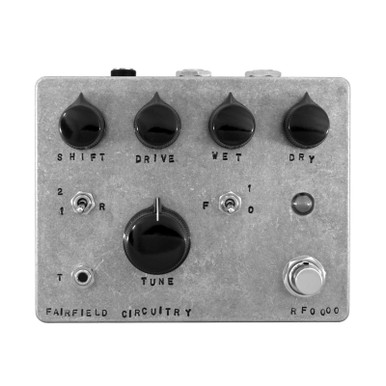
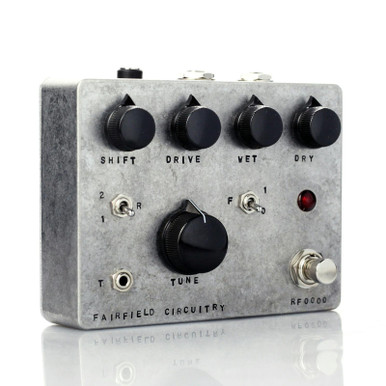
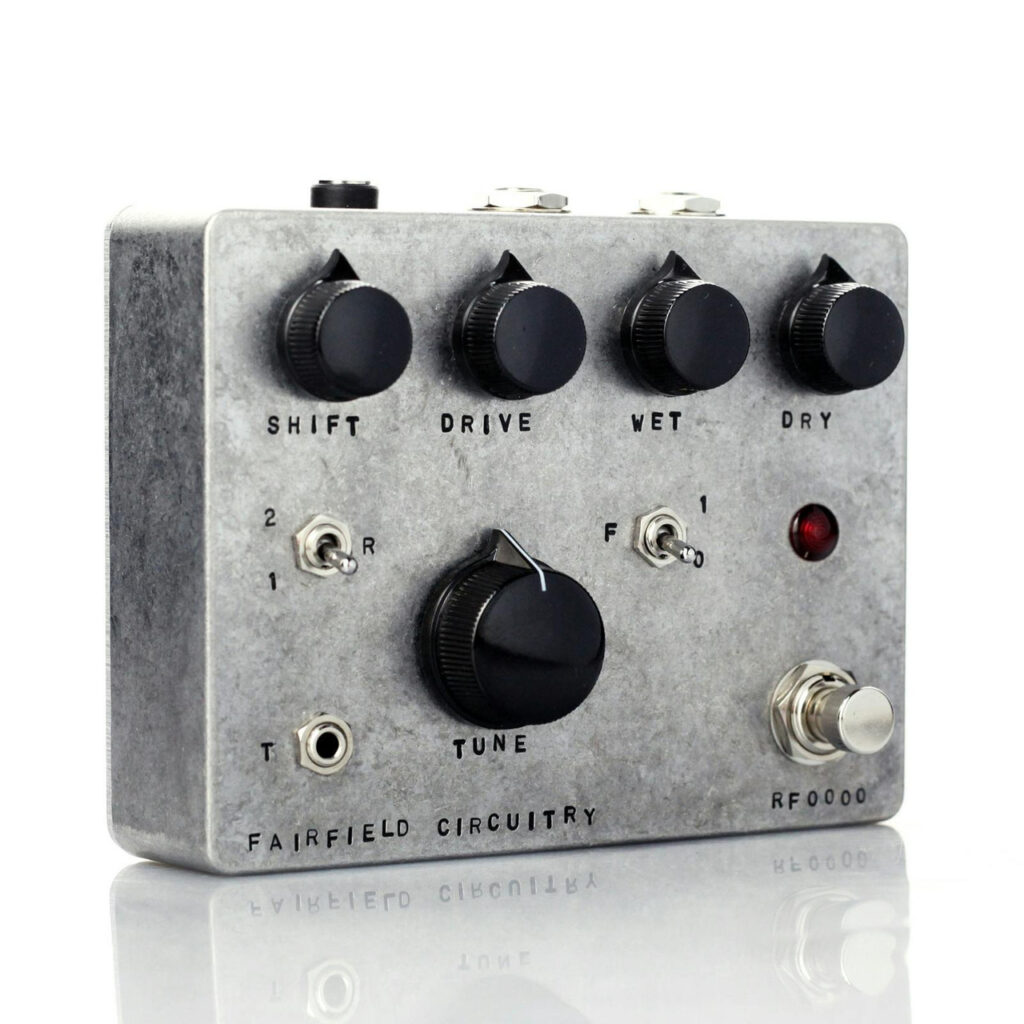
The Fairfield Circuitry Roger That is a unique signal degradation device that (at least in terms of guitar) lives somewhere between distortion, fuzz, and the crackling white noise static of an old transistor radio! It can be tuned for subtle artifacts, extreme textures, or anything in between, and produces compelling results with virtually any input signal.
Its Shift and Tune controls are mutually dependent and highly interactive — tune is like the dial on a radio receiver, sweeping through a wide spectrum of possible sounds (this can be controlled remotely via CV). Shift alters the accuracy of tracking for the incoming modulated signal. The extreme sensitivity and interactivity of these controls makes the Fairfield Roger That a playground for sonic deviance.
Controls
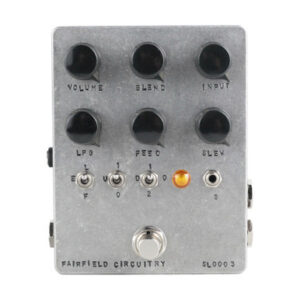
- Tune: Like turning the dial on your receiver, the Tune parameter sweeps through a wide variety of sounds. From subtle artifacts, to extreme textures, noise and distortion. Summed with CV at T input.
- Shift: Shifts the accuracy of tracking the incoming modulated signal. Sometimes acts as a filter. Highly dependent on Tune.
- Drive: Controls the input level, from clean to dirty. Pushing the Drive control generates extreme non-linearities from the modulator/demodulator circuit. Affects both the wet and dry signals.
- Wet Amount of wet signal at the output.
- Dry: Amount of dry signal at the output.
- R: Preset range of the Tune parameter: 1 – Normal, 2 – Extended
- F: Apply voice filter ~(300Hz-3kHz) to wet signal: 0 – Filter Off , 1 – Filter On
Notes on Interactivity
- The Tune, Shift, Drive and Range controls are highly interactive.
- The higher the Drive, the more artifacts will be generated.
- Tune is probably the widest, most non-linear, finest control ever included in Fairlfield Circuitry products. Micro adjustments here will drastically change the result of the demodulation.
- Tune and Shift are mutually dependant, almost like they are the same control. By tweaking both, it almost seems like there is endless varieties of sounds.
- The Range switch shifts the whole palette of possibilities.
- Wet signal path is intentionally out of phase allowing for special interactivity between Wet, Dry and Filter.
- If the original signal is still present on the wet side, adding dry signal will cancel it out leaving only the distortion artifacts.
- If voice filter is activated in these same conditions, the result is a kind of mid-scoop instead of the usual bandpass.
Key Features
- JFET preamp
- CV on Tune
- RFI/EMI approximator
- FM/AM radio quality reducer
- Volatile and unpredictable distortion
- Noise, pop, crackle and squeal generator
- True bypass
Specifications
- Input Impedance: 1MΩ
- Output Impedance: 1kΩ
- Voltage: 9V DC 2.1mm centre-negative tip, >30 mA
- Current Draw: 30mA at 9.6V DC
- Dimensions: 4.7" x 3.8" x 1.9"