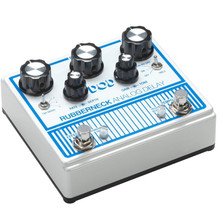
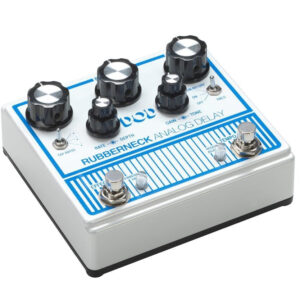
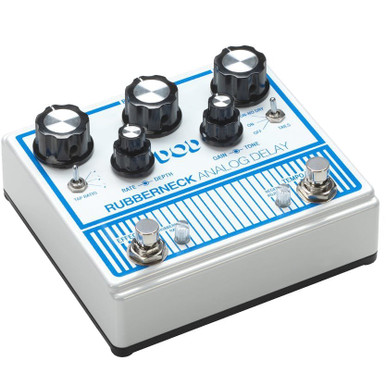
DOD Rubberneck Analogue Delay Pedal

£299.00

This is the DOD Rubberneck Analogue Delay Pedal from DOD, listed in Delay Pedals on Just Pedals. Read More below.

View Just
more
and ,

The Rubberneck will ease your delay cravings with over a second of pure analogue repeats.

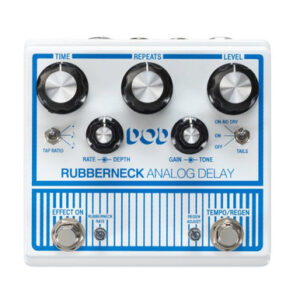
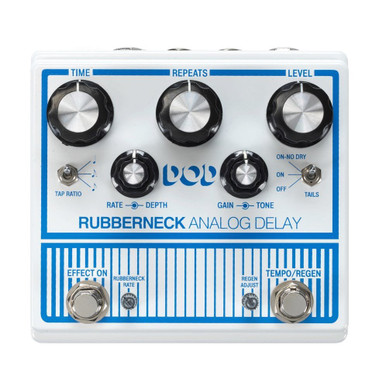
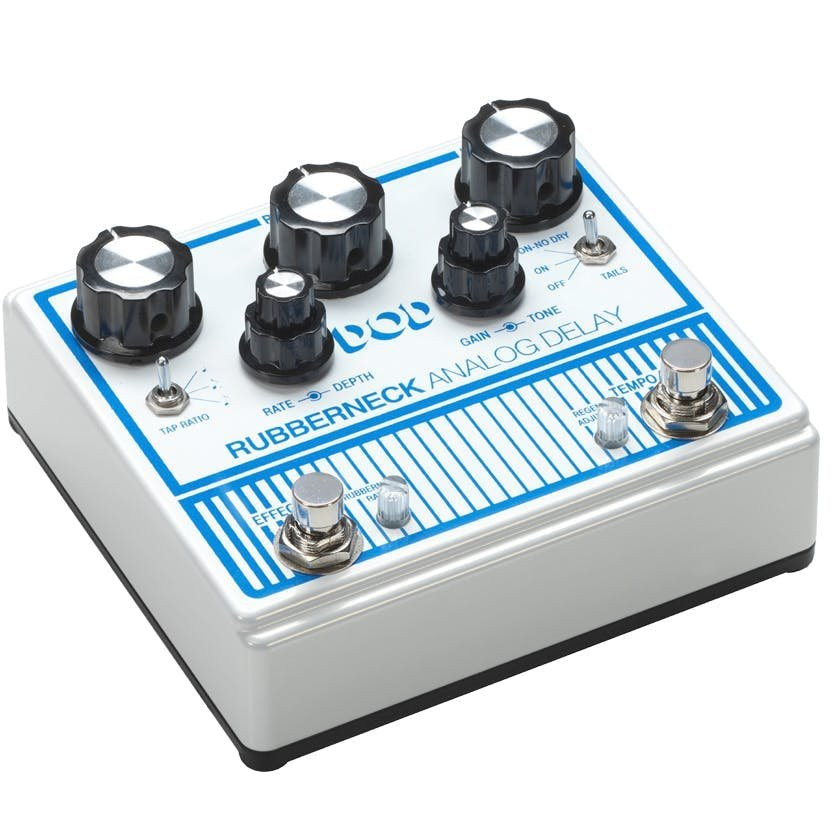
There’s bags of control here with individual knobs for Modulation Rate and Depth as well as Gain and Tone of the delay.

With two footswitches, you can access features like tap-tempo, customisable memory control of oscillation and momentary control of the dizzying pitch sweep of “Rubbernecking.”

Here’s what DOD say about the Rubberneck Analogue Delay Pedal

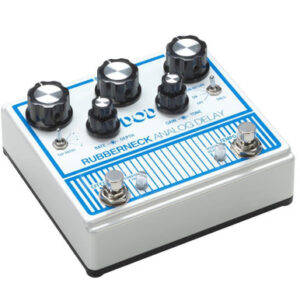
The new DOD Rubberneck Analogue Delay has double the features with the cool new double-wide chassis. The Rubberneck boasts over a second of the warm and musical 100% analogue repeats you crave, along with tap-tempo, subdivisions, and tails. Double concentric knobs give you independent control of the Modulation Rate and Depth as well as Gain and Tone of the delay.

Double footswitches allow for unique extended features like user customisable momentary control of oscillation and momentary control of the dizzying pitch sweep of “Rubbernecking.” These extended features are controlled by individual clear mini knobs that double as multi-colour LED status indicators. Feedback loop send/return, remote footswitch control, true bypass, and rugged metal construction, make the Rubberneck Analogue Delay the must have delay of the year.

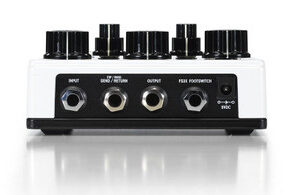
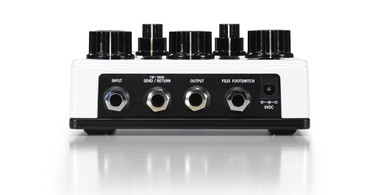
The Rubberneck also has jacks to allow FS3X 3-button remote foot switching, and a send and return so you can add external effects to the delay path.
The DOD Rubberneck uses a 9VDC power supply to easily integrate into your existing pedalboard.

Key Features

  • Over 1 Second of 100% Analog Delay with Tap Tempo
  • Modulation, Gain, and Tone controls for Shaping Delay
  • “Rubbernecking” Time stretching and Regen Adjust performance controls
  • Loop Send/Return
  • Tap Tempo Ratio Control
  • FS3X Footswitch Input
  • True Bypass

Related videos

Brand

DOD

DOD, or Digitech/DOD Electronics, is a renowned brand in the world of audio electronics, particularly known for its effects pedals for guitars and basses. The company was founded in 1973 by David Oreste Di Francesco and John Johnson, hence the acronym DOD. Initially focusing on guitar effects pedals, DOD gained prominence with its innovative designs and affordable yet high-quality products.

Throughout its history, DOD has produced a wide range of effects pedals, including overdrive/distortion pedals, delay units, chorus and flanger pedals, and more. Their pedals often feature robust construction, simple yet effective controls, and distinctive sound characteristics. Classics like the DOD Overdrive/Preamp 250 and the DOD Stereo Chorus have become staples on pedalboards of musicians across various genres.

In 1984, DOD was acquired by Harman International Industries, which also owned other prominent audio brands like AKG, JBL, and Lexicon. Under Harman’s ownership, DOD continued to innovate and release new pedals while maintaining its reputation for providing high-quality effects at accessible prices. Though there have been shifts in ownership and product lines over the years, DOD pedals remain highly regarded by musicians seeking reliable and versatile effects for their performances and recordings.

Category

Delay Pedals

Delay records the incoming signal for a chosen interval and repeats it after the original note. Feedback returns repeats to the delay line, while tone, filtering, modulation and saturation determine whether echoes remain clear, darken progressively, wobble like tape or degrade like analogue bucket-brigade circuits. Delay time and rhythmic subdivisions govern the spacing and musical pattern of the repeats.

Tags

Analogue

The signal is shaped by continuously varying electronic circuitry rather than being converted into a digital effect algorithm. Component choice, operating voltage and circuit tolerances influence headroom, noise, clipping texture and the small variations in response between designs.

True Bypass

Connects input directly to output through mechanical or relay switching when the effect is off, removing the active circuit from the audio path. It avoids buffer colour but leaves cable capacitance and switching design to influence high-frequency loss and possible switching noise.