Brand
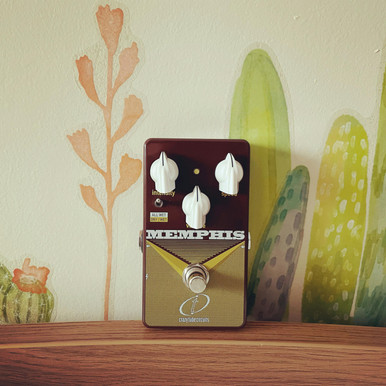
In the current JustPedals catalogue, Crazy Tube Circuits is represented by Overdrive Pedals, Tremolo & Vibrato Pedals and Multi-Effects Pedals. Current listings include Mirage JR Reverb, Time Digital Delay and Unobtanium Dual Overdrive. That makes the range relevant to players looking for drive, gain and clipping, plus time-based effects and ambience. Check each model for its exact circuit or processing platform, controls, power requirements and connections, particularly where the catalogue includes both pedals and supporting gear.
Category
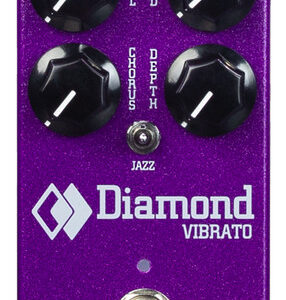
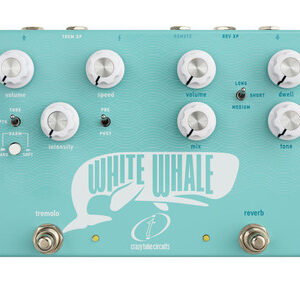
Tremolo varies amplitude, making volume rise and fall; vibrato varies pitch, making the note move sharp and flat. Some circuits combine both or derive them from modulation systems that blur the boundary. Rate, depth, waveform and stereo phase determine whether the motion is smooth, pulsing, choppy, seasick or spatial, while tap tempo can lock the cycle to a rhythm.
Tags
Voiced for the wider dynamics, strong transient detail and pickup characteristics of acoustic instruments. High input impedance, phase reversal, notch filtering and restrained processing help preserve body resonance while controlling piezo harshness and feedback. Balanced outputs may also carry the corrected signal directly to a mixer or interface.
The signal is shaped by continuously varying electronic circuitry rather than being converted into a digital effect algorithm. Component choice, operating voltage and circuit tolerances influence headroom, noise, clipping texture and the small variations in response between designs.
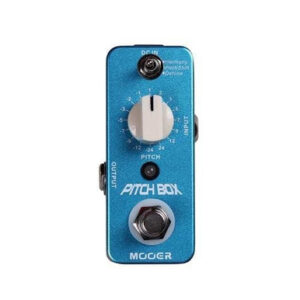
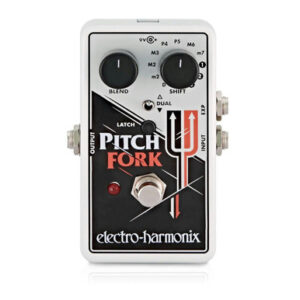
Moves the detected note to another interval or adds shifted voices alongside it. Tracking method, polyphonic capability, latency, scale awareness and formant handling determine whether the result follows chords naturally or produces a more synthetic, stepped character.
Processes, creates or passes two audio channels. True stereo preserves separate left and right inputs, while mono-to-stereo effects generate spatial differences internally; routing, phase behaviour and whether trails remain stereo determine the resulting image. Some outputs sum to mono when only one socket is connected, which can change level or modulation depth.