
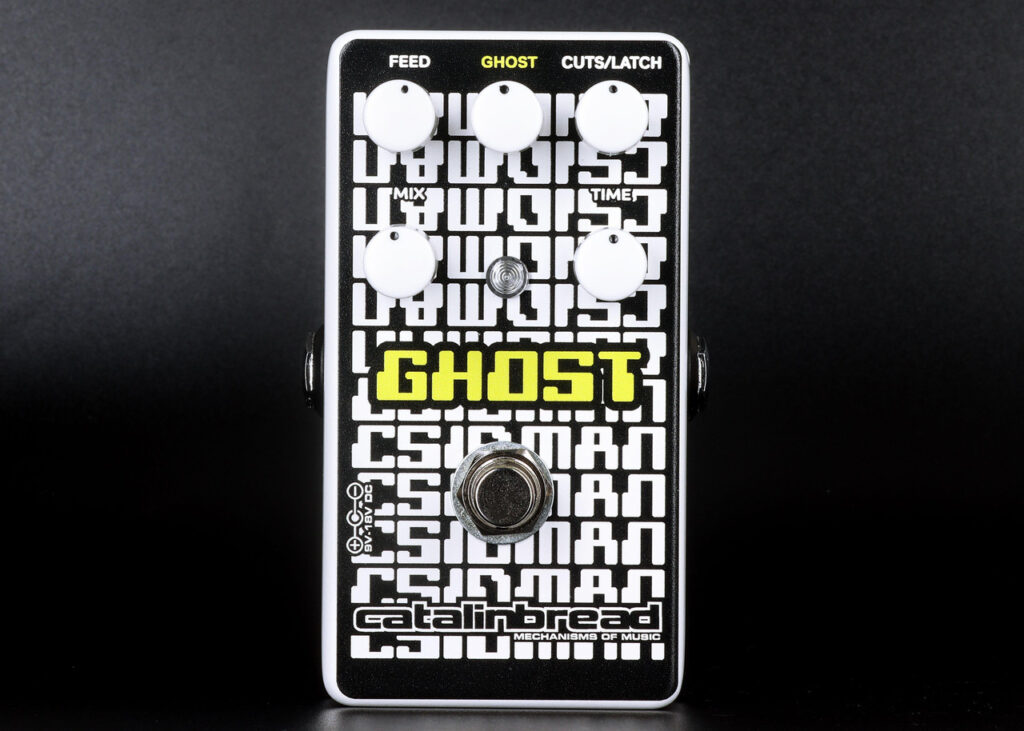
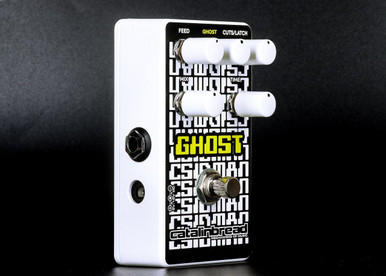
Here’s what Catalinbread say:
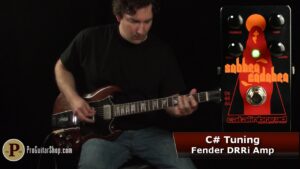
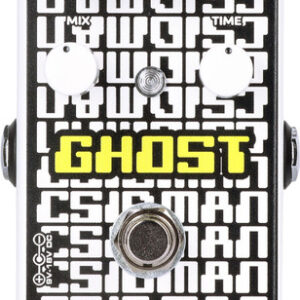
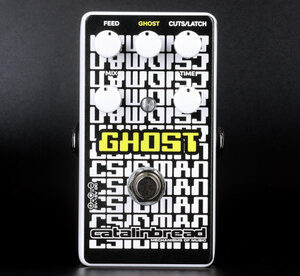
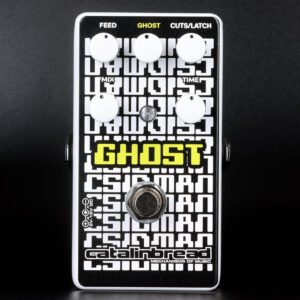
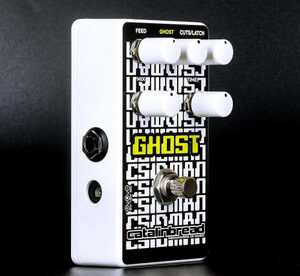
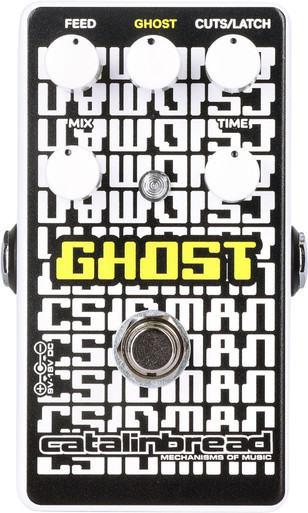
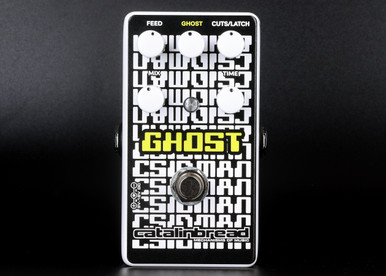
We locked it away in the vault, but the apparitions surrounding Catalinbread HQ have infiltrated that barrier and possessed our beloved CSIDMAN. While the original was long believed to be inhabited by spirits, we can tell you that it is not the case. However, the spirits communicated to us that the Latch and Cuts controls have been combined into one knob, and the new Ghost control introduces a sample rate reducer that infects the repeats for some truly spectral granular delay tones.
The first thing to keep in mind about the CSIDMAN is that it completely embraces and makes no apologies for the fact that it is digital (though it does have a 100% analog dry path). Digital is the CSIDMAN’s aesthetic: as a delay pedal, it strives to reproduce echoes as true to the input as possible without filtering. When you utilize its scratched-disc, stuttery, and glitchy behaviors, it is pseudo-random, yet gives you a certain amount of “control” over the randomness. We’ve taken the idea of your old skipping portable CD player and incorporated it into a digital delay pedal that not only does normal delay sounds (at CD quality;) but can also skip, stutter, and glitch just like your beloved old CD player.
Controls
- FEED: Controls the amount of feedback.
- MIX: Gives you control over the wet/dry balance from 100% wet to 100% dry.
- CUTS/LATCH: The Merkin is composed of three gain stages, and only the first two are governed by the Texture knob. This knob essentially functions as a mixer control between the first stage and the first and second stages combined. The output is then sent to the final stage, which is saturated by the chosen configuration. When this knob is set halfway, some mild phase cancellation can be heard (or not heard, as the case may be), delivering some extra vintage character.
- TIME: Controls the echo delay line’s delaytime up to 725mS.
Specifications
- Power Supply: You can power your CSIDMAN with any quality power supply designed for use with effects pedals. The output should be a negative-tip DC from 9 to 18 volts. The CSIDMAN does not run on batteries. If you want more volume, headroom, and percussive attack, try running an 18-volt power supply. A 9-volt power supply will have a slightly softer sound that saturates more easily.