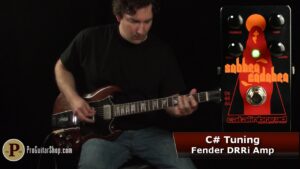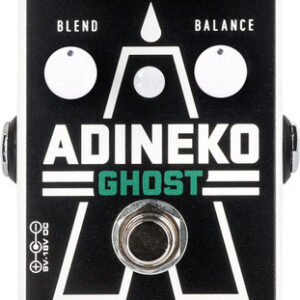

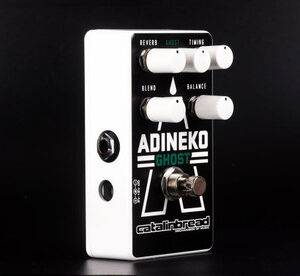
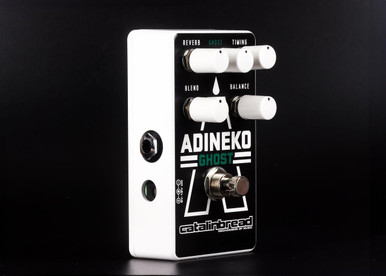
Catalinbread knows what type of spirits lurk within the hearts of ancient tonal devices. Where would modern day fuzzboxes be if not for the faulty tube in the console at Nashville’s Bradley Studios? Sometimes gear that is… disturbed… is the key to achieving fresh tones.
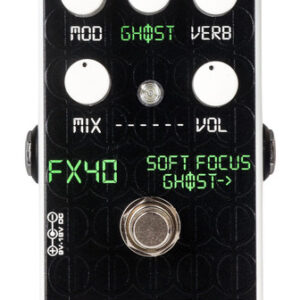
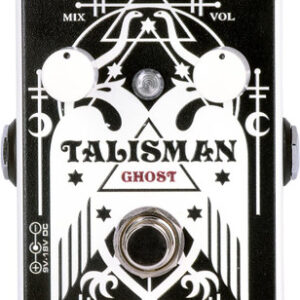
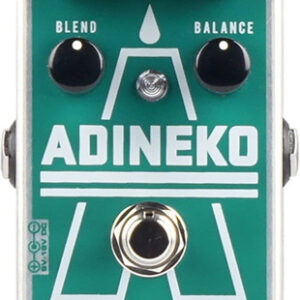
It is these strange possessions that led us to ghost hunting: The Adineko Ghost distills this spectral energy into our beloved Adineko circuit. Behold, as the new Ghost control introduces a densely-filtered octave section into the delay path, for just a touch of spooky modulation to full-on digital gaga that permeates your signal chain. With the Ghost control infecting both delay lines of the original Adineko, you can mix in your own blend of short and long delay on either end of the Balance control, or mix them right down the middle for a full supernatural experience with a healthy dose of the Ghost control.
If you opt to keep the Ghost at bay, the Adineko Ghost still delivers a killer oil-can delay just like the devices of yore.
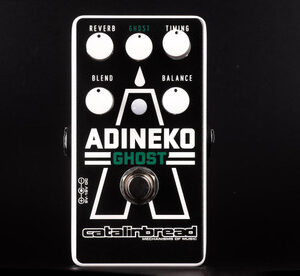
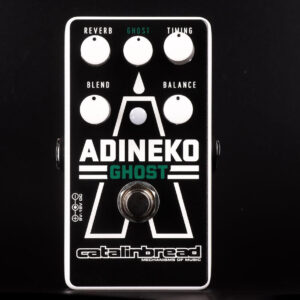
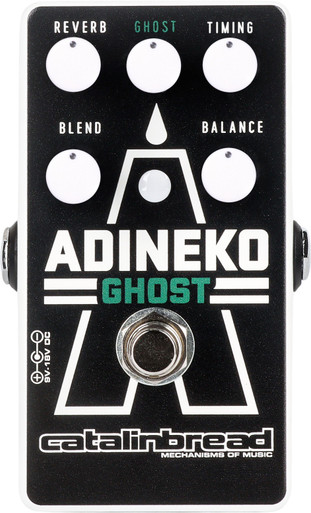
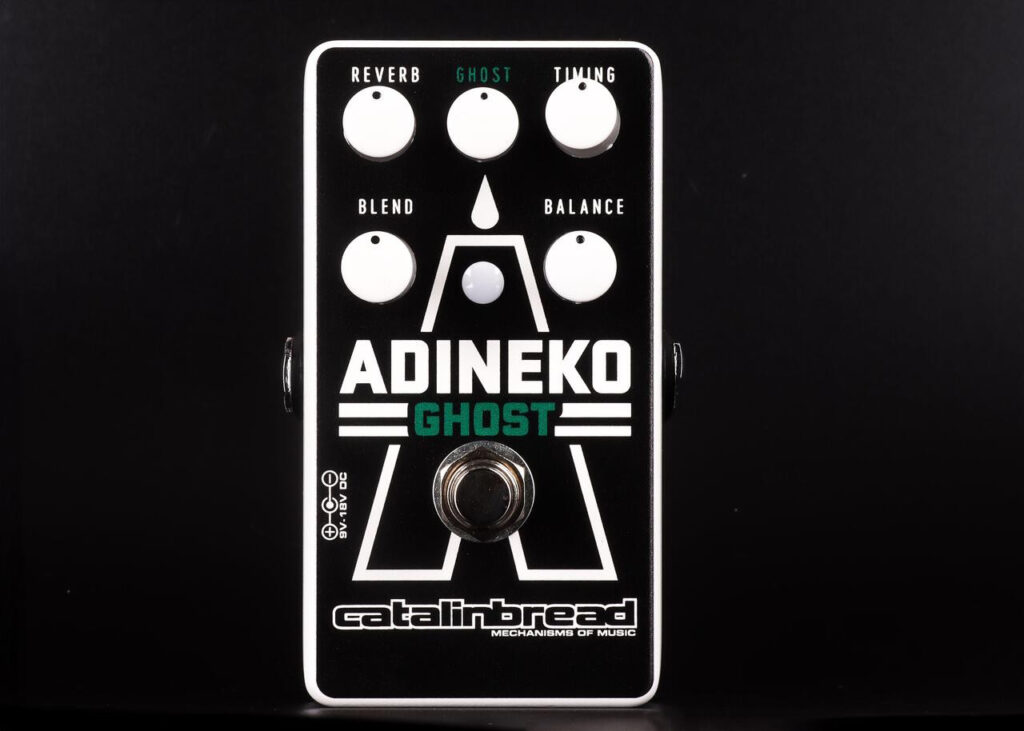
Controls
- REVERB: This knob is a feedback control that goes from zero feedback to wild, barely-in-control oscillations. Keep in mind that when dimed, this knob will self-oscillate.
- BLEND: This functions as a wet-dry mix between whichever sound is fed into the Adineko Ghost and the Ghost effect itself. This knob is the same in both the Adineko and Adineko Ghost.
- GHOST: This control possesses the original Adineko’s mod control, adding a heavily-filtered octave up signal into the delay line. “Ghost” is a mixing control; fully counter-clockwise has no effect, rolling this knob up to maximum yields unmistakably digital bleeps and bloops.
- TIMING: Adjusts the delay time from slapback delay to long delay times. This has not been modified from the original Adineko.
- BALANCE: The original Adineko utilizes two delay lines in parallel, with one a fraction behind the other. This control functions as a mix control between both lines, one slow, one fast. In the dead center, the lines are perfectly mixed. When this control is set fully counterclockwise, only the fast delay line is heard. When it is set fully clockwise, only the slow line is heard.
Specifications
- Power: The ADINEKO must be powered with center negative, regulated 9-18v DC external power supply.