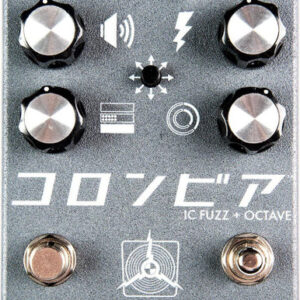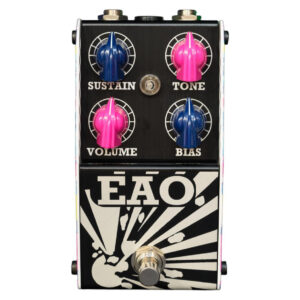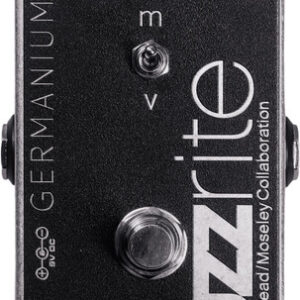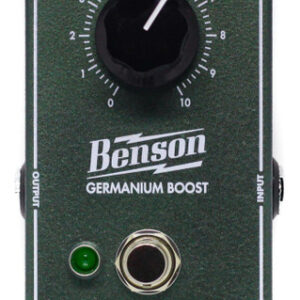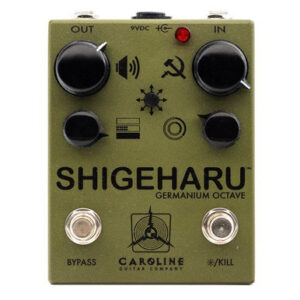
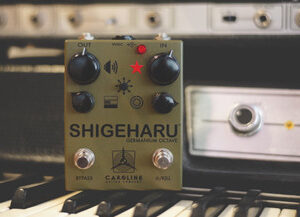

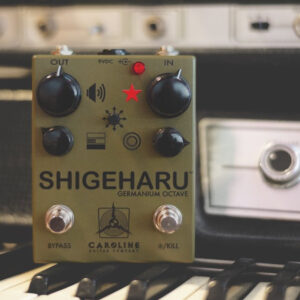
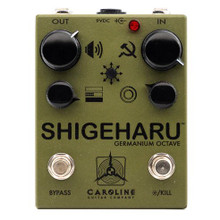
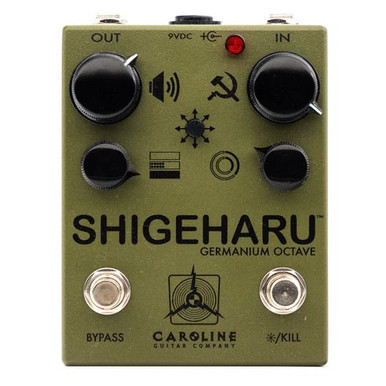
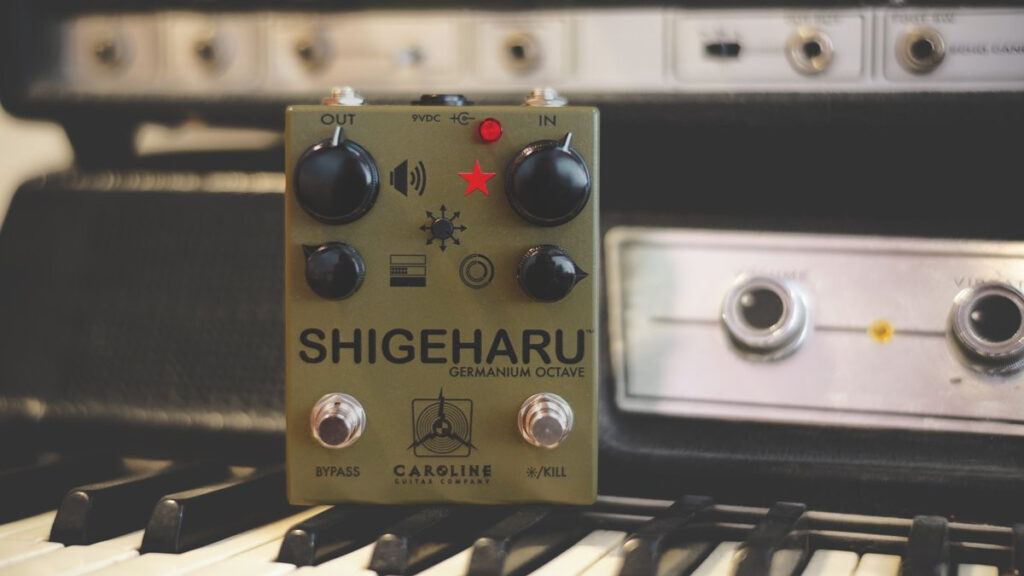
Man, we are REALLY pumped about these. This year, we’re going to be making some limited run variants of some of our existing faves, and we’re excited for this to take off with SHIGEHARU. This Army Green limited, germanium infused pedal is available in a limited batch of 100. We hope people dig it as much as we did. We had a BLAST recording the clips.
Now, while it would have been easy enough for us to say “voila! We have substituted these germanium parts for the perfectly functioning silicon ones for more ‘authentic’ tones. Now give us money as we ride this trend” that just would not have been good enough for us or for you.
So in addition to the parallel octave circuit of the Shigeharu getting a bit more of a *woody* texture and sound from some new old stock Soviet parts we used, we also tweaked each of the transistor gain stages to more closely resemble one of our old bubble-font Soviet era fuzzstortions in our reference lab.
The end result is still PLENTY of gain – I mean, good lord, you should know us by now, right? – but more wooly, a bit more low end, and a bit more bark and a little less bite than our standard Shigeharu. There’s still an incredible range of overdriven, distorted, and all out fuzzy sounds here and – while we still can! – these are hand-wired at our workshop in Columbia, S.C.