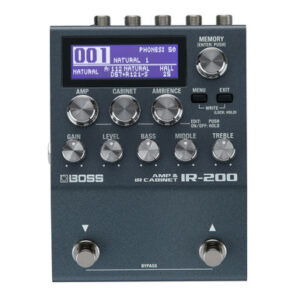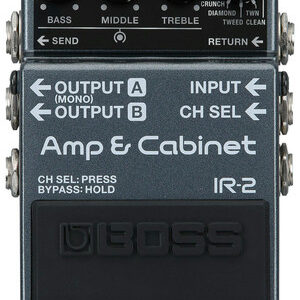
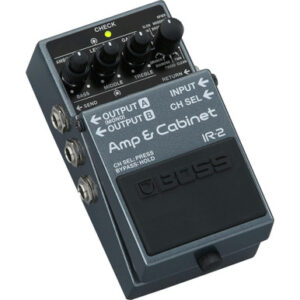
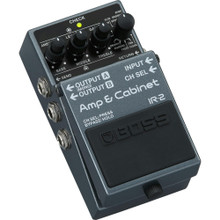

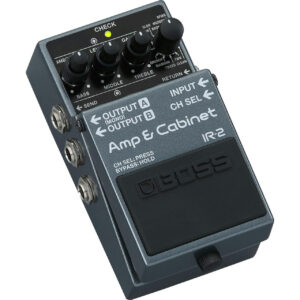
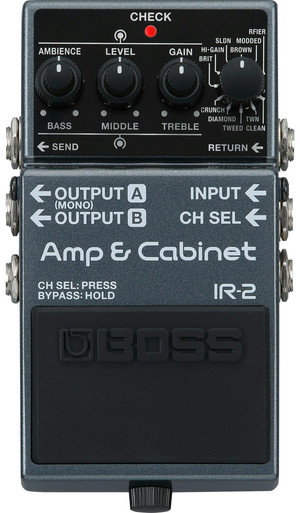
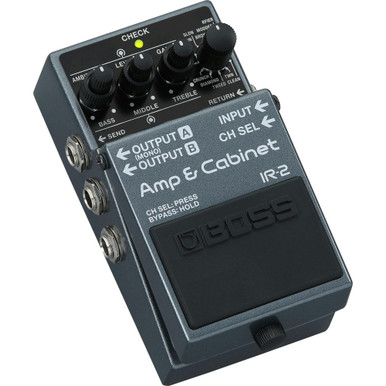
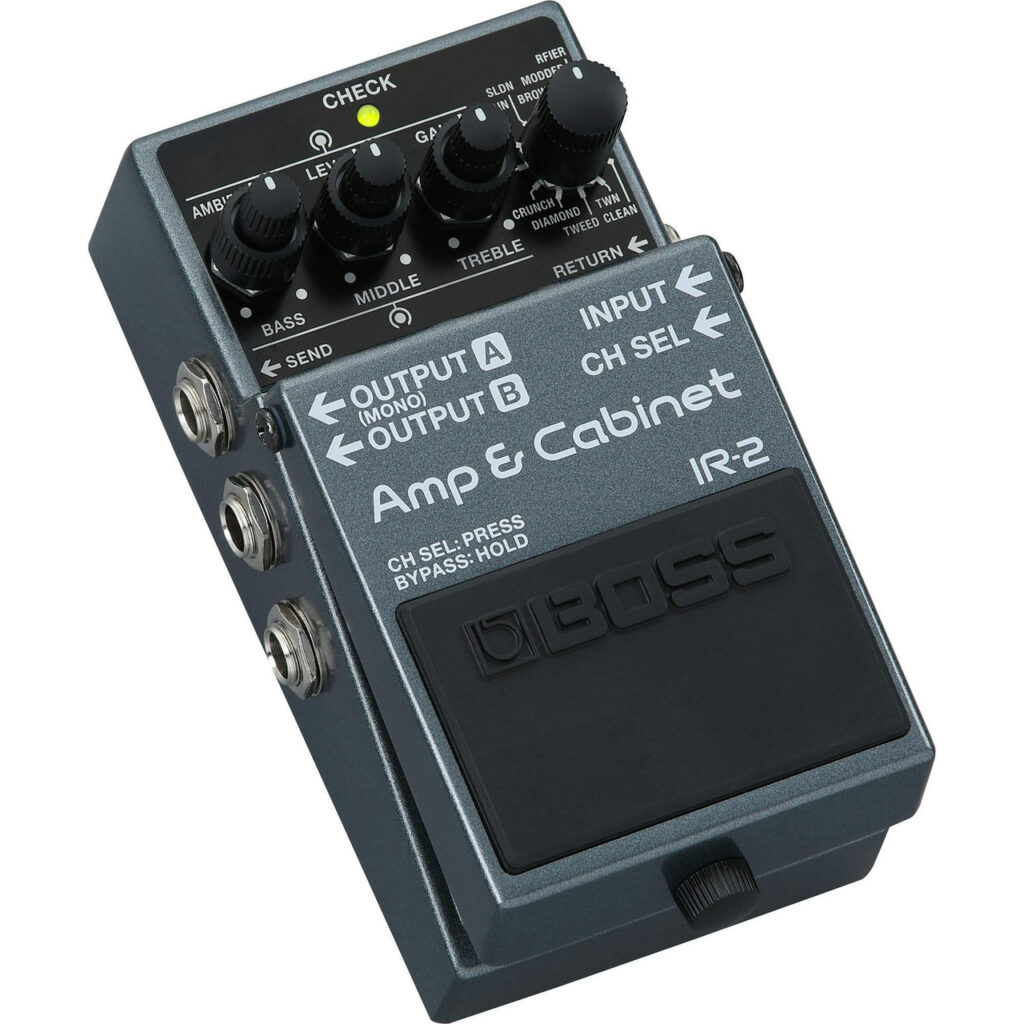
Boss have created a compact solution to give you a professional, direct, and instant solution to creating consistent sound with the IR-2 Amp and Cabinet Simulator pedal. Select between 11 premium amp types paired with a Celestion digital IRs along with the ability to tweak and alter each setting, giving you a versatile and expressive compact unit.
IR-2 Guitar Amp Cabinets
- Clean – BOSS original amp with a natural clean sound – 1×12” Celestion V-Type
- Twin – Fender Twin Reverb – 2×12” Celestion A-Type
- Tweed – 1959 Fender Bassman – 4×10” Celestion G10 Gold
- Diamond – Vox AC-30 – 2×12” Celestion Blue
- Crunch – BOSS original amp with high-clarity crunch tone – 2×12” Celestion G12-65
- Brit – Marshall 1959 Super Lead – 4×12” Celestion G12M-Heritage
- Hi–Gain – BOSS original amp with smooth well-defined gain sounds – 4×12” Celestion G12M Creamback
- SLDN – Soldano SLO-100 – 4×12” Celestion Vintage 30
- Brown – BOSS original high-gain amp derived from the Katana series – 4×12” Celestion G12M-Heritage
- Modded – BOSS original amp with extreme gain and high definition – 4×12” Celestion G12K-100
- RFIER – MESA/Boogie Dual Rectifier (Channel 2, Modern mode) – 4×12” Celestion Vintage 30
Plug in Anywhere
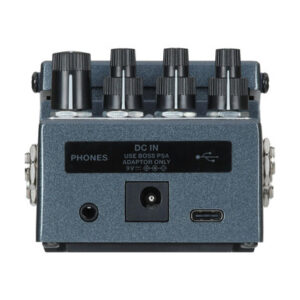
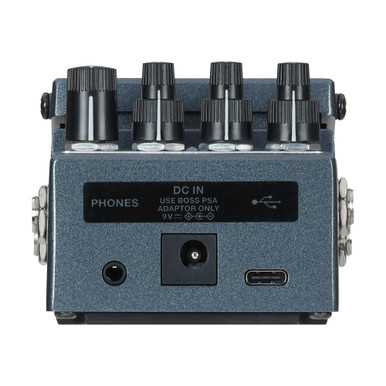
Using the mono/stereo loop for post amp effects, you can plug in headphones for quiet monitoring when practicing or into a PA system giving you a compact amp in a compact box rig/ Thanks to the USB-C you can easily plug into an interface with music software and load in you favourite IR cabs too for even more of a versatile and exciting experience.
Key Features
- 11 Premium IR Cabs – The exciting range of IR cabs setting with simulated Celestion speakers presents a fantastic and expansive tone for you to experiment and tweak.
- Compact Cabinet Rig – With everything you need in one compact pedal really packs a punch, giving you the ability to practice with just the pedal, a guitar, and headphones, you can’t go wrong. As well as the ability to load other IR cabinets via the USB-C into your interface.
- Integrate Your Pedalboard – The mono/stereo loop allows you to add extra effects like delay, modulation, and reverb after the amp emulation.
Specifications
- Power: 9V Battery (Included) or 9V DC PSU (Adapter Not Included)
- Dimensions: 73 (W) x 129 (D) x 59 (H) mm
- Weight: 0.45kg
Input/Output
- Mono/Stereo 1/4″ Jack x6
- Headphone Jack
- DC In
- USB-C