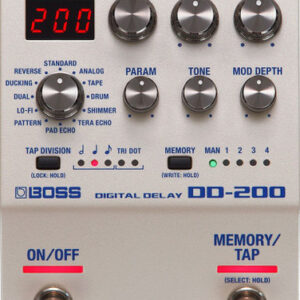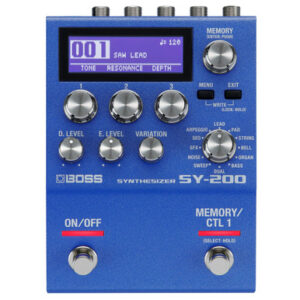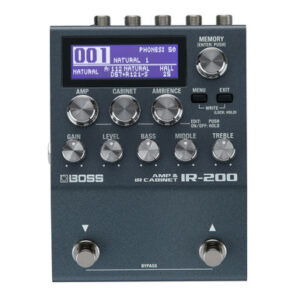
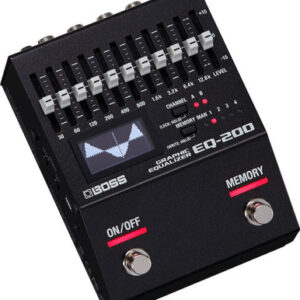
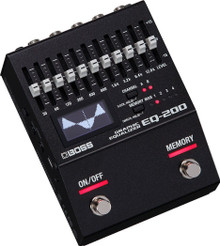

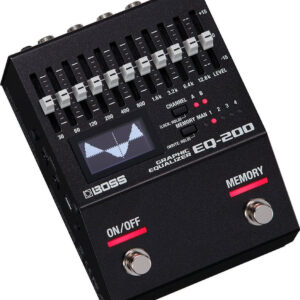
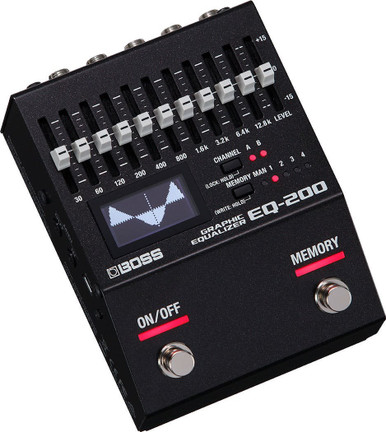
Boss’ 200 Series combines stunning studio-quality sound with their trademark rugged, clean-cut design. This totally new form factor offers unprecedented versatility, value, pro-grade features and tactility – plus an eye-catching sci-fi aesthetic to boot.
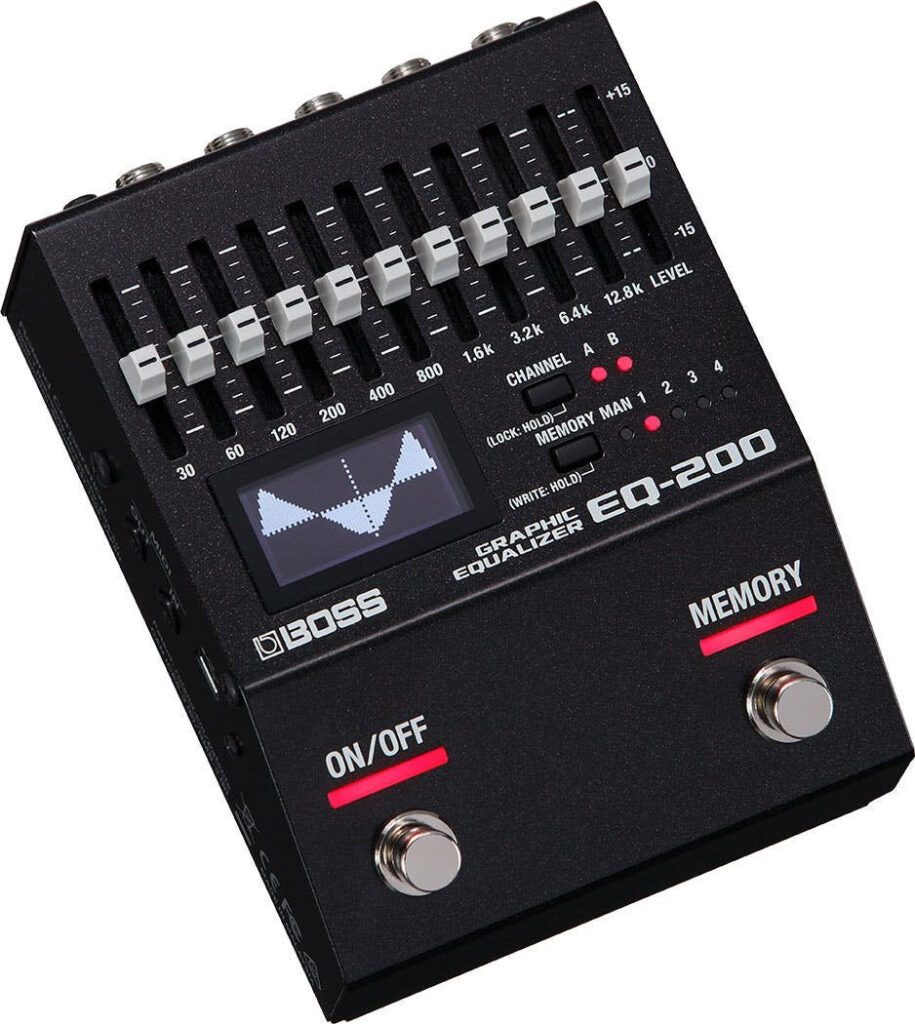
The EQ-200 Graphic Equaliser boasts a wealth of features and controls that make it a serious contender for the most comprehensive EQ ever created for guitar and bass. Two wide-ranging 10-band EQ channels, a 15dB boost/cut for each frequency, instant preset recall – and much more.
Key features
- Class-leading sound quality with 32-bit AD/DA, 32-bit floating point processing, and 96 kHz sampling rate
- Dual 10-band EQs that can be used in stereo, parallel, or series
- Insert function for processing external effects with pre and/or post tone shaping
- Three different range settings: 30 Hz to 12.8 kHz, 32 Hz to 16 kHz, and 28 Hz to 14 kHz
- 15 dB boost/cut on each band, plus overall level control for each channel
- Stereo link function for operating both EQ channels together
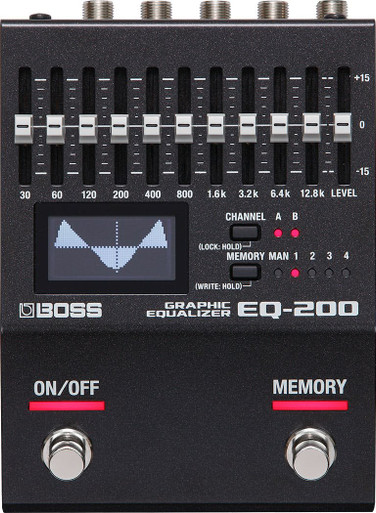
- Intuitive interface with hands-on sliders and graphic EQ display
- Real-time panel setting and four memories for storing favorite sounds
- Panel Lock function disables controls to prevent unwanted changes
- Two onboard footswitches with customizable assignments
- Support for expanded control via external footswitches, an expression pedal, or MIDI
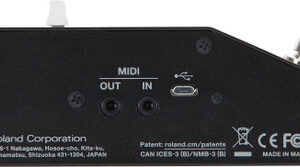
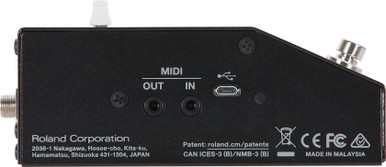
- Full MIDI I/O provided with mini TRS jacks (BMIDI-5-35 adaptor cable available separately)
- Micro USB jack for firmware updates
- Runs on PSA-series AC adaptor or three AA-size batteries
Dual 10-band EQ
Studio-quality sound – 32-bit/96 kHz to be precise – isn’t too common on EQ pedals. Boss aren’t messing around; you also get a whopping 15dB cut/boost on each frequency, a huge tonal palette. You can also adjust the center frequency for each band to work with just about any instrument.
It goes a step further though – the 10-band EQ comes in dual-channel form. The signal flow of these channels can be adjusted to suit your needs. Link them, use them independently, patch in other effects for pre/post-EQ processing – great for overdrives.
Maximum control
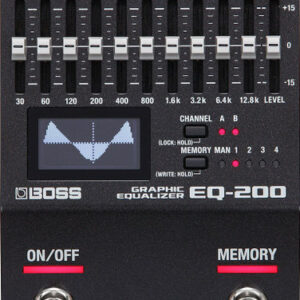
As with the rest of the 200 Series, the EQ-200 boasts a comprehensive but user-friendly control panel. First up, the graphic display gives you a handy real-time view of your EQ curve. The two channels are toggled with a dedicated panel button, and navigating deeper parameters is super quick and accessible. The Panel Lock function also disables all controls to prevent accidental changes.
Four onboard slots for presets let you easily save your favourite sounds, with the footswitch letting you recall them instantly. The Manual setting reflects the current panel settings, giving you that little bit of extra flexibility on stage or in the studio. The footswitches can be assigned to turn channels on/off, or you can control using external footswitches, expression pedals, MIDI and much more.