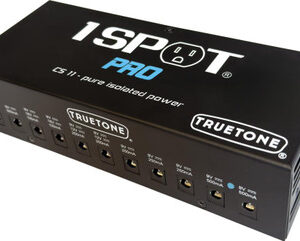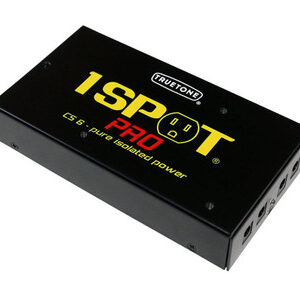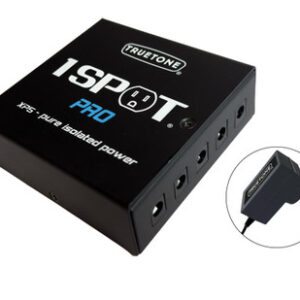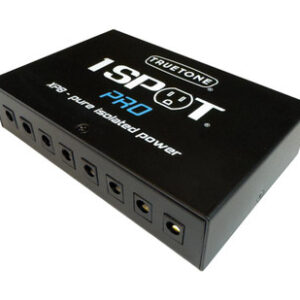
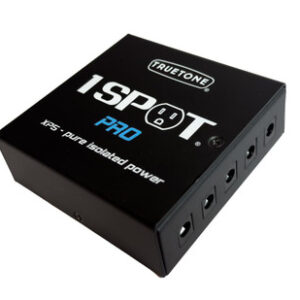
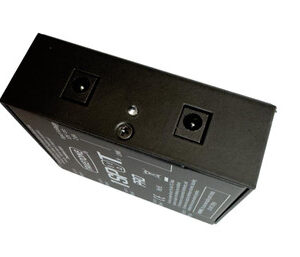

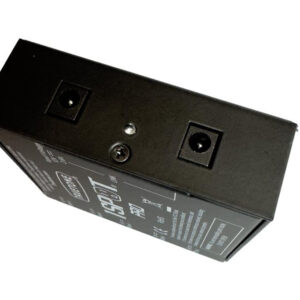
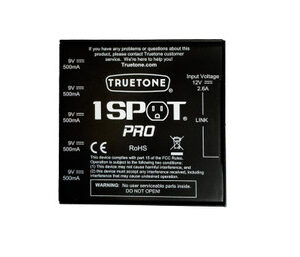
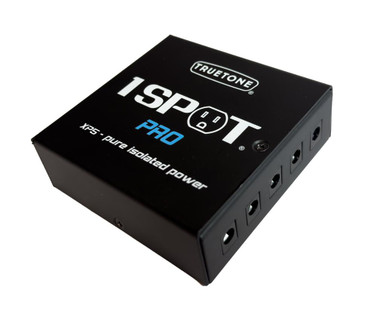
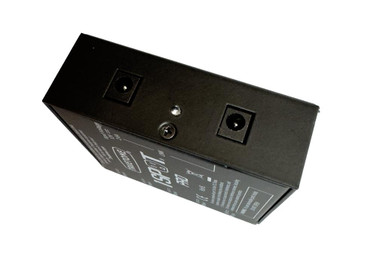
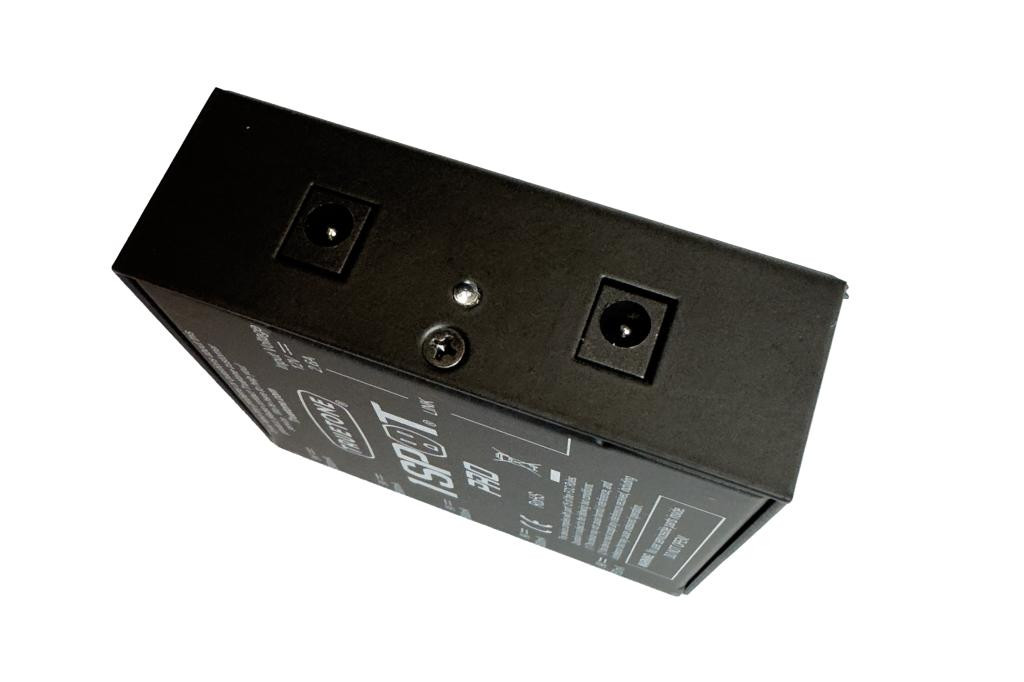
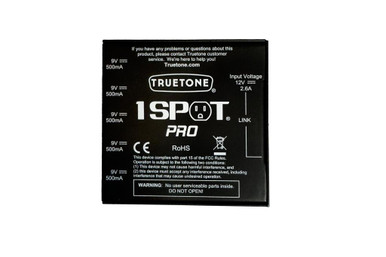
The 1 Spot Pro XP5 is a tiny little powerhouse which allows you to add 5 more isolated outputs to your CS11. Each output provides 9Vdc of studio-clean power and can handle at least 500mA of current draw per output. Measuring 88x88x30mm (3.46×3.46×1.18”) and weighing only 333 grams (11.75oz), it can be easily attached to a pedalboard using only Vel-Cro. Because of its low profile, the XP5 can be mounted under most pedalboards or be used as a pedal riser on top of a board. With 2 linked input jacks, you can power a second XP5 or XP8 by simply connecting a DC cable
Specifications
- Dimensions: 88 x 88 x 30mm (3.46 x 3.46 x 1.18”); 336 grams (0.74 lbs.) – weight and dimensions of XP5 only, not including cables or packaging.
- Input Voltage: 12Vdc 2.5A. External power supply (included with XP5-PS) must have a 5.5×2.1mm barrel plug, center pin positive. The XP5 is also designed to be powered directly from the output on the back of a 1 SPOT Pro CS11.
DC Power cables (all are center pin negative polarity):
- (3) DC18 (5.5×2.1mm barrel plugs; 18” (457mm) – White
- (2) DC12 (5.5×2.1mm barrel plugs; 12” (305mm) – Yellow
- (1) DCLINK – Two right angle 5.5×2.1mm barrel plugs, 20″ (508mm) – Black
- Output Voltage: All outputs are 9Vdc, 500mA.