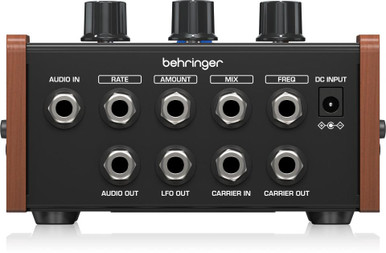
Behringer BM-12 Ring Modulator Pedal

£79.99

This is the Behringer BM-12 Ring Modulator Pedal from Behringer, listed in Modulation Pedals on Just Pedals. Read More below.

View Just
more
and

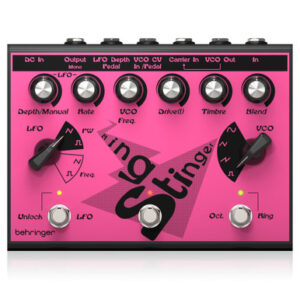
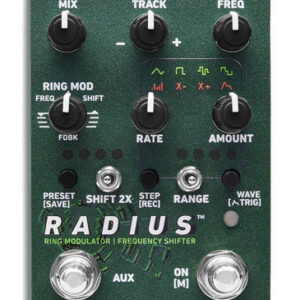
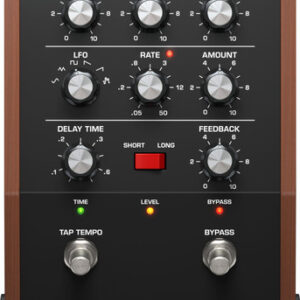
Based on one of the most unique and unearthly pedals to infiltrate popular music during the late ‘90s, the Behringer BM-12 Ring Modulator is the ultimate tool for taking your guitar or synth parts to an unearthly dimension! From glitchy metallic tones full of chaotic harmonics and distortion to unique pulsating tremolo-like effects and just about everything in-between, the BM-12 covers it all. With its thought-out I/O, drive and LFO control and timeless aesthetic, the Behringer Ring Mod is perfect for guitars, synths and is built ready to take your music to the next level, on stage or in the studio.

Key Features

  • Analogue Circuitry – Like the original, the Behringer BM-12 Ring Modulator is an authentic recreation featuring analogue circuitry for a truly vintage voiced sound design workstation, built for the modern world.
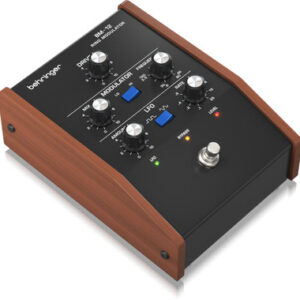
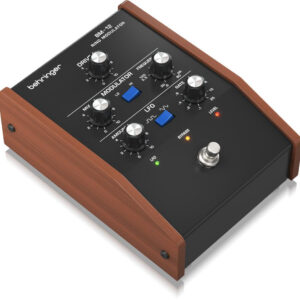
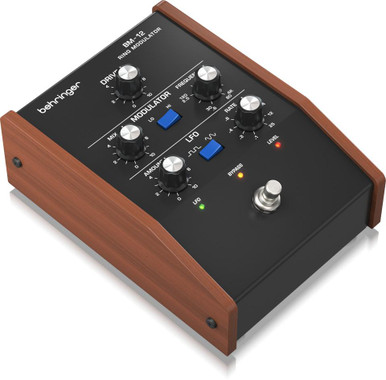
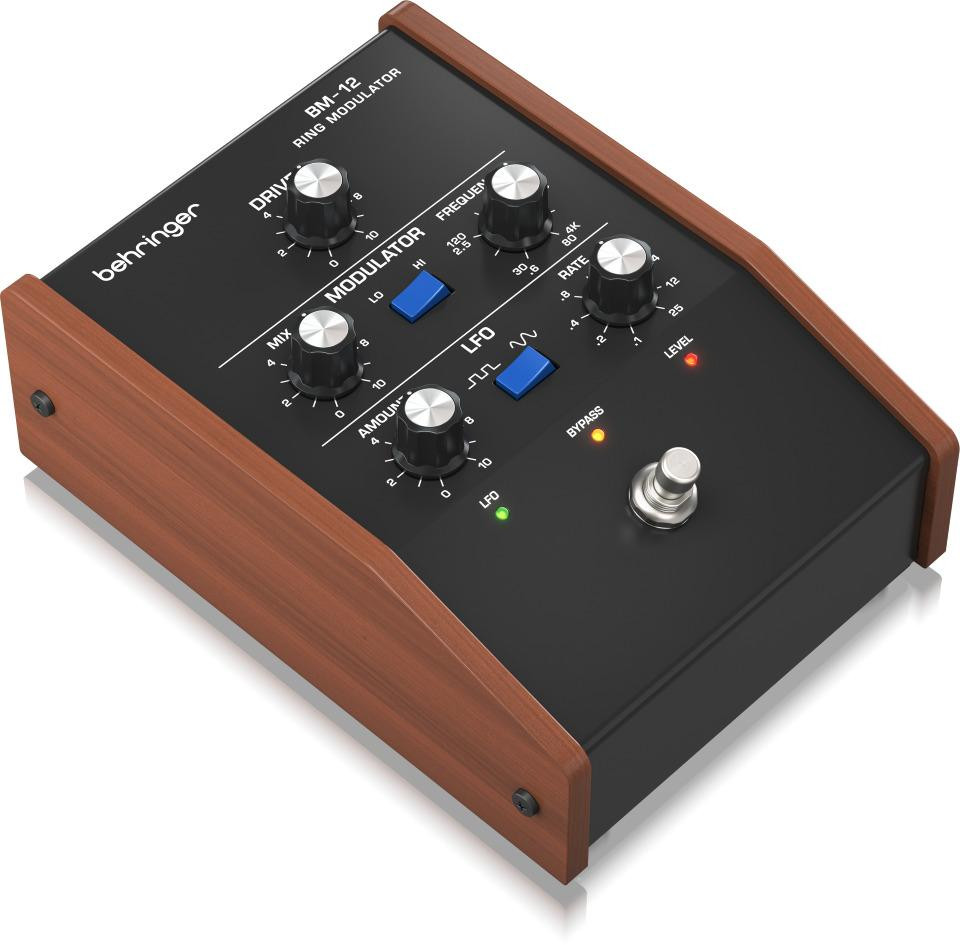
  • Classic Aesthetics – Constructed in a tried and tested roadworthy solid metal enclosure and beautifully finished with wooden side panels, the BM-12 is built to withstand life on the road.
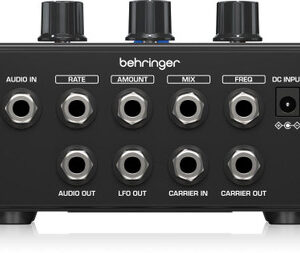
  • Modular Style I/O – This Ring Mod’s versatile I/O allows you to push your creativity to the limits by controlling each of its parameters via an external expression pedal as well as modulating the Ring Mod with an external sound source via the Carrier In and Out. Furthermore, the BM-12 can be combined with other CV pedals and devices for even more unearthly chaos.

Specifications

Audio Connections

  • Audio in: Connector, 1 x 1/4″ TS, unbalanced
  • Impedance: 1 MΩ

Audio out

  • Connector: 1 x 1/4″ TS, unbalanced
  • Output impedance: 6.8 kΩ

Controls

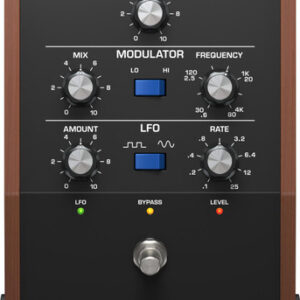
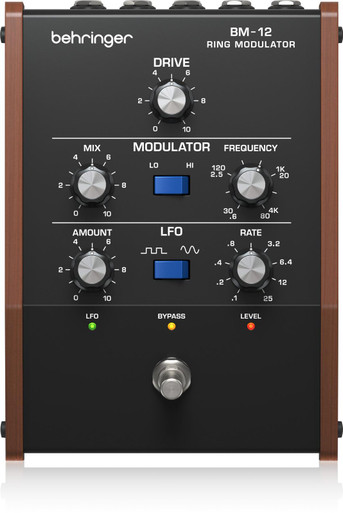
  • Frequency: 1 x rotary knob
  • Rate: 1 x rotary knob
  • Modulator: 1 x rocker switch
  • Mix: 1 x rotary knob
  • Amount: 1 x rotary knob
  • LFO: 1 x rocker switch
  • Bypass: 1 x footswitch

Power Supply / Voltage

  • Power input: Standard 9 V DC, centre negative, > 400 mA (power supply not included)
  • Power consumption: 0.75 W

Dimensions / Weight

  • Dimensions (H x W x D): 85.9 x 147.6 x 196.9 mm (3.38 x 5.81 x 7.75″)
  • Weight: 1,047 g (36.9 oz)

Related videos

Brand

Behringer

Behringer is a prominent manufacturer of audio equipment, including mixers, amplifiers, signal processors, synthesizers, and digital effects units, known for their affordability and wide range of products. Founded in 1989 by Uli Behringer, the company has grown rapidly to become one of the largest manufacturers of audio equipment in the world.

Behringer’s product lineup covers a broad spectrum of audio equipment, catering to musicians, audio engineers, DJs, and live sound professionals. The company offers a variety of mixers, ranging from compact analog mixers for home studios to digital mixers with advanced features for live sound and recording applications.

In addition to mixers, Behringer produces a wide range of amplifiers, including guitar amps, bass amps, and powered PA speakers, as well as signal processors such as equalizers, compressors, and effects units. Behringer synthesizers, like the DeepMind series, have also gained popularity for their affordability and impressive sound quality.

Behringer is known for its commitment to providing high-quality audio equipment at affordable prices, making professional-grade gear accessible to a wide range of musicians and audio enthusiasts. However, the brand has also faced criticism and controversy over issues related to intellectual property rights and product cloning. Despite this, Behringer’s extensive product lineup continues to be popular among musicians and audio professionals seeking reliable and affordable audio solutions.

Category

Modulation Pedals

Modulation changes a signal through a continuously moving control source. This broad category covers effects that alter delay time, phase, pitch, amplitude or filtering to create rotation, movement and evolving texture when no narrower effect family is dominant. Waveform, rate, depth, stereo phase and control routing determine the shape and spatial behaviour of that movement.

Tags

Analogue

The signal is shaped by continuously varying electronic circuitry rather than being converted into a digital effect algorithm. Component choice, operating voltage and circuit tolerances influence headroom, noise, clipping texture and the small variations in response between designs.