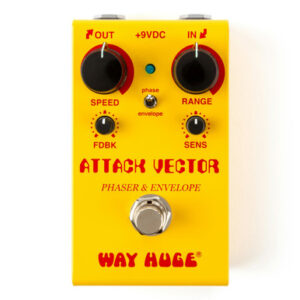
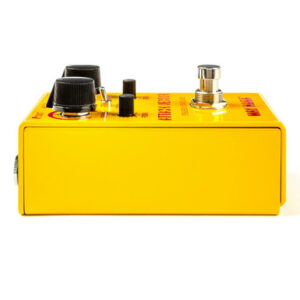
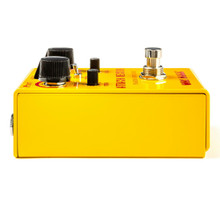
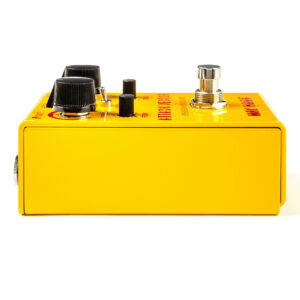
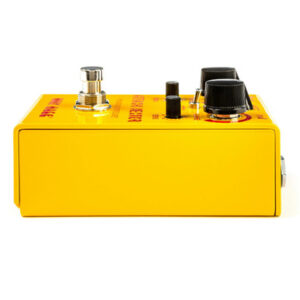
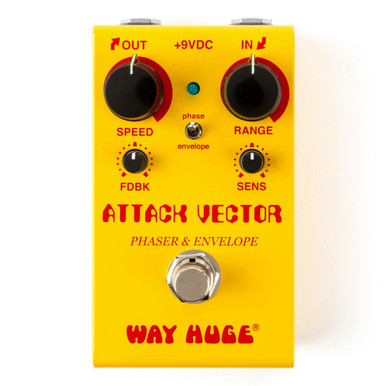
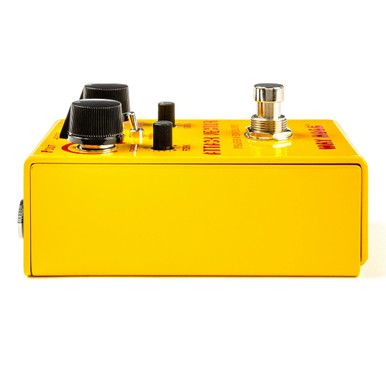
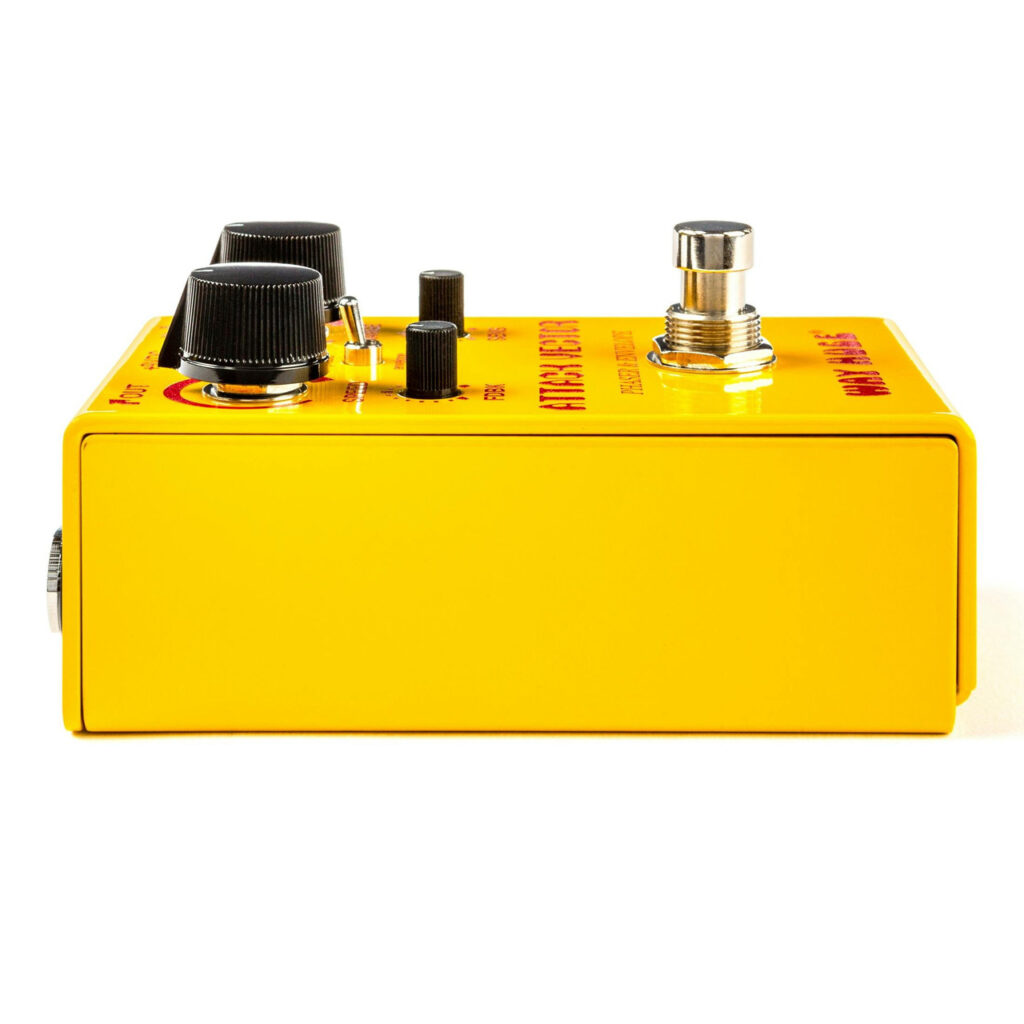
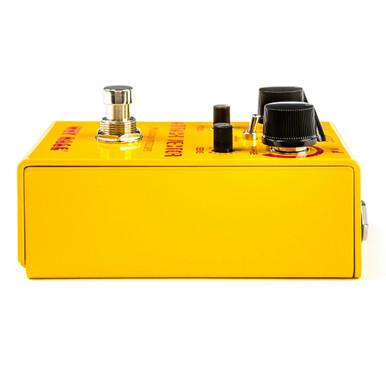
Way Huge WM92 Smalls Attack Vector Phaser & Envelope Pedal

£229.00

If you like to play it safe, then the Way Huge Attack Vector Phaser and Envelope is not for you! This vibrant and quirky pedal combines two different effects — phase shifter and envelope filter — into a single dangerous machine. It cranks out an array of off-kilter sounds, twisting your riffs into crazy new […]


Description

If you like to play it safe, then the Way Huge Attack Vector Phaser and Envelope is not for you! This vibrant and quirky pedal combines two different effects — phase shifter and envelope filter — into a single dangerous machine. It cranks out an array of off-kilter sounds, twisting your riffs into crazy new forms. Bee stings, perfect for funky moods. Gloopy syrup to drench your low-string twanging. Or fifty shades of rude behaviour that'll turn a pleasant cocktail party into a drunken brawl.

And by the way, the Attack Vector Phaser and Envelope's bratty attitude works great with electric bass as well as guitar. So if you're looking for a pedal that smiles politely and behaves appropriately, keep right on walking — because you won't find it here. But if you seek a kindred spirit and fellow troublemaker, the Way Huge Attack Vector Phaser and Envelope might just become your new best friend!
Brand

Way

Category

Way

Tags

Phaser

A phaser is a type of guitar effects pedal that creates a swirling, sweeping sound by modulating the phase of the audio signal. It works by splitting the incoming signal into two paths, shifting the phase of one path, and then recombining them. This creates peaks and troughs in the frequency spectrum, resulting in a distinctive, “phasing” effect characterized by moving notches in the frequency response.

Here’s how a phaser pedal typically works and some common features:

1. **Rate**: The rate control adjusts the speed at which the phase-shifting effect oscillates. Increasing the rate produces faster modulation, creating a more pronounced swirling effect, while decreasing the rate slows down the modulation for a smoother, more subtle effect.

2. **Depth**: The depth control adjusts the intensity or depth of the phase-shifting effect. Higher depth settings result in more pronounced peaks and troughs in the frequency response, while lower settings produce a more subtle modulation.

3. **Feedback (or Regeneration)**: Some phaser pedals feature a feedback control that determines the amount of modulated signal fed back into the effect. Increasing the feedback creates more pronounced peaks and troughs in the frequency spectrum, resulting in a more intense and resonant phasing effect.

4. **Stages**: Phasers typically have multiple stages (usually four, six, or eight), each of which contributes to the overall phase-shifting effect. More stages generally result in a more complex and textured phasing sound.

5. **Sweep (or Manual)**: The sweep control adjusts the center frequency of the phase-shifting effect. This allows you to focus the phasing effect on specific frequency ranges, altering the tonal character of the modulation.

6. **Resonance (or Feedback)**: Some phaser pedals feature a resonance control that emphasizes the peaks and troughs in the frequency response, creating a more pronounced and resonant effect. This control can add richness and depth to the phasing sound.

Phaser pedals are commonly used in various music genres, including rock, funk, and psychedelic music, to add movement, depth, and texture to guitar tones. They can be used to create swirling, swirling effects on rhythm parts, add dynamics to lead lines, or create atmospheric textures for ambient music. Overall, phaser pedals offer guitarists a versatile tool for shaping their tone and adding expressive modulation effects to their playing.

Phaser Pedals