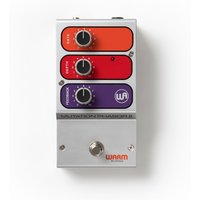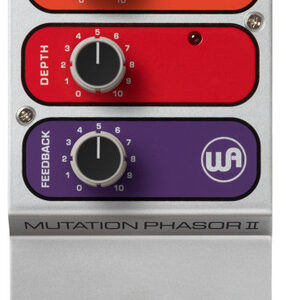
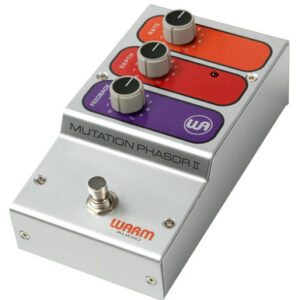

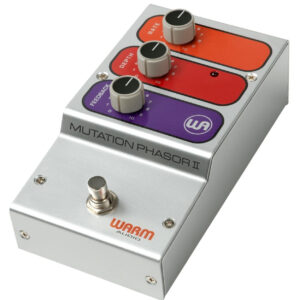
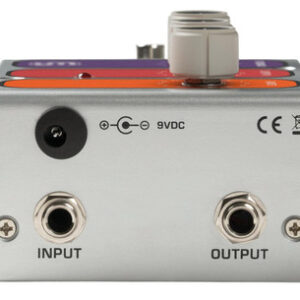
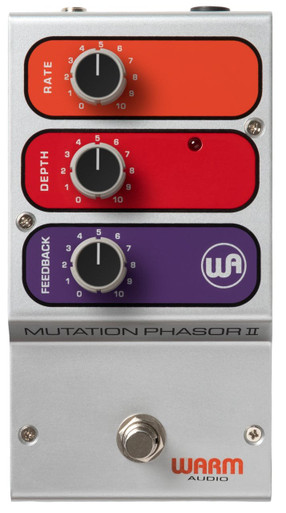
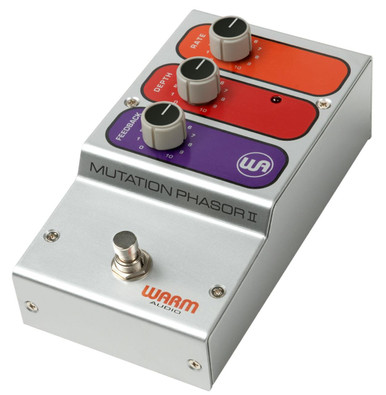
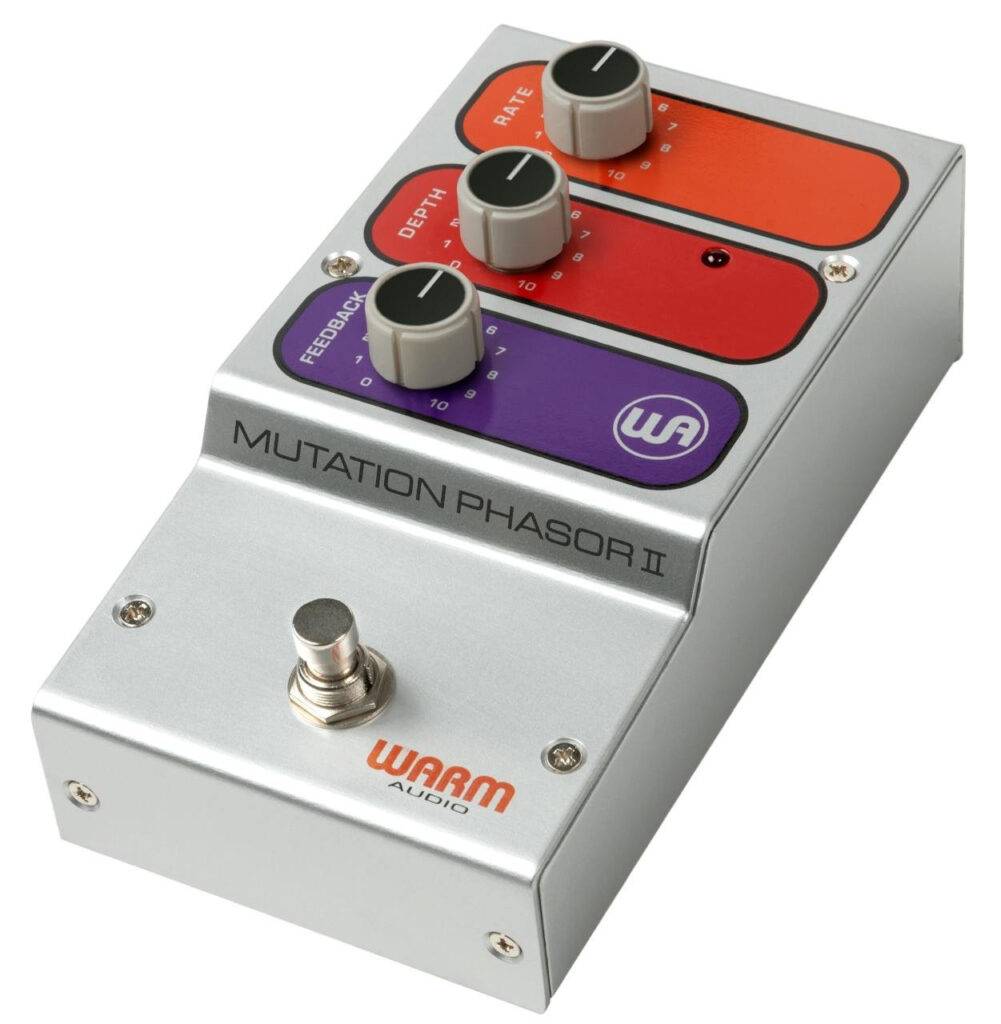
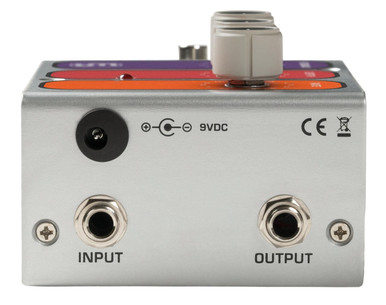
The Warm Audio Mutation Phasor II is an accurate recreation of a swirly phaser made famous in the experimental era of the 1970s. Mutation Phasor II has all the vintage vibes of the original phaser pedal allowing you to add depth, wobble, swirl, or “instant funk” to guitar, keys, bass, or anything you can dream of.
This electro-optical phase-shifting pedal is built with a true-to-spec recreation of the 70s circuit using premium components. True to the original pedal, Mutation Phasor II delivers all the rich depth and instant psychedelic tones, favoured by innovative musicians and producers like Billy Corgan, Tom Bukovac, Robin Trower, and many more!
Key Features
- Maximum Depth – For ultra-rich swirly phase-shifting, the “Depth” control allows you to vary the width of the sweep range – delivering deep modulation expected from a vintage, all-analogue pedal. Increasing the depth control adds width to the frequency range of the effect, impacting higher highs and lower lows.
- Rate Switch – Easily change the speed (or rate) of the phase-shifting effect to create more or less “wobble” in your tone – From 1/10th sweeps per second (slowest) to 18 sweeps per second (fastest).
- Feedback – Increasing the “Feedback” control adds electric feedback to the “wet” phase-shifting signal. Increasing the feedback control creates a more intense phase sound with a particular emphasis on the sweeps – Especially noticeable at slower rate settings.
- Lush Studio Sound, Road-Worthy Build – A true-to-original recreation of the 70s circuit, Mutation Phasor II is built with premium components including classic RC4558P op-amps, vintage-style diodes, carbon resistors, and film caps – Housed in an ultra-tough, vintage-vibe steel case.
- Hand-Tested in Austin, Texas – Like all Warm Audio gear, the Mutation Phasor II is meticulously hand-tested and inspected by trained technicians with a passion for making music in Austin, Texas USA.
Specifications
- Controls: Rate, Depth & Feedback
- Frequency Response: 20Hz – 20KHz
- Min Feedback: 4V RMS, 11.2V Peak-to-Peak | Max Feedback: 2V RMS, 5.6V Peak-to-Peak
- Signal-to-Noise Ratio: 86 dB Below 2V Input
- Current Draw: 150 mA
- Bypass: Buffered
- Power: 9-Volt Battery Or External Centre-Negative 9V Regulated DC Adapter (Not included)
- Dimensions: 2” x 3.5” x 6.5”