Brand
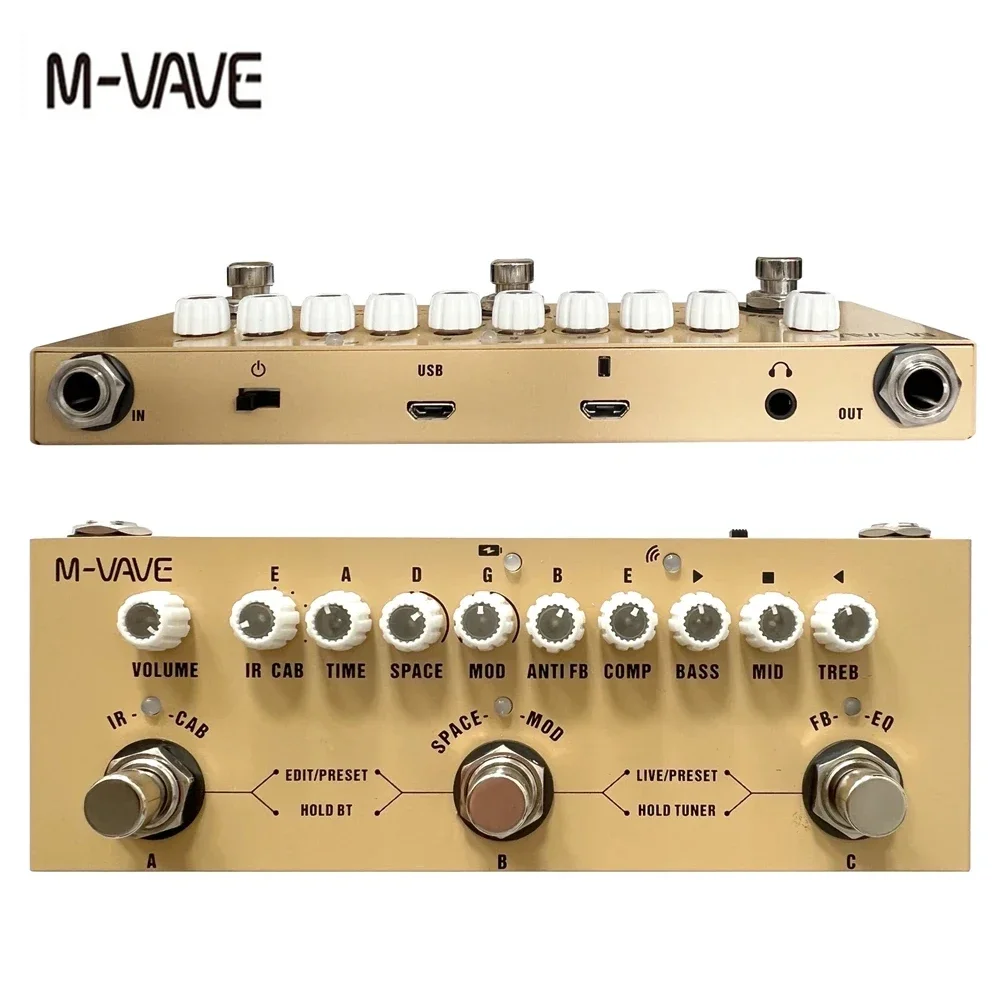
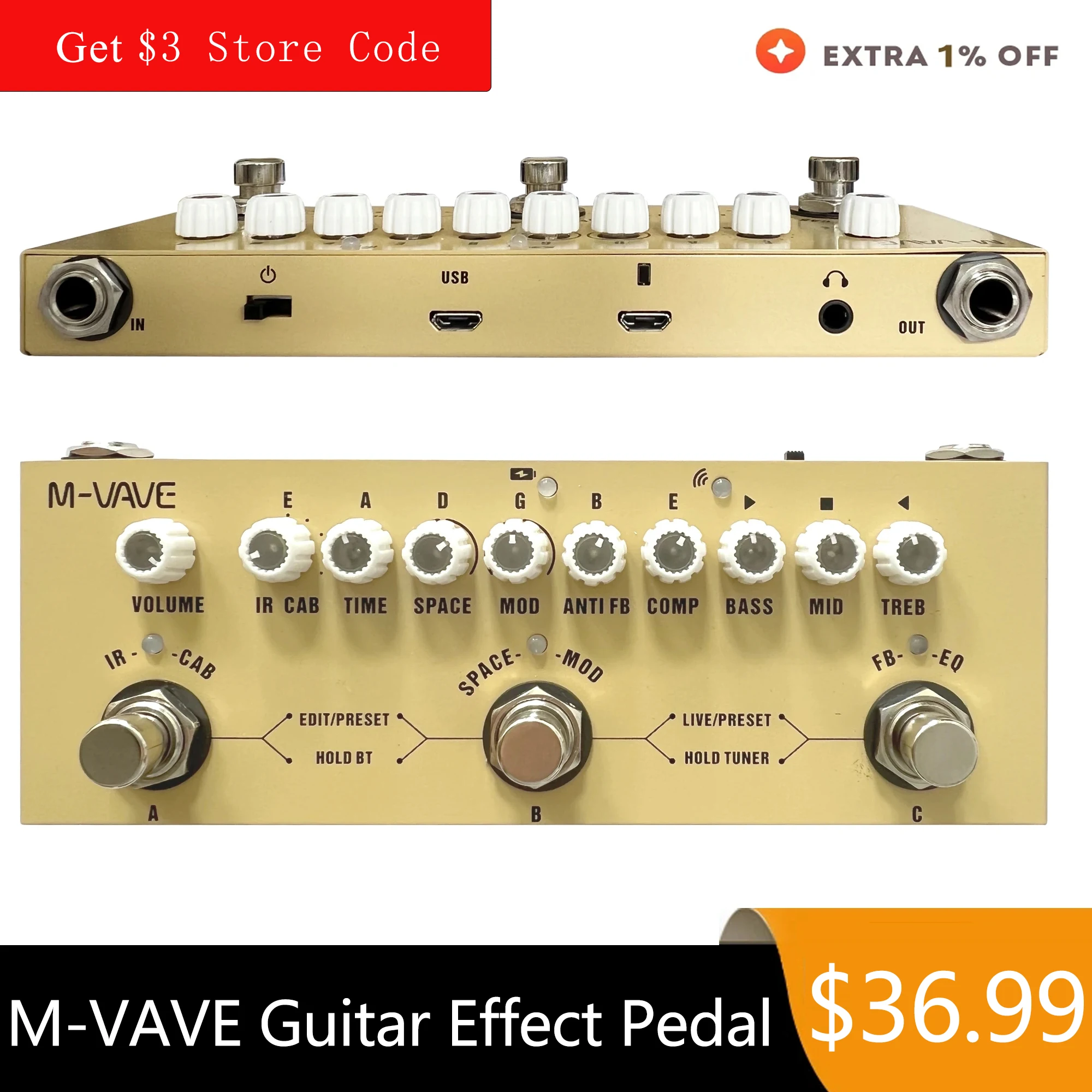
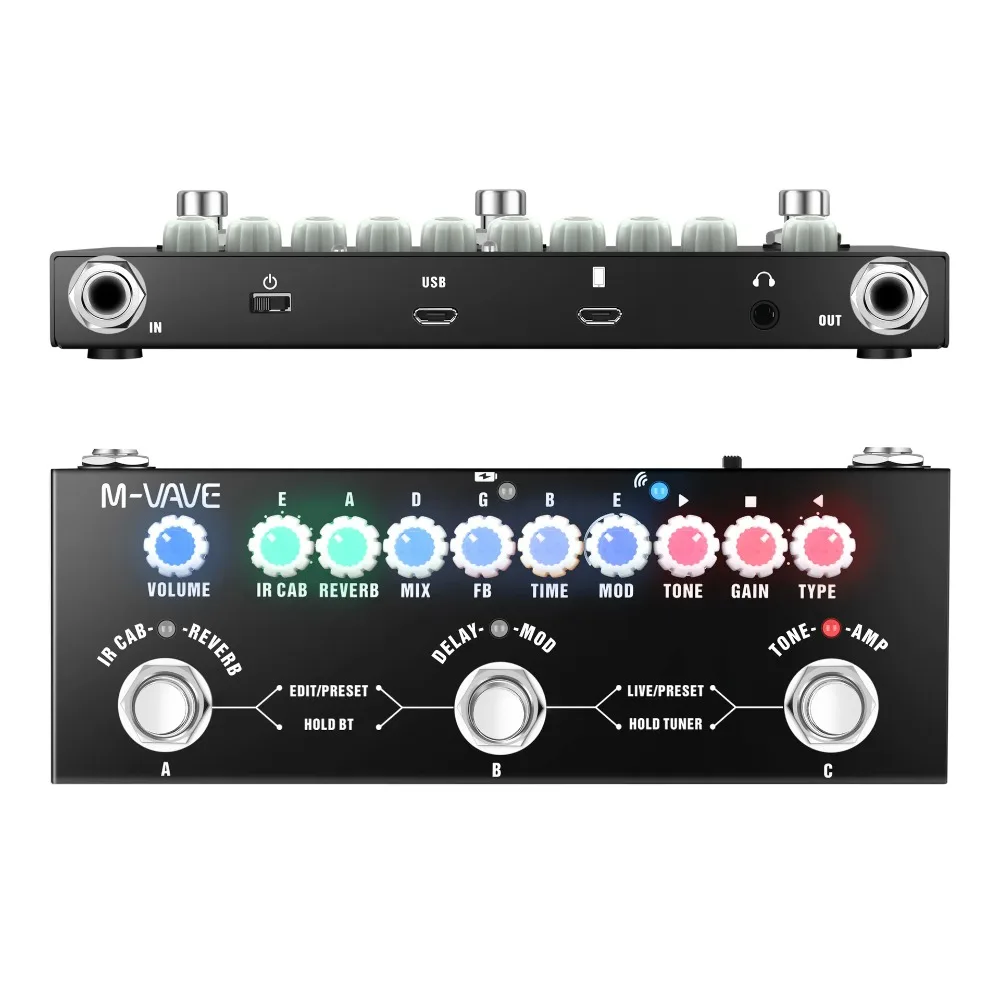
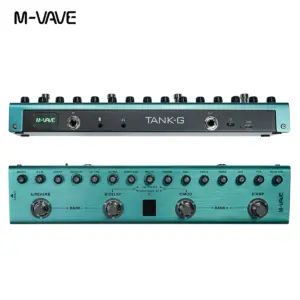
M-VAVE is a music-gear brand of Shengke, whose official company history describes a move from consumer wireless audio into instrument products using wireless transmission and digital signal processing. The current range mixes compact single-effect pedals, multi-effects processors, headphone tools and wireless systems. JustPedals listings include the Mini Universe digital reverb, Tank multi-effects, H8 headphone amplifier and pedal tuners. TANK-G adds amp modelling, USB audio and recording features, while Mini Universe is a compact dedicated reverb. Check the product type before comparing M-VAVE listings, as the brand covers both stompboxes and supporting equipment.
Category
A multi-effects processor combines several effect algorithms and signal-routing stages in one unit. Its sound depends not only on the individual models but on their order, parallel or serial routing, processing resolution and available control. Preset structure, switching gaps, foot control, expression assignment, amp or cabinet modelling, USB audio and MIDI determine how completely the processor can replace separate pedals.
Tags
Voiced for the wider dynamics, strong transient detail and pickup characteristics of acoustic instruments. High input impedance, phase reversal, notch filtering and restrained processing help preserve body resonance while controlling piezo harshness and feedback. Balanced outputs may also carry the corrected signal directly to a mixer or interface.
Contains a battery designed to be recharged inside the unit. Cell capacity determines operating time, while charging connector, charge-while-playing support, battery protection and eventual replacement access affect long-term use. Charging noise and the number of full cycles before capacity declines are additional design considerations.