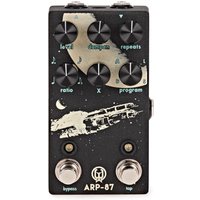
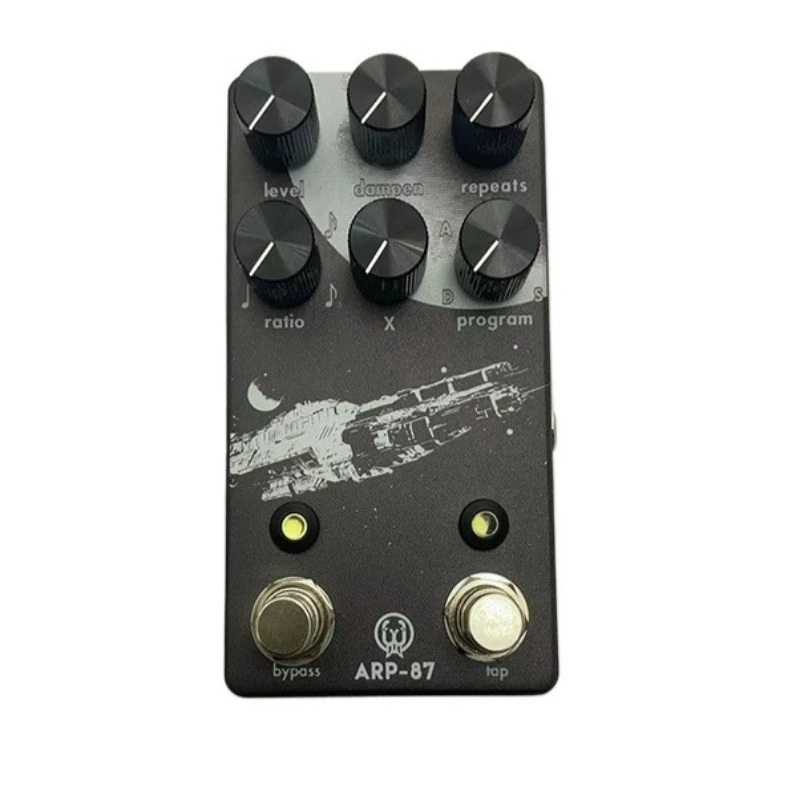
The Walrus Audio ARP-87 is a multi-function delay pedal which offers an incredible range of delays with a plethora of controllable parameters to provide players with incredible freedom. With digital analogue lo-fi and slapback algorithms to choose from use the selection of control knobs to dial in and array of rich sounding delay effects suitable for all musical styles. Alongside its incredible tones the ARP-87 features momentary functions for quick bursts of infinite delays or enhanced repeats. The trails mode is added to allow you to choose whether the pedals repeats die-off naturally or are cut abruptly when the pedals is disengaged. Encased within a road-worthy enclosure and finished with the original artwork of Chris Castro the ARP-87 Delay is the perfect pedal for transporting you and your audience to another dimension.
Walrus Audio ARP-87 Multi-Function Delay Pedal
This is a New Walrus Audio ARP-87 Multi-Function Delay Pedal from Walrus Audio is in our Delay Pedals category on Just Pedals. Read More below.
As an affiliate partner, we may earn a small commission when you buy through our links — at no extra cost to you.
Related videos


Brand
Walrus Audio
Walrus Audio describes itself as a collective of artists, musicians and engineers, bringing circuit design together with distinctive pedal artwork. The company says its effects are hand-built and manufactured in the USA. JustPedals listings illustrate the variety: ARP-87 multi-function delay, Slö ambient reverb, Julia analog chorus and vibrato, and Polychrome flanger. Some models focus on direct, compact controls, while others provide broader modulation or atmospheric textures. Compare each model’s modes, stereo connections and control options; the artwork is a signature of the brand, while the circuit determines how it fits a rig.
Category
Delay Pedals
Delay records the incoming signal for a chosen interval and repeats it after the original note. Feedback returns repeats to the delay line, while tone, filtering, modulation and saturation determine whether echoes remain clear, darken progressively, wobble like tape or degrade like analogue bucket-brigade circuits. Delay time and rhythmic subdivisions govern the spacing and musical pattern of the repeats.
Tags
Analogue
The signal is shaped by continuously varying electronic circuitry rather than being converted into a digital effect algorithm. Component choice, operating voltage and circuit tolerances influence headroom, noise, clipping texture and the small variations in response between designs.
Digital
Converts the signal or control process into numerical data for algorithmic processing. Digital designs can provide precise timing, long memory, complex routing and repeatable presets; sample rate, conversion, internal resolution and latency influence fidelity and response.
Others Just Ordered :
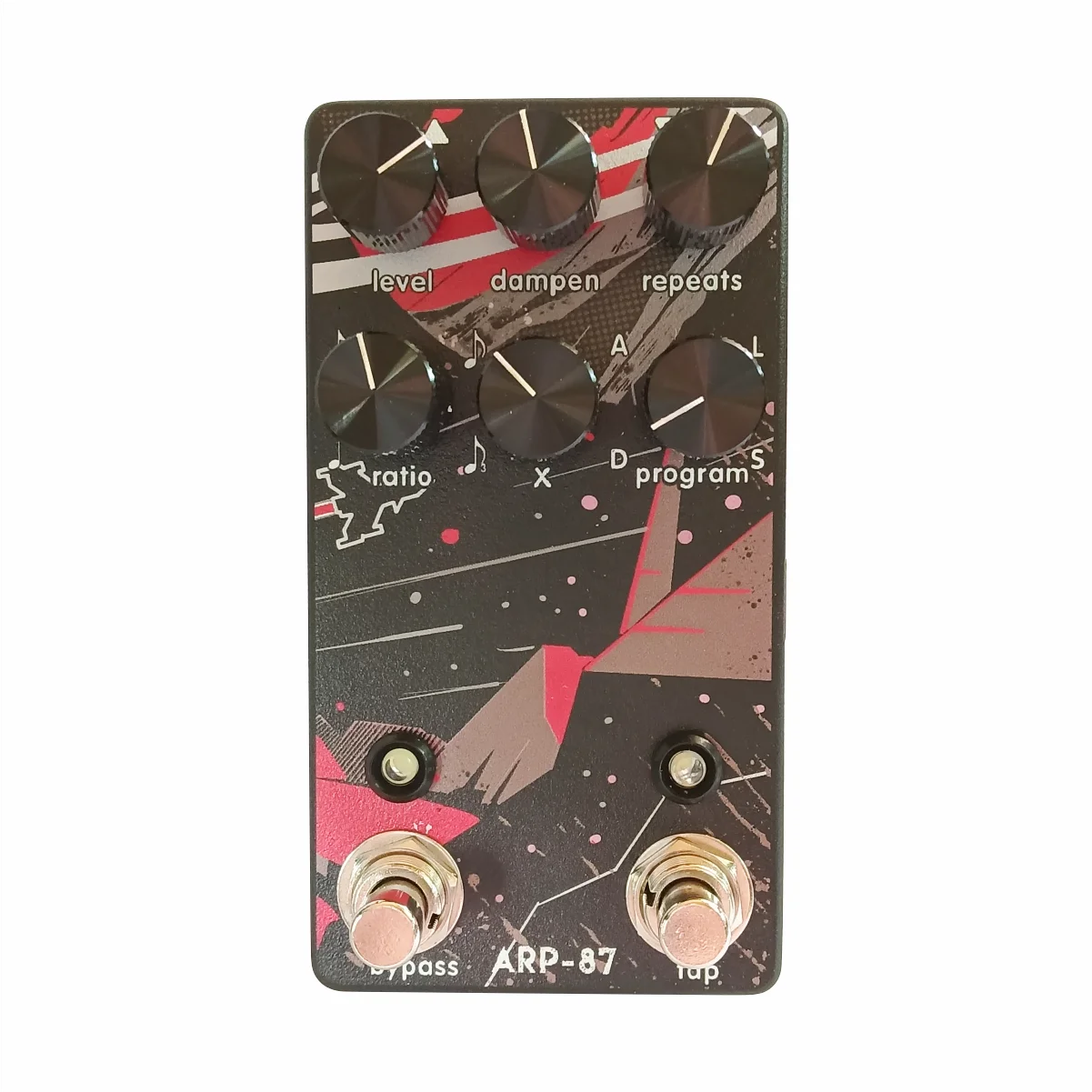
- I Love A Happy Accident… – Animals Pedal

- Animals Pedal Vintage Van Driving is Very Fun Overdrive

- Animals Pedal Sunday Afternoon Is Infinity Bender

- Ninevolt Pedals | Bath Time Reverb (Animals Pedal)
- This Fuzz Pedal Makes No Sense… But It Sounds Incredible

- ANIME Pedals | Animals Pedal Custom Illustrated Series