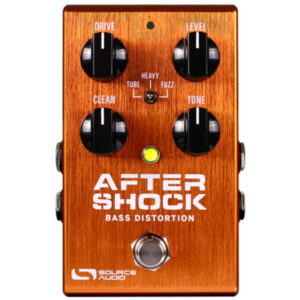
Source Audio Aftershock Bass Distortion Pedal

£189.99

This is the Source Audio Aftershock Bass Distortion Pedal from Source Audio, listed in Distortion Pedals on Just Pedals. Read More below.

View Just
more
and , ,

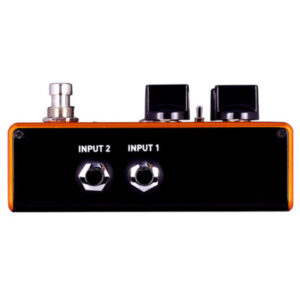
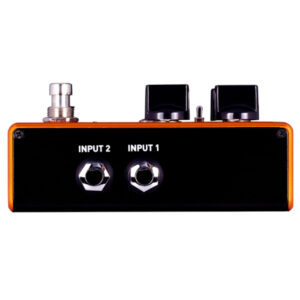
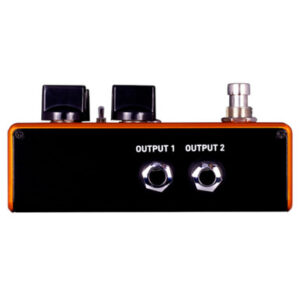
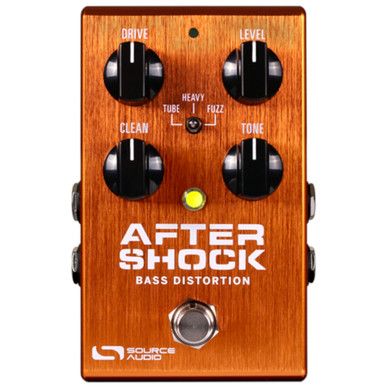
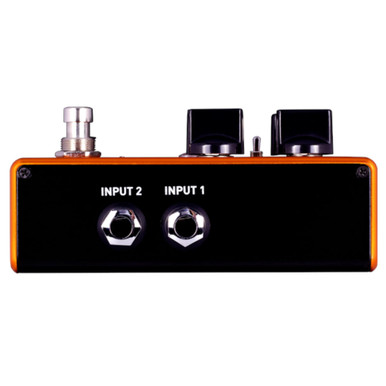
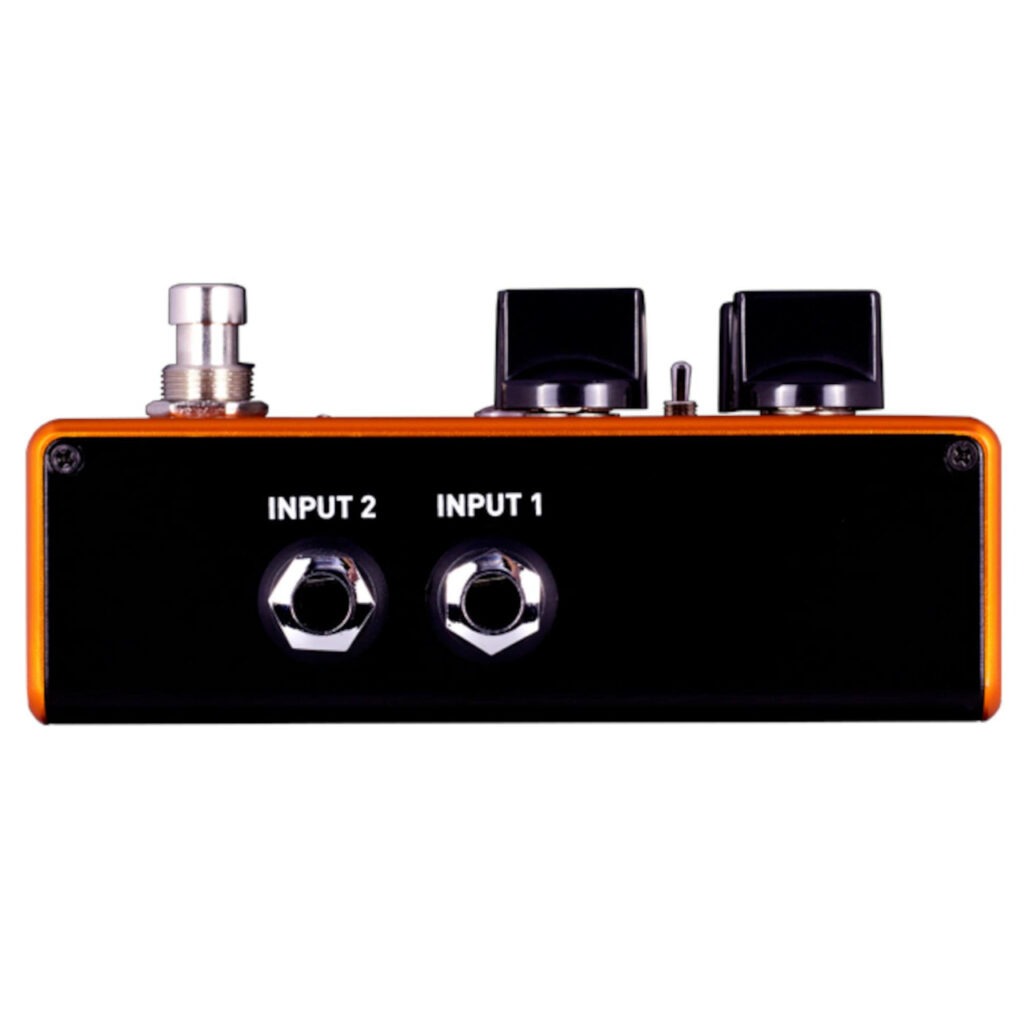
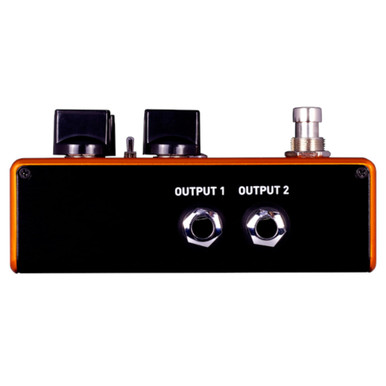
The Source Audio Aftershock Bass Distortion allows you to get down and dirty with three distinct overdrive modes; Tube, Heavy and Fuzz. With controls for Drive, Level, Clean and Tone, you have full control over the effect allowing you to dial in anything from a subtle, low gain overdrive to a thick, chewy, gut busting fuzz sound with ease. The Aftershock also has stereo capability which means you can plug it into two amplifiers for a truly massive bass sound. The Stereo set up also allows you to distort upstream stereo signals, split a mono signal to dual outputs, or use the additional in and out as an external effects loop. 

Each pedal from Source Audio's One Series line is compatible with the Neuro Mobile App (a free download for iOS and Android) which opens up a plethora of presets and customisation and editing features.

Key Features

  • 3 Overdrive Modes – "Tube" mode delivers a subtle but powerful vintage tube-style overdrive with plenty of punch. "Heavy" mode produces an aggressive scooped sound with ample highs and plenty of low end thump and "Fuzz" mode gives you intense germanium fuzz tones with plenty of grit.
  • Stereo Operation – Connect the Aftershock Bass Distortion to two amplifiers for a thick, wide overdriven sound. Once you've gone stereo, you won't want to go back!
  • Universal Bypass – Chose between an analogue buffered or relay based True Bypass depending on where the Aftershock sits in your signal chain.
  • Stackable Drive Engines – Dual drive engines and stereo inputs and outputs make it possible (via the Neuro App) to stack any combination of drive engines in either series or parallel as well as split the signal and send a separate drive engine to each of the pedal’s outputs.

Specifications

  • Includes 9v DC power supply (300mA / Negative Tip)
  • Includes 1/8” to 1/4” cable for Neuro Mobile App connection.
  • Power Consumption – 150mA
  • USB port – Connects to Mac or Windows PC for firmware updates and the forthcoming in-depth effects editing software.
  • Brushed anodized aluminium housing.
  • Dimensions: L: 4.5 in./11.4cm x W: 2.75 in./7cm x H: 2 in./5.1cm (including knobs)
Related videos

Brand

Source Audio

Source Audio is an American company renowned for its advanced guitar effects pedals and digital audio processing technology. Founded in 2008, the company is recognized for its innovative approach to effects design, incorporating sophisticated digital signal processing (DSP) and extensive customization features.

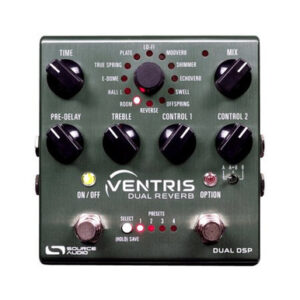
Source Audio’s product lineup includes a variety of pedals such as the Nemesis Delay, the Ventris Dual Reverb, and the Collider Delay+Reverb, which offer a range of high-quality, programmable effects. Their pedals are distinguished by their deep editing capabilities, allowing users to create and save custom sounds through a user-friendly interface and Source Audio’s proprietary Neuro Mobile App.

Known for their precision, versatility, and cutting-edge technology, Source Audio pedals are favoured by musicians seeking advanced tonal possibilities and seamless integration into modern setups.

Category

Distortion Pedals

Distortion clips the waveform more firmly than overdrive, generating dense upper harmonics, longer sustain and a more compressed response. Circuit topology and filtering decide whether the sound is tight and focused, broad and aggressive, smooth or deliberately abrasive. Gain sets the amount of clipping, while pre- and post-distortion tone controls strongly influence low-end definition, midrange presence and high-frequency texture.

Tags

Bass

Voiced or equipped to retain low-frequency fundamentals and the higher headroom of a bass signal. Clean blends, crossovers and bass-specific filter ranges can preserve weight and articulation while the effected portion adds harmonics, movement or ambience.

Presets

Stores complete groups of parameter values for later recall. The number of locations, switching time, spillover behaviour and whether presets include routing, expression and MIDI assignments determine how completely one sound can change into another.

Stereo

Processes, creates or passes two audio channels. True stereo preserves separate left and right inputs, while mono-to-stereo effects generate spatial differences internally; routing, phase behaviour and whether trails remain stereo determine the resulting image. Some outputs sum to mono when only one socket is connected, which can change level or modulation depth.