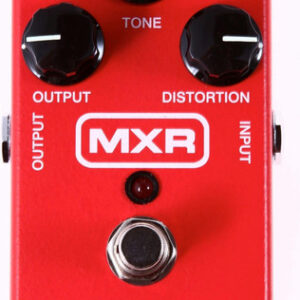
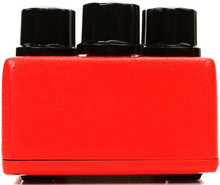
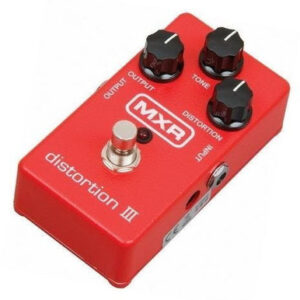
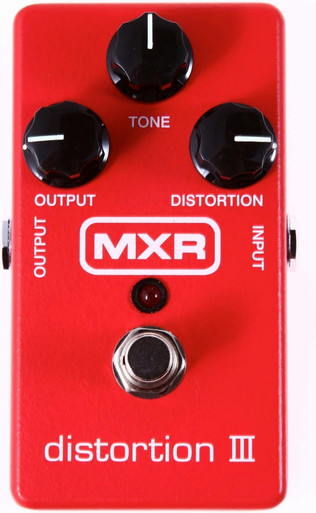
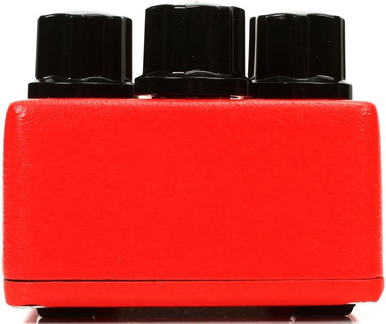
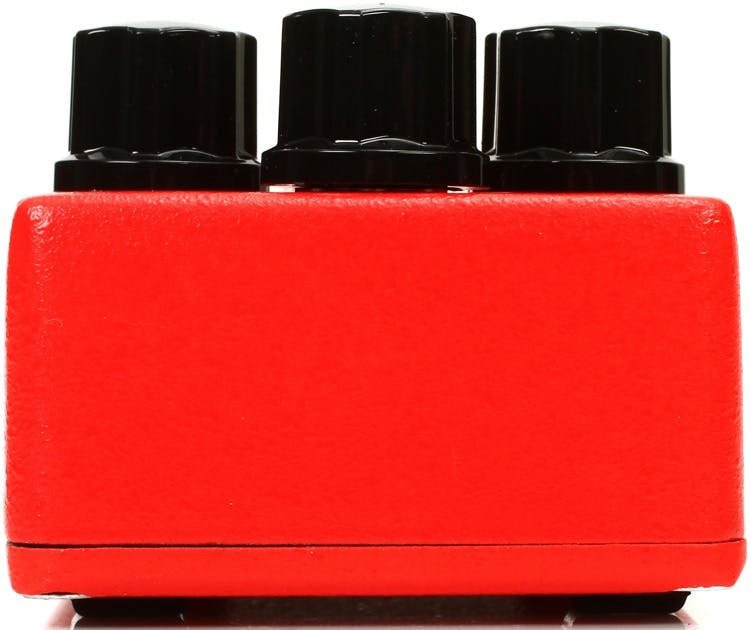
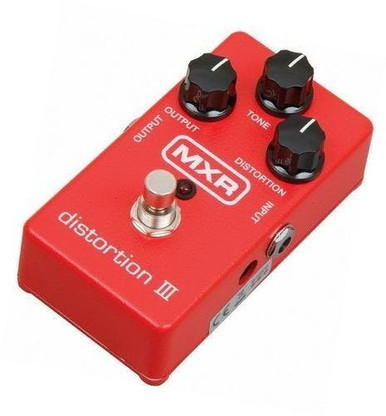
MXR M115 Distortion Pedal III Pedal

£109.99

This is a New MXR M115 Distortion Pedal III Pedal from MXR, listed in Distortion Pedals on Just Pedals. Read More below.

View Just
more
and

The Distortion III delivers everything from sweet singing overdrive to massive distortion crunch. Developed from the ground up using carefully selected components, the D-III delivers everything from sweet singing overdrive to massive distortion crunch!

Key Features

  • Dynamic, touch-sensitive response
  • Proprietary circuit design delivers rich harmonics
  • Large output range
  • True bypass

It’s natural and amp-like distortion is versatile enough to appeal to any playing style and transparent enough to let your guitar’s personality shine through. Like all MXR pedals, the Distortion III features a heavy-duty casing, switch and jacks for a lifetime of use.

Specifications

The MXR Distortion III is powered by one 9-volt battery (remove bottom plate to install), a 9-volt AC adapter such as the Dunlop ECB003/ECB003E, or a DC Brick™ power supply
Related videos

Brand

MXR

MXR’s first product was the Phase 90, released in 1972. Dunlop’s official MXR history traces the early line from that compact phaser to the Distortion+, Dyna Comp compressor and Blue Box octave fuzz—circuits that remain central reference points for the brand. JustPedals carries those classic families alongside the Carbon Copy analog delay, Micro Amp, Talk Box and bass effects. MXR’s range is deliberately broader than one effect category: compare the model number and version, especially where a classic circuit has later reissues, mini enclosures or expanded controls.

Category

Distortion Pedals

Distortion clips the waveform more firmly than overdrive, generating dense upper harmonics, longer sustain and a more compressed response. Circuit topology and filtering decide whether the sound is tight and focused, broad and aggressive, smooth or deliberately abrasive. Gain sets the amount of clipping, while pre- and post-distortion tone controls strongly influence low-end definition, midrange presence and high-frequency texture.

Tags

True Bypass

Connects input directly to output through mechanical or relay switching when the effect is off, removing the active circuit from the audio path. It avoids buffer colour but leaves cable capacitance and switching design to influence high-frequency loss and possible switching noise.