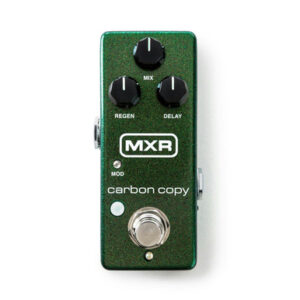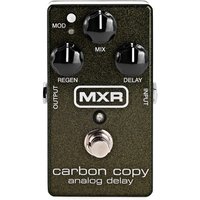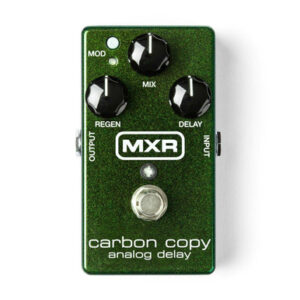
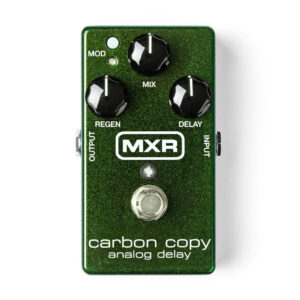
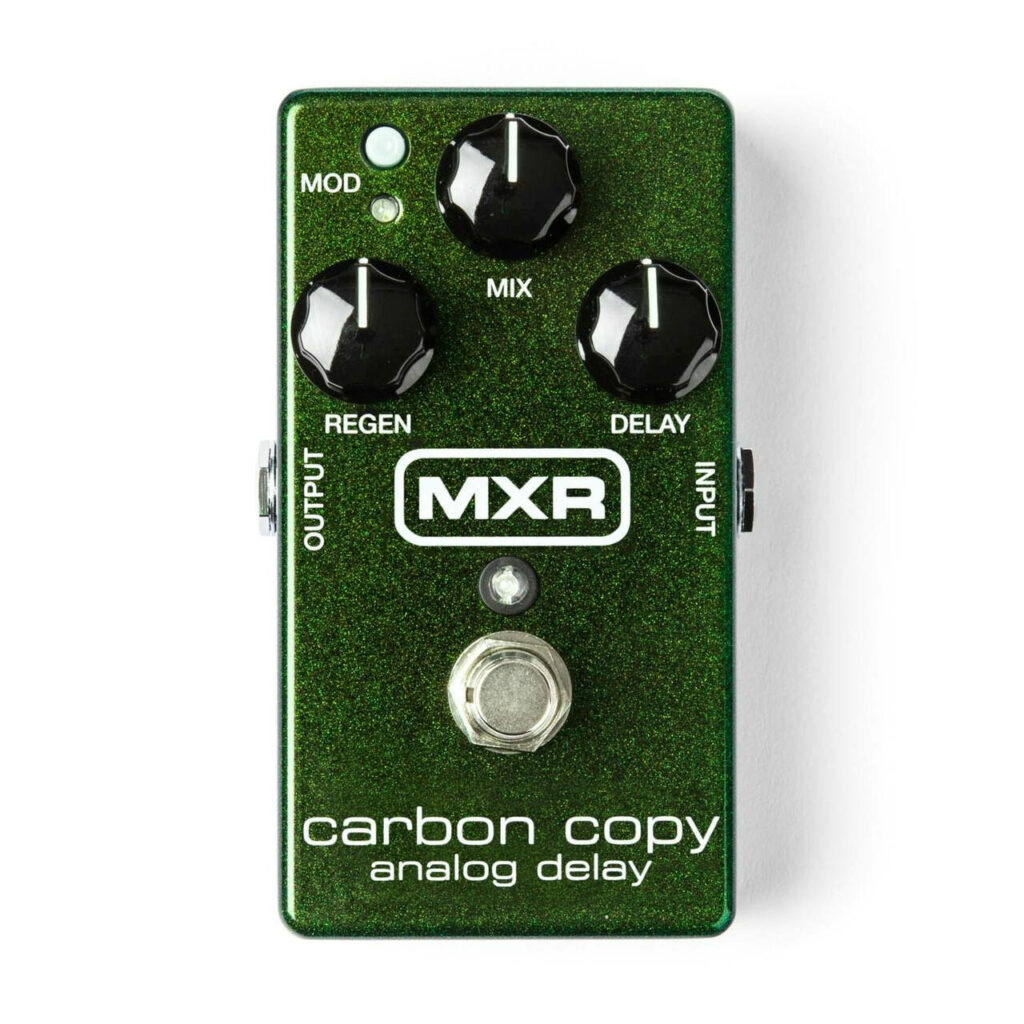
MXR M169 Carbon Copy Analog Delay Pedal

£159.00

This is a New MXR M169 Carbon Copy Analog Delay Pedal from MXR is in our Delay Pedals category on Just Pedals. Read More below.

View Just
more
and

The XMR M169 Copy Analog Delay Pedal is a high-quality completely analogue stompbox. Offering the authentic rich and warm sonics that only analogue bucket-brigade technology can bring the M169 Carbon Copy infuses your sound with scintillating echoes.And it couldnt be easier to dial in the delay youre looking for. A set of intuitive controls allow you to quickly introduce any kind of echo that you desire from instant slapbacks through to wild spacious ripples. But it gets better because a modulation button at the top of pedal transforms the tone to be more ethereal and glassier in character allowing you explore a whole additional set of sonics within the same pedal. Powerful and versatile in its sound this exceptional delay pedal is the perfect addition to any existing setup.

Related videos

Brand

MXR

MXR’s first product was the Phase 90, released in 1972. Dunlop’s official MXR history traces the early line from that compact phaser to the Distortion+, Dyna Comp compressor and Blue Box octave fuzz—circuits that remain central reference points for the brand. JustPedals carries those classic families alongside the Carbon Copy analog delay, Micro Amp, Talk Box and bass effects. MXR’s range is deliberately broader than one effect category: compare the model number and version, especially where a classic circuit has later reissues, mini enclosures or expanded controls.

Category

Delay Pedals

Delay records the incoming signal for a chosen interval and repeats it after the original note. Feedback returns repeats to the delay line, while tone, filtering, modulation and saturation determine whether echoes remain clear, darken progressively, wobble like tape or degrade like analogue bucket-brigade circuits. Delay time and rhythmic subdivisions govern the spacing and musical pattern of the repeats.

Tags

Analogue

The signal is shaped by continuously varying electronic circuitry rather than being converted into a digital effect algorithm. Component choice, operating voltage and circuit tolerances influence headroom, noise, clipping texture and the small variations in response between designs.