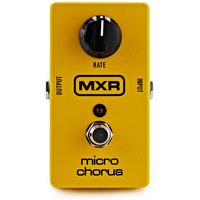
The MXR M148 Micro Chorus Pedal is small and compact – but crammed with tone! Offering a range of rich chorus textures to play with inspiration is only a stomp away. Featuring one single rate control it couldnt easier to dial in the exact sound youre looking for and thanks to its ultra-compact size itll easily fit onto any pedal board. Complete with true bypass switching and analogue circuitry youre guaranteed a consistent performance and creativity inducing chorus.
MXR M148 Micro Chorus Pedal
£129.00
This is a New MXR M148 Micro Chorus Pedal from MXR its found in our Chorus Pedals on the Just Pedals menu. Read More below.
View Just MXR
As an affiliate partner, we may earn a small commission when you buy through our links — at no extra cost to you.
Related videos


Brand
MXR
MXR’s first product was the Phase 90, released in 1972. Dunlop’s official MXR history traces the early line from that compact phaser to the Distortion+, Dyna Comp compressor and Blue Box octave fuzz—circuits that remain central reference points for the brand. JustPedals carries those classic families alongside the Carbon Copy analog delay, Micro Amp, Talk Box and bass effects. MXR’s range is deliberately broader than one effect category: compare the model number and version, especially where a classic circuit has later reissues, mini enclosures or expanded controls.
Category
Chorus Pedals
Chorus mixes the dry signal with one or more short, continuously modulated delays. The small pitch and timing movement between the paths creates width, shimmer and the impression of several instruments playing together. Rate controls the modulation speed, depth controls its excursion, and delay or mix settings determine whether the result is subtle thickening, a liquid wobble or a broad stereo image.
Tags
Analogue
The signal is shaped by continuously varying electronic circuitry rather than being converted into a digital effect algorithm. Component choice, operating voltage and circuit tolerances influence headroom, noise, clipping texture and the small variations in response between designs.
True Bypass
Connects input directly to output through mechanical or relay switching when the effect is off, removing the active circuit from the audio path. It avoids buffer colour but leaves cable capacitance and switching design to influence high-frequency loss and possible switching noise.
Others Just Ordered :
- I Love A Happy Accident… – Animals Pedal

- Animals Pedal Vintage Van Driving is Very Fun Overdrive

- Animals Pedal Sunday Afternoon Is Infinity Bender

- Ninevolt Pedals | Bath Time Reverb (Animals Pedal)
- This Fuzz Pedal Makes No Sense… But It Sounds Incredible

- ANIME Pedals | Animals Pedal Custom Illustrated Series