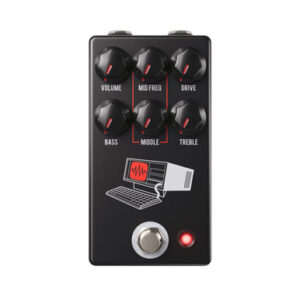

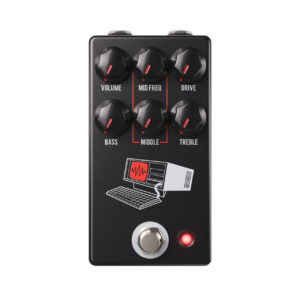
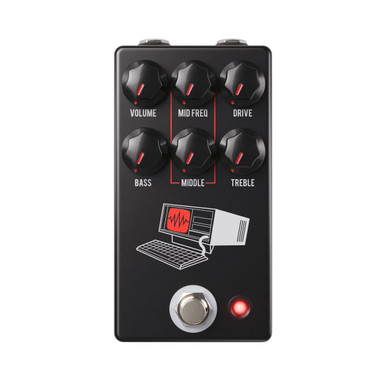
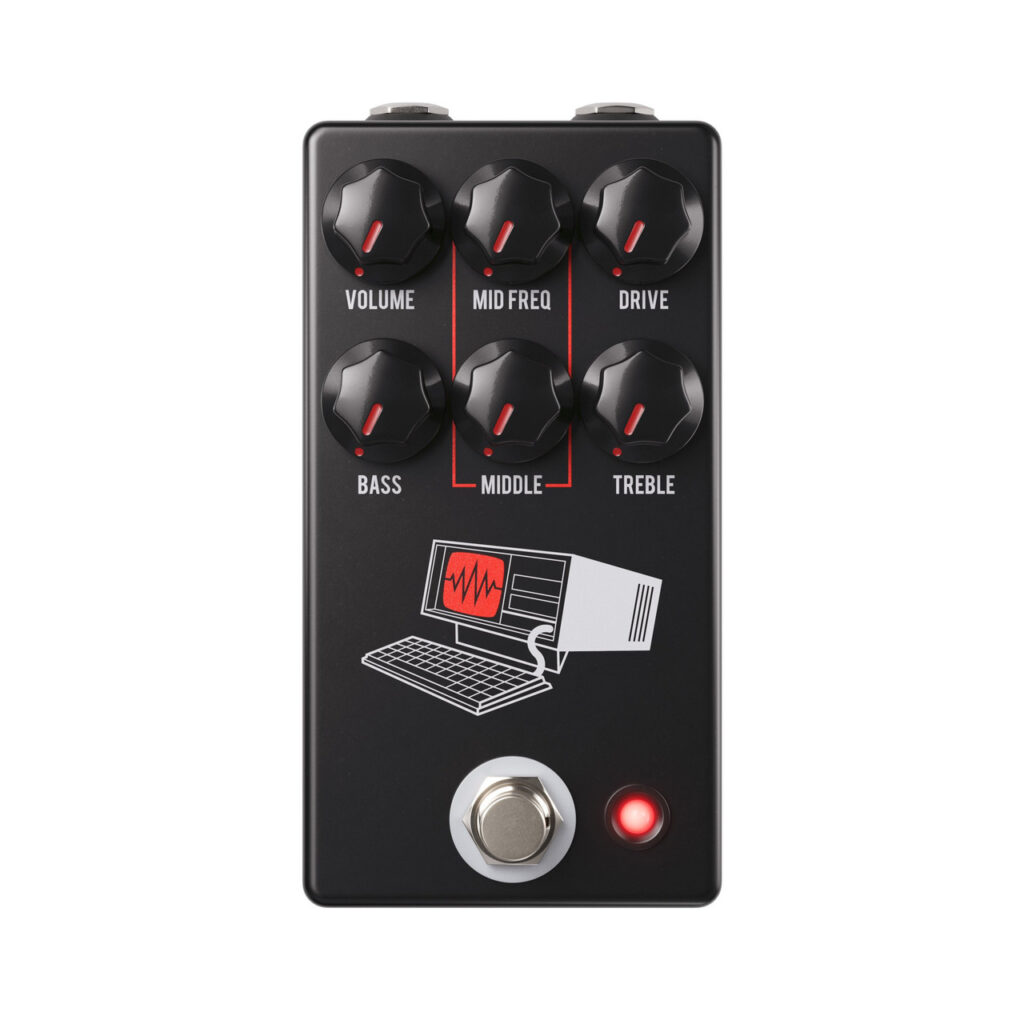
After an 8-year high-gain passion project led by Josh Scott and former head engineer Cliff Smith, JHS Pedals are proud to offer the Hard Drive Distortion. It’s their first ever truly original modern high-gain distortion pedal in the company’s history. With the aim of developing a pedal which covers the converted guitar tones of the ‘90s and 2000s the Hard Drive is the perfect companion for all things alternative with a side helping of chug.
Key Features
- Choice of 2 colours: Available in either Black or Tan, don’t let any pedal ruin your rigs aesthetic!
- Soft Touch: Effortless and noise-free bypassing.
- Buffered Bypass: Premium quality buffer ensuring that your precious guitar signal doesn’t get lost in a sea of pedals and cable.
Ultimate Mid-Frequency Control
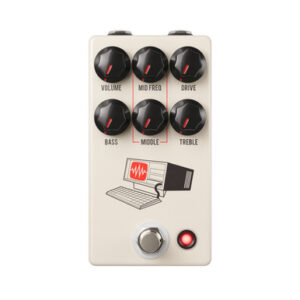
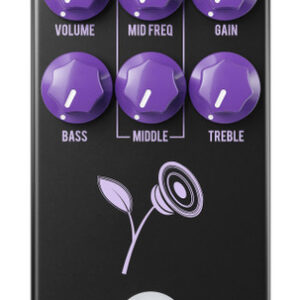
The Hard Drive uses a 2-knob sweepable midrange EQ to provide the ultimate mid-frequency flexibility. The Mid Freq knob allows you to select the specific mid-range frequency you wish to manipulate whereas the Middle knob allows you to control whether that frequency is scooped (left) or boosted (right). With the knob set to noon, the mid-EQ is flat. The treble and bass knobs are also flat in the noon position with left as a cut and right as a boost. Thanks to the intuitive well-thought-out tone-stack of the Hard Drive, dialling in the perfect high-gain tone for your project couldn’t be easier.
Original Circuit
Taking a casual approach to designing the Hard Drive led to JHS having the freedom and headroom for experimentation. First taking ideas and inspiration from other high-gain pedals and then high-gain valve amplifiers all ideas were eventually scrapped and the Hard Drive was taken back to the drawing board resulting in the development of a truly unique and original circuit design not based on any previously developed topology. Utilising cascading gain stages and a hard limiting circuit, followed by a class AB amplifier circuit which powers the unique midrange EQ section the Hard Drives offers you a tone that sounds and feels familiar however, done in a unique and interesting way which offers maximum control of tone and distortion.
Specifications
- Pedal Type: Distortion
- Analogue/Digital: Analogue
- Controls: Volume, Mid Freq, Drive, Bass, Middle, Treble
- Bypass: Buffered
- Switching: Soft Touch
- Input: ¼” Top Mounted
- Output: ¼” Top Mounted
- Power Source: 9V DC Centre Negative Power (sold separately)
- Power: 78mA
- Made in the USA