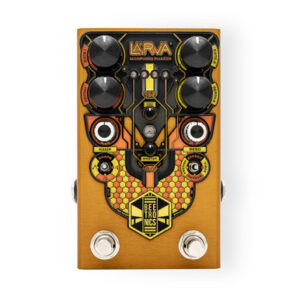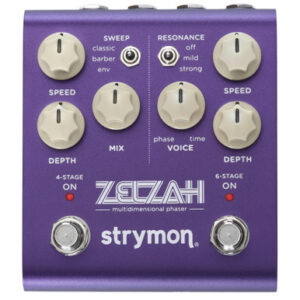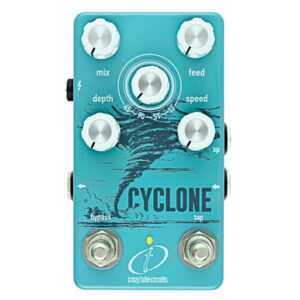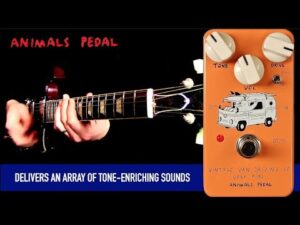
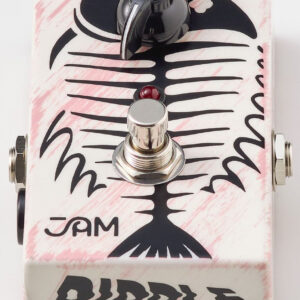
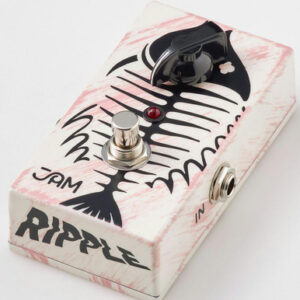
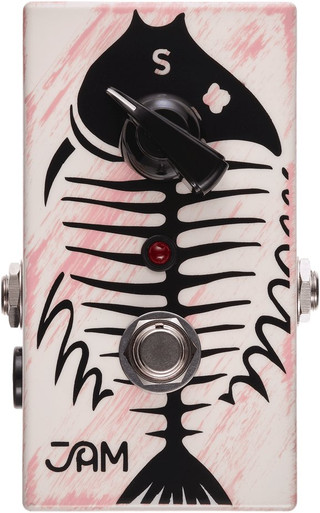
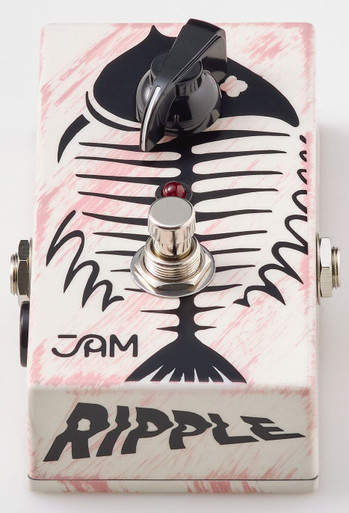
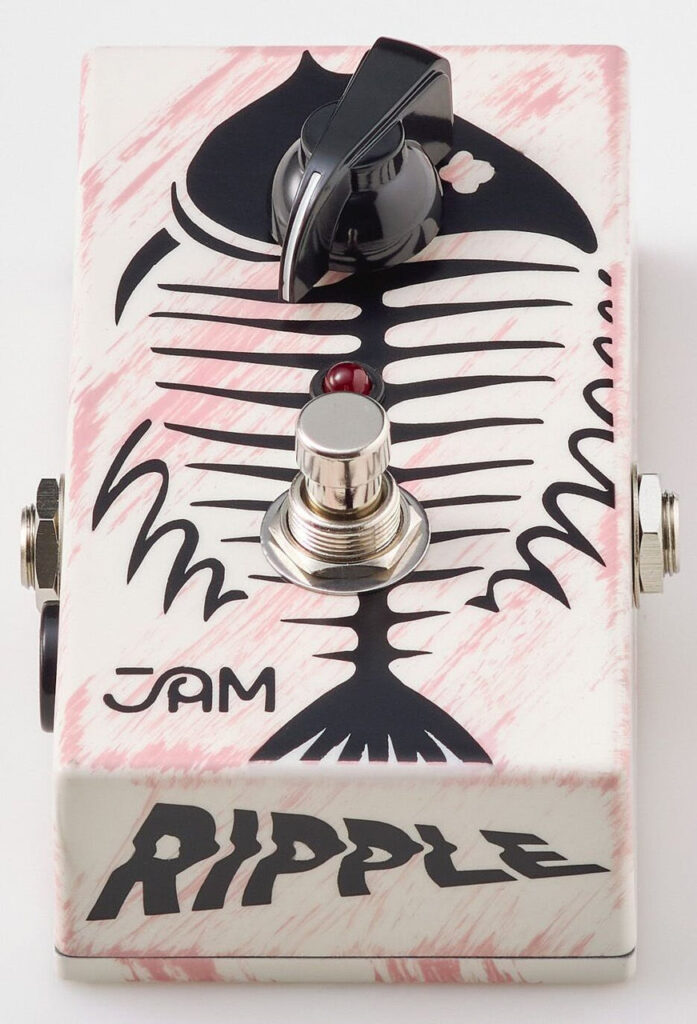
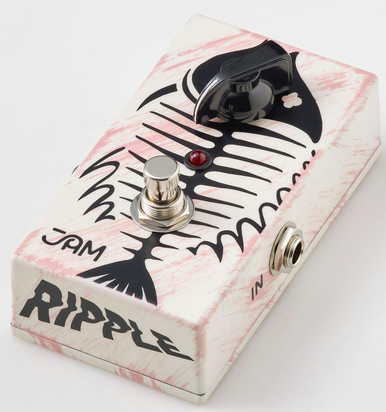
JAM Pedals Ripple Phaser Pedal

£199.99

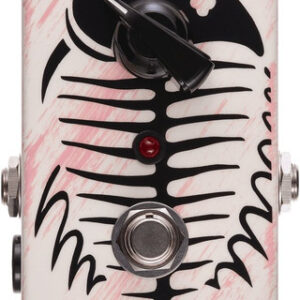
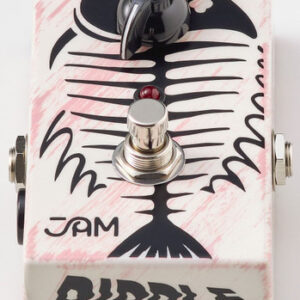
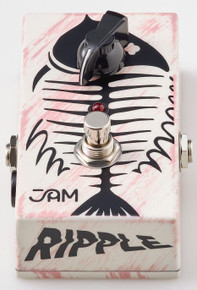
The Ripple weaves in and out of your guitar tone like a piranha slips through water. A real homage to two-stage phasing, the Jam Pedals Ripple is a classic, smooth phaser stompbox in its most stripped back form. By adding a bit of modulated movement to your signal, you can enhance your guitar tone and […]


Description

The Ripple weaves in and out of your guitar tone like a piranha slips through water. A real homage to two-stage phasing, the Jam Pedals Ripple is a classic, smooth phaser stompbox in its most stripped back form.

By adding a bit of modulated movement to your signal, you can enhance your guitar tone and set it apart from the rest.

Plug it in and you’re away with a gliding effect that works extremely well with other layered textures. Crank the single dial and you’ve got a unique effect to use for one-off interludes and guitar lines.  

Here’s what Jam Pedals say about the Ripple:

The Ripple is an homage to 2-stage phasing. It offers a truly unique, deep “vibey” tone, that we are extremely proud of! Breathe new life into your funky percussive grooves, enhance arpeggiating parts with deep “vibey” modulation, or max it out to animate quirky passages.

The Ripple performs equally well before and after overdrive pedals. One may not encounter 2-stage phasing circuits so often these days, but we believe in its sincerity and straight-forwardness so much we are proud to include it as the JAM pedals offering in the genre.

ARTIST QUOTES

“I’ve been enjoying the Ripple a great deal. It’s got a really mellow phase tone that doesn’t overtake the sound of the guitar.” – James Sedwards

“Tasty phaser with a real nice wobble to it.” – Sean Ono Lennon
Brand

JAM

Category

JAM

Tags

Phaser

A phaser is a type of guitar effects pedal that creates a swirling, sweeping sound by modulating the phase of the audio signal. It works by splitting the incoming signal into two paths, shifting the phase of one path, and then recombining them. This creates peaks and troughs in the frequency spectrum, resulting in a distinctive, “phasing” effect characterized by moving notches in the frequency response.

Here’s how a phaser pedal typically works and some common features:

1. **Rate**: The rate control adjusts the speed at which the phase-shifting effect oscillates. Increasing the rate produces faster modulation, creating a more pronounced swirling effect, while decreasing the rate slows down the modulation for a smoother, more subtle effect.

2. **Depth**: The depth control adjusts the intensity or depth of the phase-shifting effect. Higher depth settings result in more pronounced peaks and troughs in the frequency response, while lower settings produce a more subtle modulation.

3. **Feedback (or Regeneration)**: Some phaser pedals feature a feedback control that determines the amount of modulated signal fed back into the effect. Increasing the feedback creates more pronounced peaks and troughs in the frequency spectrum, resulting in a more intense and resonant phasing effect.

4. **Stages**: Phasers typically have multiple stages (usually four, six, or eight), each of which contributes to the overall phase-shifting effect. More stages generally result in a more complex and textured phasing sound.

5. **Sweep (or Manual)**: The sweep control adjusts the center frequency of the phase-shifting effect. This allows you to focus the phasing effect on specific frequency ranges, altering the tonal character of the modulation.

6. **Resonance (or Feedback)**: Some phaser pedals feature a resonance control that emphasizes the peaks and troughs in the frequency response, creating a more pronounced and resonant effect. This control can add richness and depth to the phasing sound.

Phaser pedals are commonly used in various music genres, including rock, funk, and psychedelic music, to add movement, depth, and texture to guitar tones. They can be used to create swirling, swirling effects on rhythm parts, add dynamics to lead lines, or create atmospheric textures for ambient music. Overall, phaser pedals offer guitarists a versatile tool for shaping their tone and adding expressive modulation effects to their playing.

Phaser Pedals