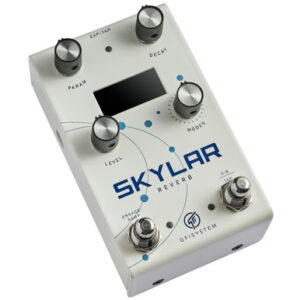
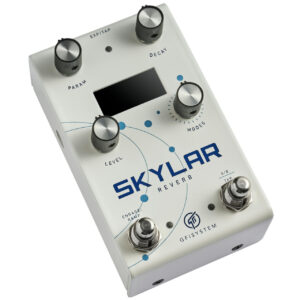
GFI System Skylar Reverb Pedal

£229.00

This is a New GFI System Skylar Reverb Pedal from GFI System, listed in Reverb Pedals on Just Pedals. Read More below.

View Just
more
and , ,

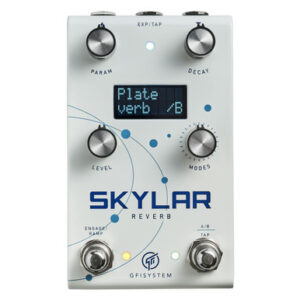
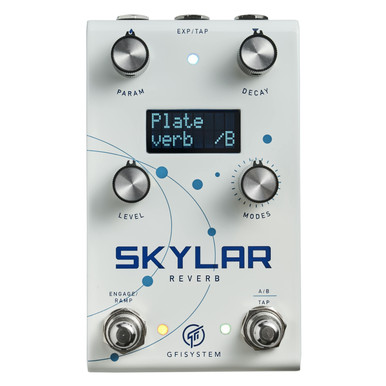
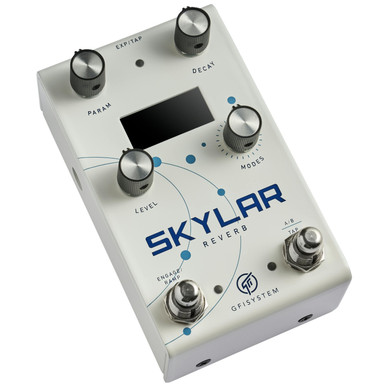
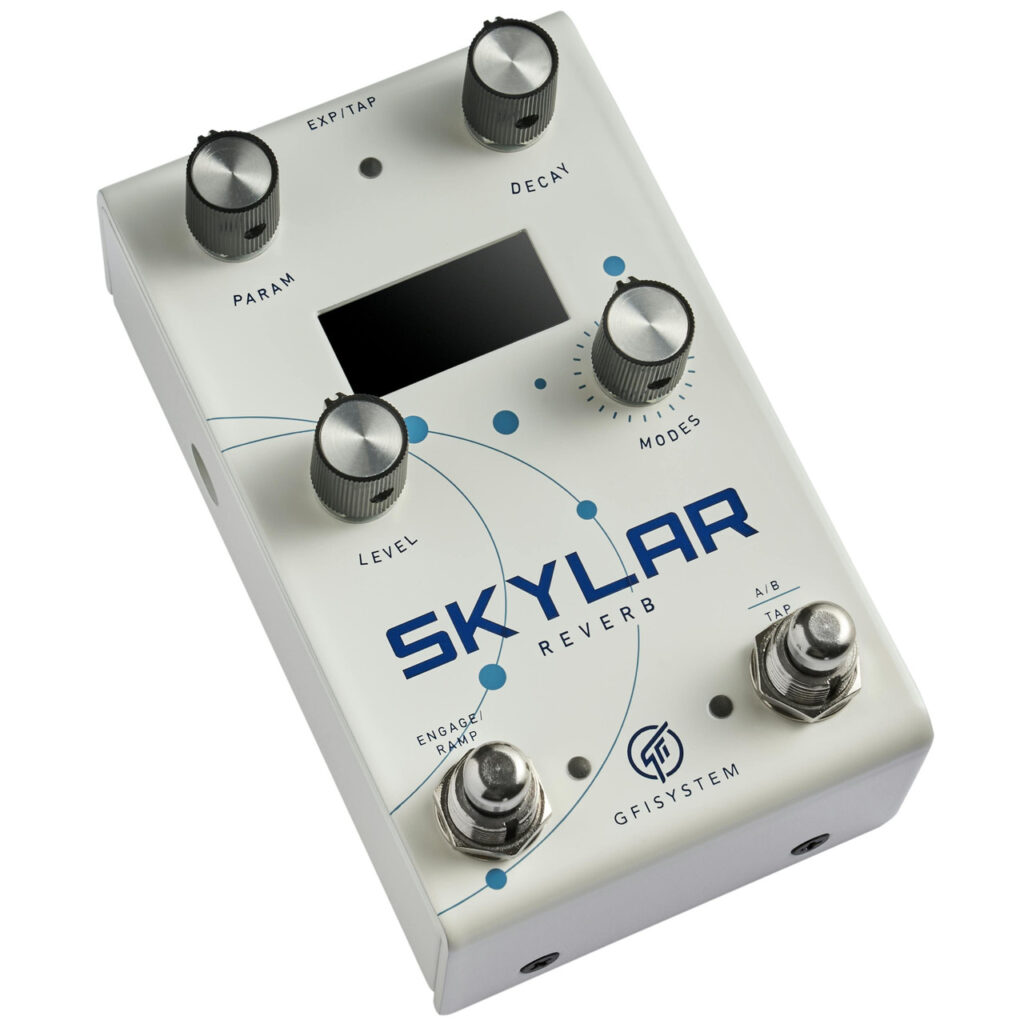
GFI System pedals have garnered plenty of acclaim in recent years for their stellar, ethereal sounds and intuitive interfaces. The Skylar reverb packs four quintessential and highly-versatile GFI System ambient algorithms into a compact pedal that is straightforward and easy to use. The LCD screen makes it a breeze to navigate through Skylar’s vast sonic palette and features, giving you more freedom to focus on your playing!

Key Features

  • 4 selectable reverb textures: Spatium, Shimmer, Plate, Tremble (tremolo-reverb with tap-tempo).
  • 2 presets, accessible via dedicated A/B footswitch.
  • 4 knobs provide you with plenty of control over different parameters.
  • Intuitive interface with bright LCD screen.
  • Analogue dry-through retains character of your unaffected tone.
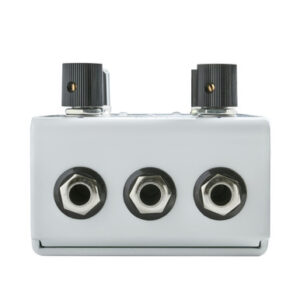
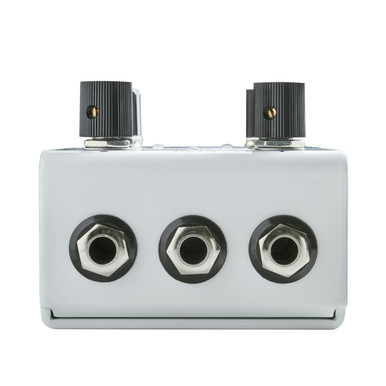
  • Mono and stereo input/output, allowing you to use the pedal with single or dual-amplifier rigs.
  • Expression pedal and tap-tempo input lets you affect parameters on-the-fly.
  • Momentary action supported.

Mono or Stereo – You Decide!

The GFI System Skylar has both mono and stereo inputs/outputs. This means that you can use it with a simple single-amp setup, or run it through two separate amplifiers to create an immersive ambient experience. Mono connection is made using standard TS patch cables, while stereo routing is achieved via TRS cables (a splitter-Y cable may be required).‹

External Control

A thoughtfully-added multi-purpose jack allows you to connect the Skylar to an expression or tap-tempo pedal.‹ With an expression pedal, you can directly control certain reverb parameters completely on-the-fly — perfect for players who like to create experimental and otherworldly sounds! An external tap-tempo can be used to control the tremolo speed in the Tremble algorithm.

Specifications

  • Input Impedance: 1 MOhm
  • Output Impedance: 1K Ohm
  • DAC / ADC Resolution: 24 bits
  • Current Consumption: ~110 mA
  • Weight: 0.6 Kg (1.6 lbs)
  • Dimensions (L x W x H): 12 x 7.2 x 5.5 cm
  • Power Source: 9VDC (Negative Center)
Related videos

Brand

GFI System

GFI System is a boutique pedal company based in Jakarta, Indonesia, recognized for its high-quality guitar effects pedals and advanced signal processing units. Founded by Henry Widjaja, GFI System has gained acclaim for its commitment to innovation, craftsmanship, and sonic excellence.

The company offers a diverse range of effects pedals, including modulation, delay, reverb, and overdrive pedals, each designed with meticulous attention to detail and utilizing cutting-edge technology. GFI System pedals are celebrated for their versatility, pristine sound quality, and intuitive user interface, making them a favorite among discerning musicians and recording engineers worldwide.

One of GFI System’s standout products is the Specular Tempus, a stereo delay and reverb pedal renowned for its studio-quality sound and extensive feature set. The Specular Tempus offers a wide range of delay and reverb algorithms, customizable parameters, and MIDI functionality, making it a powerful tool for ambient musicians, sound designers, and performing guitarists alike.

In addition to effects pedals, GFI System also produces advanced signal processing units, such as the Clockwork Delay and the Cabzeus Mono, which offer studio-grade effects and amp simulation in a compact and portable format.

With its dedication to innovation, quality, and sonic excellence, GFI System continues to be a respected name in the guitar effects industry, inspiring musicians to explore new sonic territories and push the boundaries of their creativity.

Category

Reverb Pedals

Reverb pedals create the reflections and decay that make a dry signal feel placed in a room, plate, spring or designed space. Room, hall, plate, spring, shimmer, freeze and ambient algorithms differ in density, pre-delay, modulation, tone and how the tail responds when bypassed. Analogue spring-style circuits have their own physical behaviour; digital designs can offer several spaces, presets and stereo routing. Keep an eye on mix and low-frequency decay so the effect does not cloud the rhythm section. Check spillover, trails and mono summing when choosing a model for a live board.

Tags

Analogue

Uses continuous analogue circuitry for some or all of the audio path, so clipping, filtering or modulation arises from physical components rather than sampled algorithms. Check the exact signal path.

Presets

Stores complete groups of parameter values for later recall. The number of locations, switching time, spillover behaviour and whether presets include routing, expression and MIDI assignments determine how completely one sound can change into another.

Stereo

Processes, creates or passes two audio channels. True stereo preserves separate left and right inputs, while mono-to-stereo effects generate spatial differences internally; routing, phase behaviour and whether trails remain stereo determine the resulting image. Some outputs sum to mono when only one socket is connected, which can change level or modulation depth.