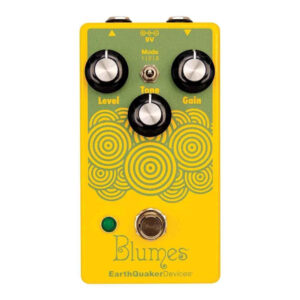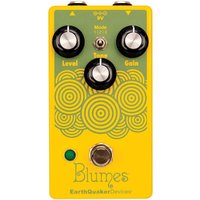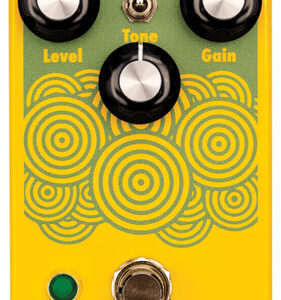
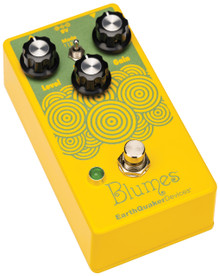
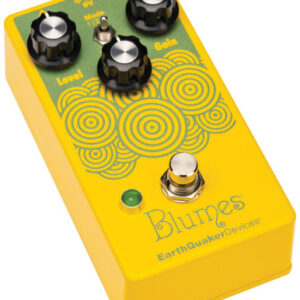
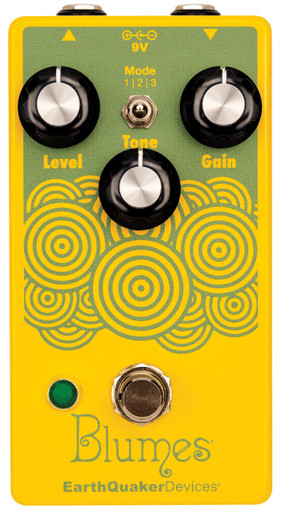
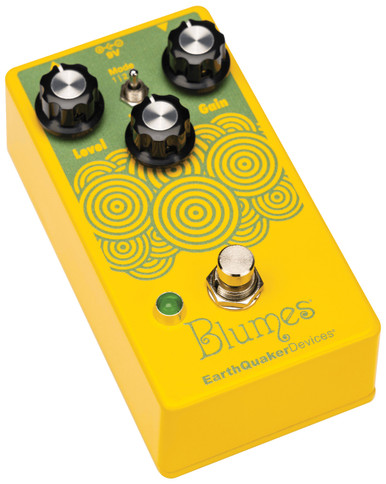
Earthquaker Devices Blumes Low Signal Shredder Bass Overdrive Pedal

£124.99

This is a New Earthquaker Devices Blumes Low Signal Shredder Bass Overdrive Pedal from EarthQuaker Devices, listed in Overdrive Pedals on Just Pedals. Read More below.

View Just
more
and , ,

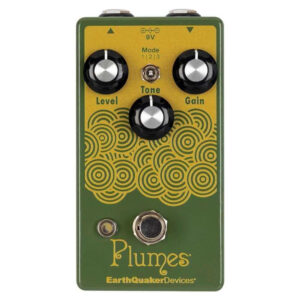
Designed for bass players that like to live in the low-end, the Earthquaker Devices Blumes Low Signal Shredder Overdrive Pedal is based on the Plumes circuit. This stompbox delivers all the same characteristics and features of the plumes, however, it has been modified to give you even more gain and bass response to tame that low-end even more!

Being an all-analogue tri-mode overdrive pedal, with a screamer-style circuit at its heart, Earthquaker devices have created a voice all its own. Producing more of a dynamic response, with cutting clarity, and plenty of headroom, you will experience a 3D tone that will enhance your sonic palette into something extraordinary.

Three Modes

Featuring three different modes, you can experiment and discover the tone that suits you the best all at the flick of a switch:

  • Symmetrical LED
  • Asymmetrical Silicon
  • No Diode OpAmp Drive

Key Features

  • More Gain, More Bass – With twice as much gain as the Plumes, you can achieve the same great crunchy attitude with even more low-end, clarity, and bass.
  • Three Modes – Select between three modes to find a setting that suits your style the best on an all-analogue signal path.
  • Bipolar Power – Operating off an internal bipolar power supply you will be able to achieve more headroom and signal clarity from your tone.

Specifications

Power

  • Power: 9V DC PSU (Power Supply Not Included)

Controls

  • Level
  • Tone
  • Gain
  • Mode Switch
  • Flexi-Switch Footswitch

Related videos

Brand

EarthQuaker Devices

In the current JustPedals catalogue, EarthQuaker Devices is represented by Octave Pedals, Fuzz Pedals and Overdrive Pedals. Current listings include Organizer V2, Hoof Fuzz V2 and Buffer/Splitter. That makes the range relevant to players looking for drive, gain and clipping, plus time-based effects and ambience. Check each model for its exact circuit or processing platform, controls, power requirements and connections, particularly where the catalogue includes both pedals and supporting gear.

Category

Overdrive Pedals

Overdrive pedals add controlled clipping and harmonics while retaining more of the instrument’s attack and dynamics than heavier distortion. They can simulate a pushed valve amp, add a mid lift, tighten the low end or provide a lower-gain always-on voice. Gain, tone, output, presence, bass and clipping options determine how the pedal responds to pickups and the next stage. Before choosing, decide whether it should clean up from the guitar volume, stack with another drive or feed an already driven amplifier.

Tags

Analogue

Analogue products use continuous audio circuitry for some or all of the signal path, so clipping, filtering or modulation arises from physical components rather than sampled algorithms. The label does not guarantee a particular tone; component choice, headroom, bias, noise and the surrounding gain stages still matter. Check whether the switching, presets, control section or cabinet stage is digital when the exact signal path is important.

Bass

Bass products are designed or voiced to retain low-frequency information and usable headroom with bass guitar or other low-register sources. Controls may centre on clean blend, low-end EQ, compression, crossover points or drive character. A guitar pedal can sometimes work well on bass, but it may remove the fundamental or compress the transient. Check the frequency response, input impedance, output level and dry-signal path with the intended tuning and amplifier.

Vocal

Vocal products process a microphone signal with harmony, reverb, delay, doubling, pitch correction, distortion or tone shaping. Microphone type, phantom-power handling, input gain, footswitch control and balanced output are as important as the effect list. Check key or scale settings, monitoring, feedback control, dry-signal routing and the intended PA or interface connection before using a vocal effect on stage.