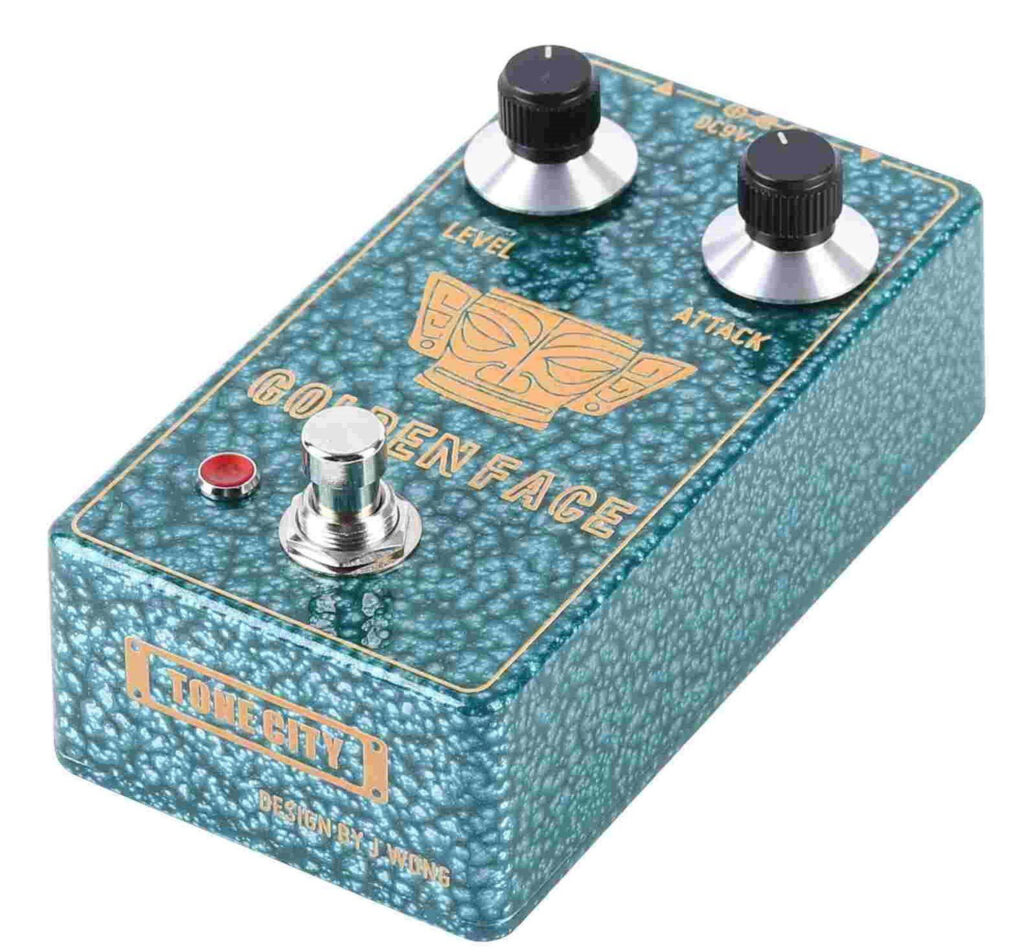



Producing creamy fuzz character in the style of legendary Jimi Hendrix and Eric Johnson tones, the Tone City Golden Face pays homage to a flat fuzz stompbox that defined the sound of rock ‘n’ roll.Famous fuzzy tonesUtilising a BC183 triode‑based circuit that audiophiles will instantly recognise, the Golden Face has everything you need over just two controls to dial in gentle light overdrive all the way up to high-gain madness. This is a harmonic textured fuzz putting a unique, defining stamp on your guitar tone.Many fuzz and distortion pedals struggle with volume knob cleanup, but this is one of the Golden Face’s strengths – it boasts excellent clean performance when you dial back and look for a delicate touch to accentuate your dynamics. Saying that, the Golden Face can get hairy and intense when you want to get heavy.Premium componentsAs part of the Legends series of stompboxes, Tone City have built the Golden Face with high specs including military‑grade metal‑film resistors, WIMA audiophile capacitors, plus rigorously screened operational amplifiers, diodes and transistors. This all goes towards top quality tone and incredible longevity and durability for years of playing.Key FeaturesClassic fuzzy harmonics based on defined, iconic Hendrix and Johnson tonesLight breakup all the way through to thick saturationImpressive clean-up for accentuated playing dynamicsMade with premium components for outstanding sonic qualities and longevitySpecificationsInput Impendence: 1MΩOutput Impendence:10KΩCurrent Draw: 5mAPower supply: DC 9V adaptorDM: 12(L) 10(W) 5.2(H) cmNet Weight: 0.49 kgTrue bypass



Tone City Golden Face Fuzz Pedal
This is a New Tone City Golden Face Fuzz Pedal from Tone City its found in our Fuzz Pedals on the Just Pedals menu. Read More below.
As an affiliate partner, we may earn a small commission when you buy through our links — at no extra cost to you.
Related videos
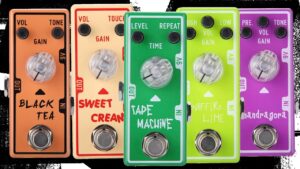
Brand
Tone City
TONECITY was founded in 2014 to make guitar pedals, pedal power supplies and related products. Its chief designer, J. Wong, has played guitar and designed pedals for much of his working life. The catalogue covers overdrive, distortion, fuzz, delay, chorus, reverb, phaser, tremolo and boost, alongside board power. JustPedals listings include the Angel Wing chorus, Model M distortion, Wild Fire distortion, Fuxx fuzz and All Spark boost. The range combines compact tone-shaping pedals with practical rig equipment, so the model’s named effect and role are more useful guides than a broad brand label.
Category
Fuzz Pedals
Fuzz drives the signal into extreme clipping, often flattening the waveform and generating a thick spectrum of harmonics. Transistor type, bias, input loading and tone filtering create markedly different responses, from loose and velvety to gated, spluttering or octave-rich. Some circuits interact strongly with pickup impedance and guitar volume, while others include buffers or blends for a more consistent response.
Others Just Ordered :
- I Love A Happy Accident… – Animals Pedal

- Animals Pedal Vintage Van Driving is Very Fun Overdrive
- Animals Pedal Sunday Afternoon Is Infinity Bender

- Ninevolt Pedals | Bath Time Reverb (Animals Pedal)
- This Fuzz Pedal Makes No Sense… But It Sounds Incredible

- ANIME Pedals | Animals Pedal Custom Illustrated Series