
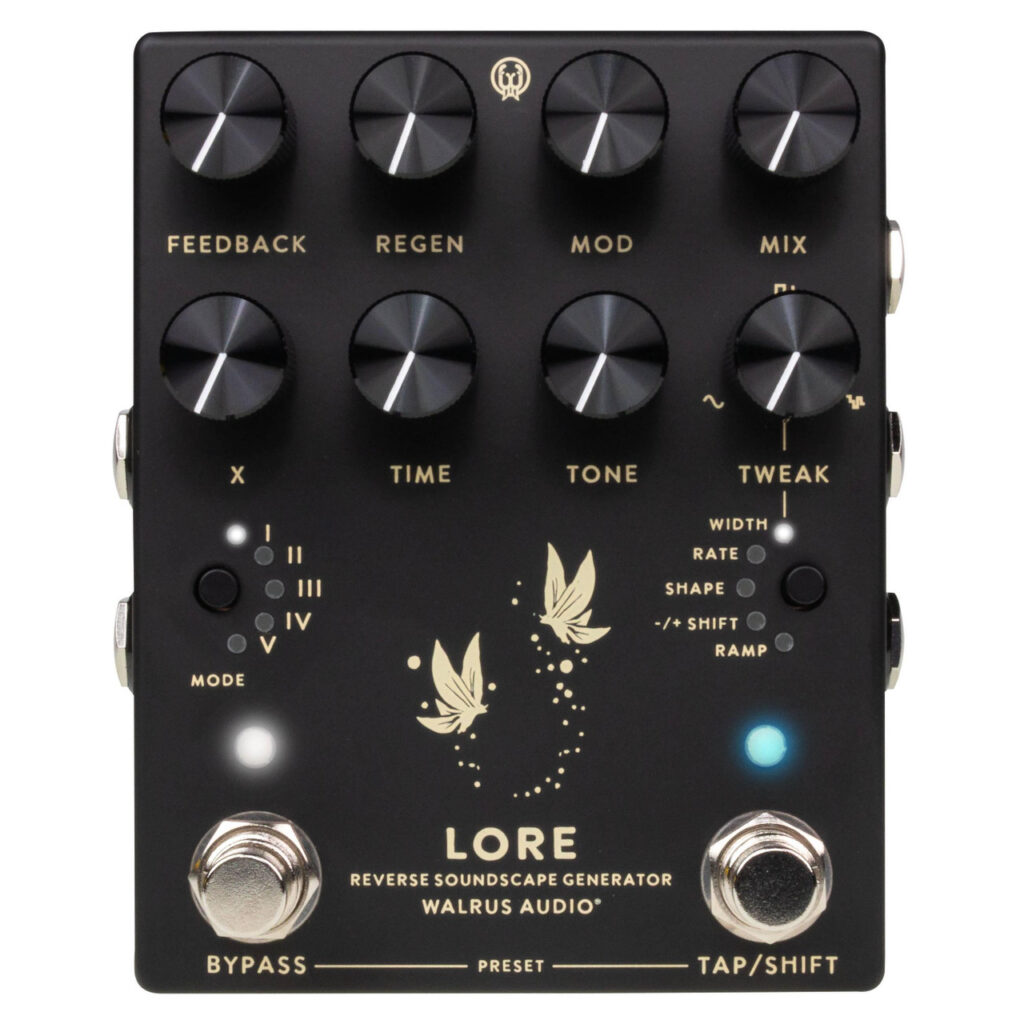



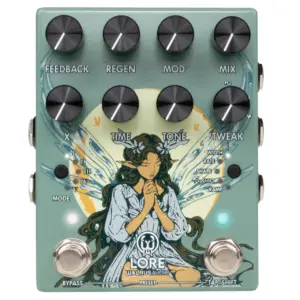
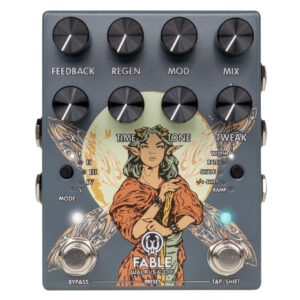
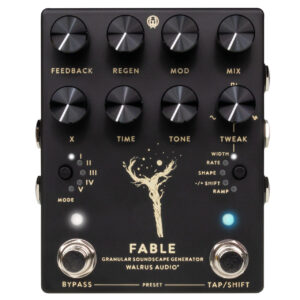
The Walrus Audio Lore MKII Reverse Soundscape Generator in Black is a powerful stereo ambient pedal that turns your guitar into a cinematic instrument. Combining reverse delays, lush reverbs and pitch shifting across five creative modes, it is built for players who want evolving textures, shimmering swells and deep, dark pads at their feet. With stereo I/O, MIDI, presets and expression control, Lore MKII is equally at home on immersive studio boards and tightly dialled live rigs. Part of Walrus Audio’s Storybook Stereo series, Lore MKII runs on the brand’s in-house MDSP platform, delivering pristine audio quality and the processing muscle needed for complex dual-effect algorithms. Each mode pairs two effects in series with separate feedback paths, so your sound keeps developing instead of simply repeating. From delicate octave-up ambience to murky octave-down soundscapes and sequencer-like pitch delays, Lore MKII invites you to write your own sonic fairy tale. For modern players, control is everything. Lore MKII lets you save three presets on the pedal, with up to 127 available via MIDI, so your favourite patches are always ready to go. The Tweak section gives you instant access to stereo width, modulation and clock-shifting tricks, while the tap footswitch doubles as a momentary Dive/Rise control for expressive pitch and time warps. MIDI clock sync, assignable expression and selectable trails bypass make it easy to integrate into any advanced pedalboard setup. Finished in a sleek black enclosure with artwork by Niall Grant, this version of Lore MKII offers a more minimal visual take on Walrus’s trademark storytelling aesthetic. Whether you are scoring soundtracks, building ambient worship pads or just looking for a single pedal that can transform simple chords into huge, three-dimensional soundscapes, Lore MKII is designed to keep you inspired for years to come. Five Immersive Reverse Soundscape Modes Lore MKII gives you five carefully voiced algorithms that blend reverse delay, reverb and pitch shifting in musical ways. From reverse delay into reverse reverb, to octave-up and octave-down ambience, dual reverb with time stretching, and duelling pitch delays that behave like a sequencer or harmoniser, each mode offers a distinct flavour of evolving texture. This makes it easy to move from subtle atmosphere to full-blown cinematic washes without changing pedals. Stereo, MIDI and Presets for Modern Rigs With true stereo inputs and outputs, Lore MKII can sit at the heart of a wide, immersive setup, or instantly turn a mono signal into a huge stereo spread. Onboard storage for three presets plus a live mode keeps your go-to sounds within easy reach, while MIDI support unlocks up to 127 presets, full CC control of every parameter, mode selection, bypass and tap tempo. It is a powerful hub for players who need repeatable, recallable sounds on stage and in the studio. Expressive Tweak, Modulation and Dive/Rise Control The Tweak button and knob give you fast access to Width, Mod Rate, Mod Shape, Shift and Ramp, so you can fine-tune how wide, wobbly or warped your sound becomes. Modulation ranges from slow, gentle movement to faster, more experimental textures, with sine, square and random LFO shapes. Hold the tap switch to trigger the Dive/Rise momentary feature, shifting the pedal’s clock rate for dramatic pitch and time sweeps that respond directly to your foot. High-Fidelity MDSP Platform and Flexible Bypass Built on Walrus Audio’s proprietary MDSP digital processing platform, Lore MKII delivers clear, detailed audio even when running complex nested feedback paths and dual effects. Buffered bypass with selectable Trails or No Trails operation lets you decide whether your reverbs and delays fade naturally or stop instantly when you bypass the pedal. It is a practical, high-fidelity solution for players who want cutting-edge sound design without sacrificing reliability or clarity. Key Features Five Reverse, Reverb and Pitch Mode…



Walrus Audio Lore MKII Reverse Soundscape Generator FX Pedal in Black
This is a New Walrus Audio Lore MKII Reverse Soundscape Generator FX Pedal in Black from Walrus Audio its found in our Specialist Effects Pedals on the Just Pedals menu. Read More below.
As an affiliate partner, we may earn a small commission when you buy through our links — at no extra cost to you.
Related videos
Brand
Walrus Audio
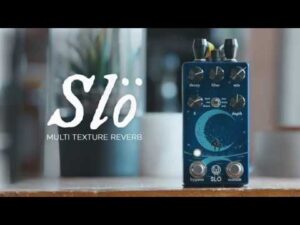
Walrus Audio describes itself as a collective of artists, musicians and engineers, bringing circuit design together with distinctive pedal artwork. The company says its effects are hand-built and manufactured in the USA. JustPedals listings illustrate the variety: ARP-87 multi-function delay, Slö ambient reverb, Julia analog chorus and vibrato, and Polychrome flanger. Some models focus on direct, compact controls, while others provide broader modulation or atmospheric textures. Compare each model’s modes, stereo connections and control options; the artwork is a signature of the brand, while the circuit determines how it fits a rig.
Category
Specialist Effects Pedals
Specialist effects alter the signal in ways that do not sit cleanly inside one established family. They may use granular processing, frequency shifting, resonators, freeze or sustain, bit reduction, ring modulation, feedback networks or combinations of several techniques. The relevant distinction is the underlying process, its tracking or latency, and how completely the dry signal can be blended or replaced.
Tags
MIDI
Sends, receives or responds to Musical Instrument Digital Interface messages rather than carrying the instrument audio itself. Program changes recall presets, continuous controllers move parameters, and MIDI clock or transport messages synchronise timing between devices.
Presets
Stores complete groups of parameter values for later recall. The number of locations, switching time, spillover behaviour and whether presets include routing, expression and MIDI assignments determine how completely one sound can change into another.
Stereo
Processes, creates or passes two audio channels. True stereo preserves separate left and right inputs, while mono-to-stereo effects generate spatial differences internally; routing, phase behaviour and whether trails remain stereo determine the resulting image. Some outputs sum to mono when only one socket is connected, which can change level or modulation depth.
Others Just Ordered :
- I Love A Happy Accident… – Animals Pedal

- Animals Pedal Vintage Van Driving is Very Fun Overdrive

- Animals Pedal Sunday Afternoon Is Infinity Bender

- Ninevolt Pedals | Bath Time Reverb (Animals Pedal)

- This Fuzz Pedal Makes No Sense… But It Sounds Incredible

- ANIME Pedals | Animals Pedal Custom Illustrated Series