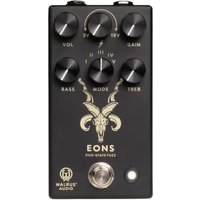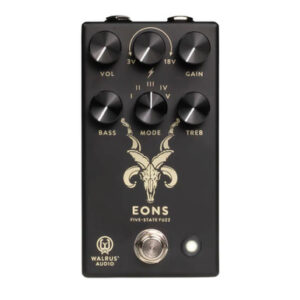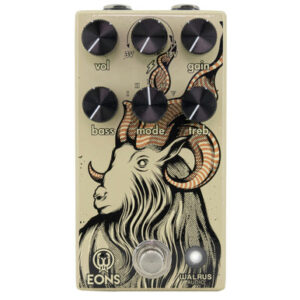
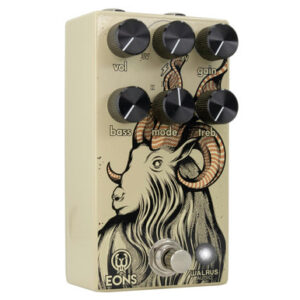

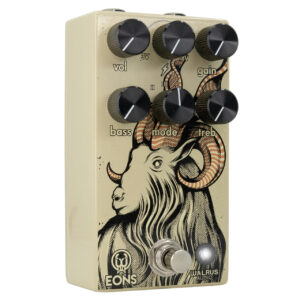
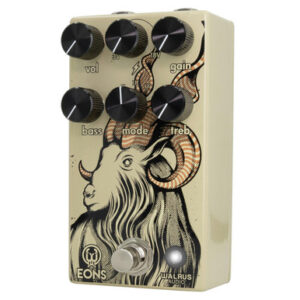
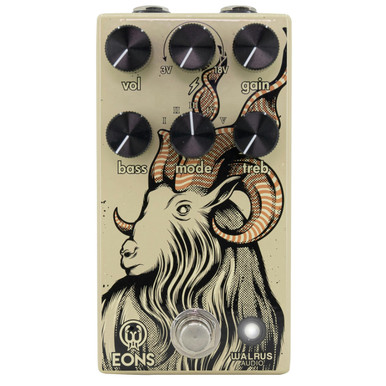
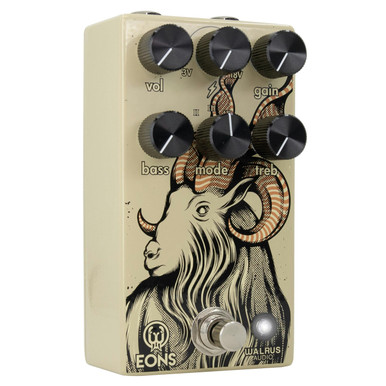
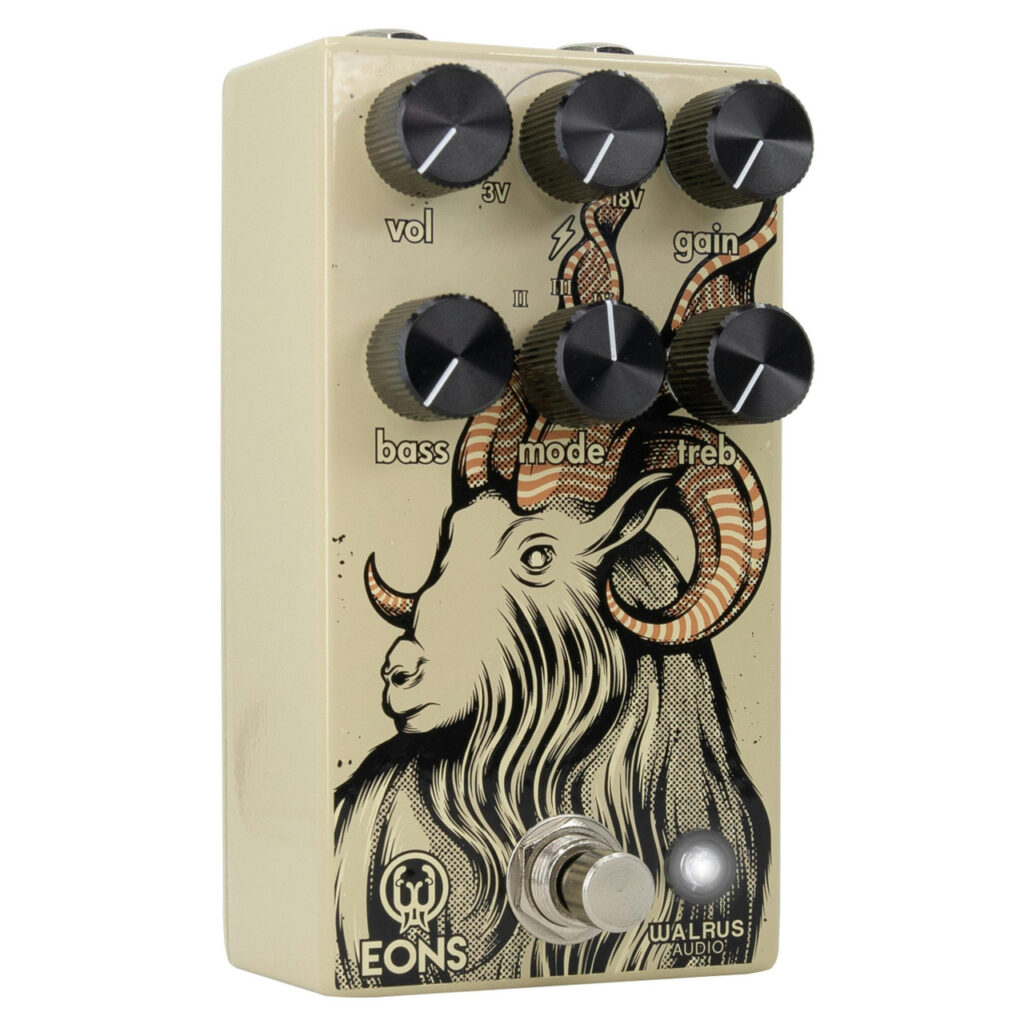
If you're looking for a fuzz pedal that can provide insane levels of flexibility, then the Walrus Audio Eons is hard to beat! This unique stompbox is capable of producing insanely thick fuzz sounds that are ready to test the limits of any amplifier's grill cloth — featuring five selectable clipping modes that change the overall character of the pedal for a wide sonic palette.
What really sets this pedal apart though is its 'Voltage' (lightning bolt) knob, which allows you to crank up the Eons' circuit to 18-volts for massive, engulfing fuzz sounds — or alternatively — you can choose to starve it down to 3-volts and attain "spitty", gated fuzz tones. Experiment with the 'Voltage' and 'Mode' knobs for nearly endless styles of fuzz that can range from those vintage-inspired sounds that emanated from the stages of Woodstock, to chaotic three-chord punk rock. This powerful pedal just might be the only fuzz you'll ever need!
5 Clipping Modes
The Eons features a five-position rotary knob that offers the following clipping configurations. You can think of them as different "flavours" of the pedal, but in a way, it's almost like having five fuzz pedals in one!
- I: Silicon clipping traditional fuzz that's well-rounded with a huge sound; compressed and smooth.
- II: Silicon clipping with an added bass boost that accentuates the low-end at the beginning of the circuit; compressed and crunchy.
- III: Germanium clipping with a feel of "what if a distortion and fuzz had a kid?"; crunchy and dynamic.
- IV: LED clipping diodes with a slight high-end cut; dynamically dark.
- V: Hard clipping silicon transistors combined with LED and silicon soft clipping diodes. The rowdiest of the modes with tons of gain: compressed, loud, and angry!
Key Features
- Five different fuzz "flavours" selectable via dedicated 'Mode' switch.
- Each mode features a different combination of frequency response and clipping style.
- Experiment with 'Voltage' and 'Mode' knobs for nearly endless styles of fuzz tones.
- Voltage knob allows you to adjust the circuit’s operating voltage from 3V to 18V, letting you attain anything from "gated, dying battery" to "wide open, less compressed" fuzz sounds.
- Active boost/cut 'Bass' and 'Treble' controls let you dial-in the perfect tone with different pickups.
- Top-mounted input and output jacks save precious pedalboard real-estate.
- Artwork features a stoic, four-horned Markhor goat illustrated by Adam Forster.
- Designed and assembled in the USA.
Specifications
- Controls: Volume, Voltage, Gain, Bass, Treble, Mode (5-Position Selector Switch)
- Power: 9V DC, Centre Negative, 100mA Minimum (PSU Not Included)
- Dimensions: 2.62" x 4.77" x 2.25"