
Brand
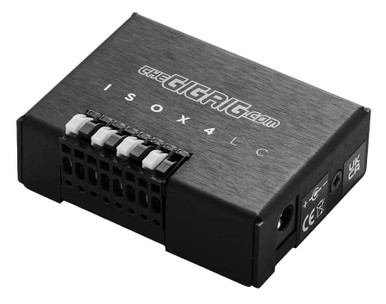
The GigRig is a UK-based company known for its high-quality pedal switching systems and effects management tools. The company has developed a reputation for creating innovative solutions that allow musicians to seamlessly integrate multiple effects pedals into their setups while maintaining control and clarity. The GigRig’s products are designed to provide versatility and ease of use for both live performance and studio use, helping musicians manage their complex pedalboards with minimal effort.
One of The GigRig’s flagship products is the *G2*, a multi-pedal switching system that allows musicians to control up to 8 effects pedals with a single unit, making it easier to create intricate signal chains and switch between different configurations on stage. The system’s flexible routing options and MIDI capabilities give users precise control over their effects, while preserving signal integrity and minimising noise. The GigRig also offers various power supplies, loop switchers, and controllers, all designed to help musicians build more efficient, organised, and professional pedalboard setups. With its focus on reliability and innovation, The GigRig has become a trusted brand for musicians seeking to optimise their pedalboard configurations.
Category
Specialist effects alter the signal in ways that do not sit cleanly inside one established family. They may use granular processing, frequency shifting, resonators, freeze or sustain, bit reduction, ring modulation, feedback networks or combinations of several techniques. The relevant distinction is the underlying process, its tracking or latency, and how completely the dry signal can be blended or replaced.
Tags
The signal is shaped by continuously varying electronic circuitry rather than being converted into a digital effect algorithm. Component choice, operating voltage and circuit tolerances influence headroom, noise, clipping texture and the small variations in response between designs.
Converts the signal or control process into numerical data for algorithmic processing. Digital designs can provide precise timing, long memory, complex routing and repeatable presets; sample rate, conversion, internal resolution and latency influence fidelity and response.
Supplied as components and hardware to be assembled into a working pedal. Circuit complexity, board layout, enclosure preparation and off-board wiring set the difficulty, while accurate component values, polarity and solder joints determine the final noise, reliability and sound.