
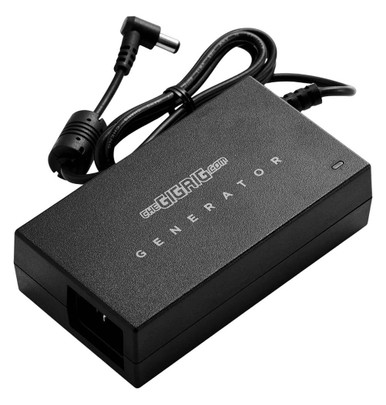
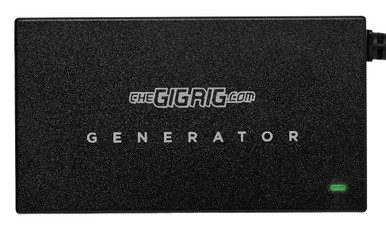
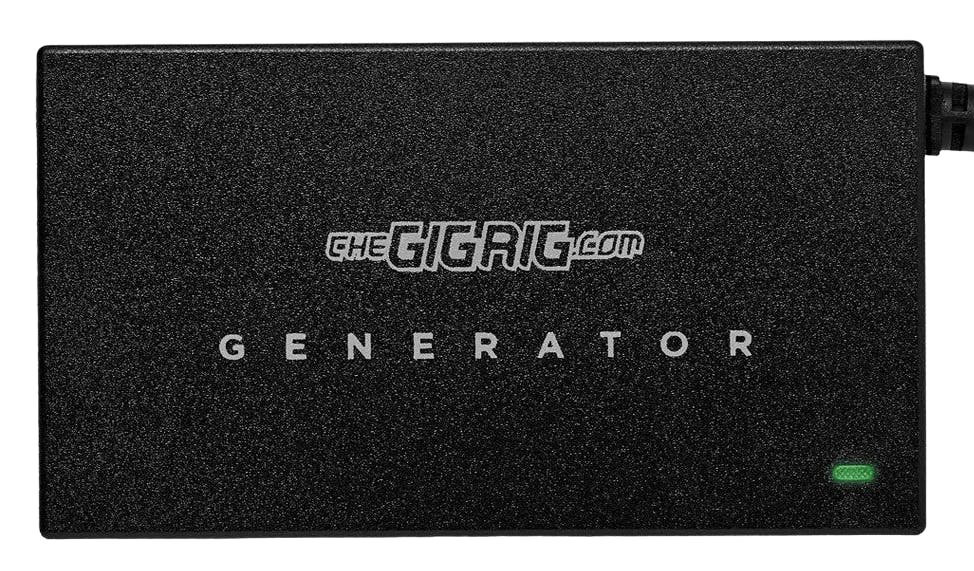

The GigRig Generator Power Supply

£119.99

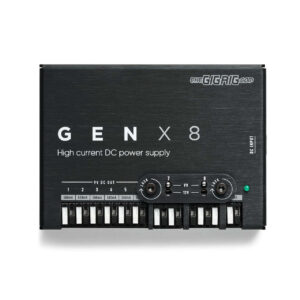
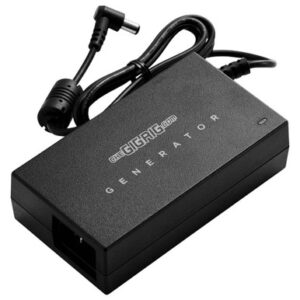
This is a New The GigRig Generator Power Supply from The GigRig, listed in Specialist Effects Pedals on Just Pedals. Read More below.

View Just
more
and

The Generator is the base and first port of call for your GigRig power supply. Using a series of distributors and power adaptors, the Generator provides electricity from the mains to power your guitar pedalboard. 

Deliver a massive 5 amps to the adaptors, designed to filter the exact current specific pedals work with best. Whether they're top of the line digital effects or old fuzz pedals, your setup won't sound as good any other way. 

Features

  • An unbelievable 5 Amps (that's 5000 milliamps!) of power which makes it the most powerful specialist guitar FX supply on the market.
  • Incredibly clean 9V DC regulated studio quality power supply.
  • Short circuit protection protects your precious pedals
  • Self-healing fuse. That's right, it heals itself!
  • Will work anywhere in the world between 110-250V. No more step-up or step-down transformers.
  • Small, light and discrete. Will fit on any pedal board.

Specifications

  • POWER – mains voltage in – 9v/ 500mA out
  • DIMENSIONS – 11 x 6 x 3cm / 4.33" x 1.18" x 2.36"
  • WEIGHT – 0.52kg (with IEC lead) / 0.34kg (without IEC lead)
  • UK (IEC) mains lead included. 

Brand

The GigRig

In the current JustPedals catalogue, The GigRig is represented by Pedal Switchers, Utility Pedals and Pedal Power Supplies. Current listings include ACA AOK, ABY-BABY and Distributor. That makes the range relevant to players looking for pedalboard infrastructure and control. Check each model for its exact circuit or processing platform, controls, power requirements and connections, particularly where the catalogue includes both pedals and supporting gear.

Category

Specialist Effects Pedals

Specialist effects alter the signal in ways that do not sit cleanly inside one established family. They may use granular processing, frequency shifting, resonators, freeze or sustain, bit reduction, ring modulation, feedback networks or combinations of several techniques. The relevant distinction is the underlying process, its tracking or latency, and how completely the dry signal can be blended or replaced.

Tags

Digital

Converts the signal or control process into numerical data for algorithmic processing. Digital designs can provide precise timing, long memory, complex routing and repeatable presets; sample rate, conversion, internal resolution and latency influence fidelity and response.