Brand
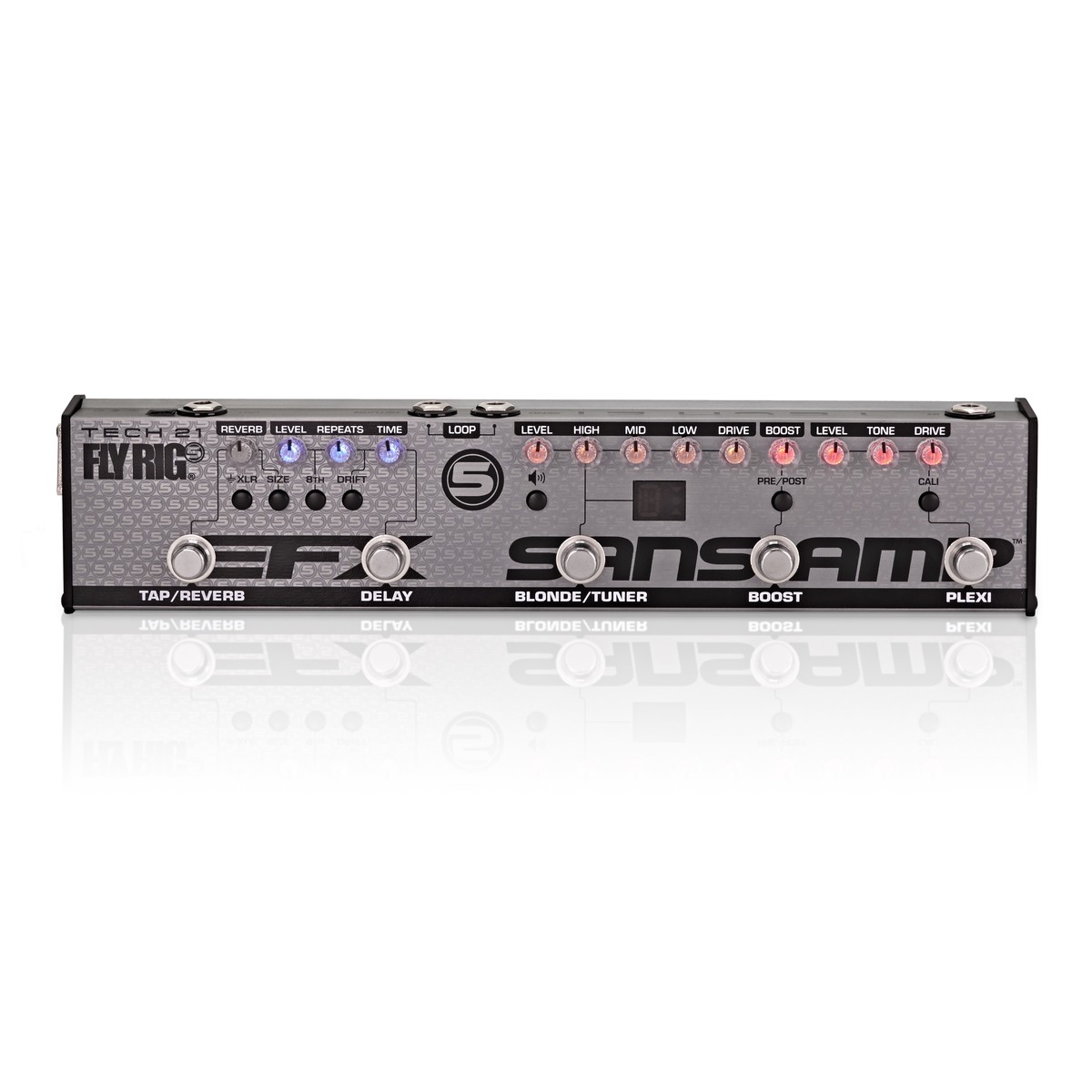
Tech 21 is a well-respected company in the music industry, particularly known for its innovative guitar effects and amplification products. Founded in 1989 by musician and engineer Andrew Barta, Tech 21 gained prominence with its groundbreaking product, the SansAmp.
This analogue amp emulator was revolutionary because it allowed guitarists to achieve tube amplifier-like tones without using actual tube amplifiers. The SansAmp became a staple in studios and live performances, appreciated for its ability to provide versatile tones, from clean to high-gain, all in a portable, pedal-friendly format.
Over the years, Tech 21 has expanded its product line to include various other effects pedals, rack units, and amplifiers, maintaining a strong reputation for high-quality, analog-based products.
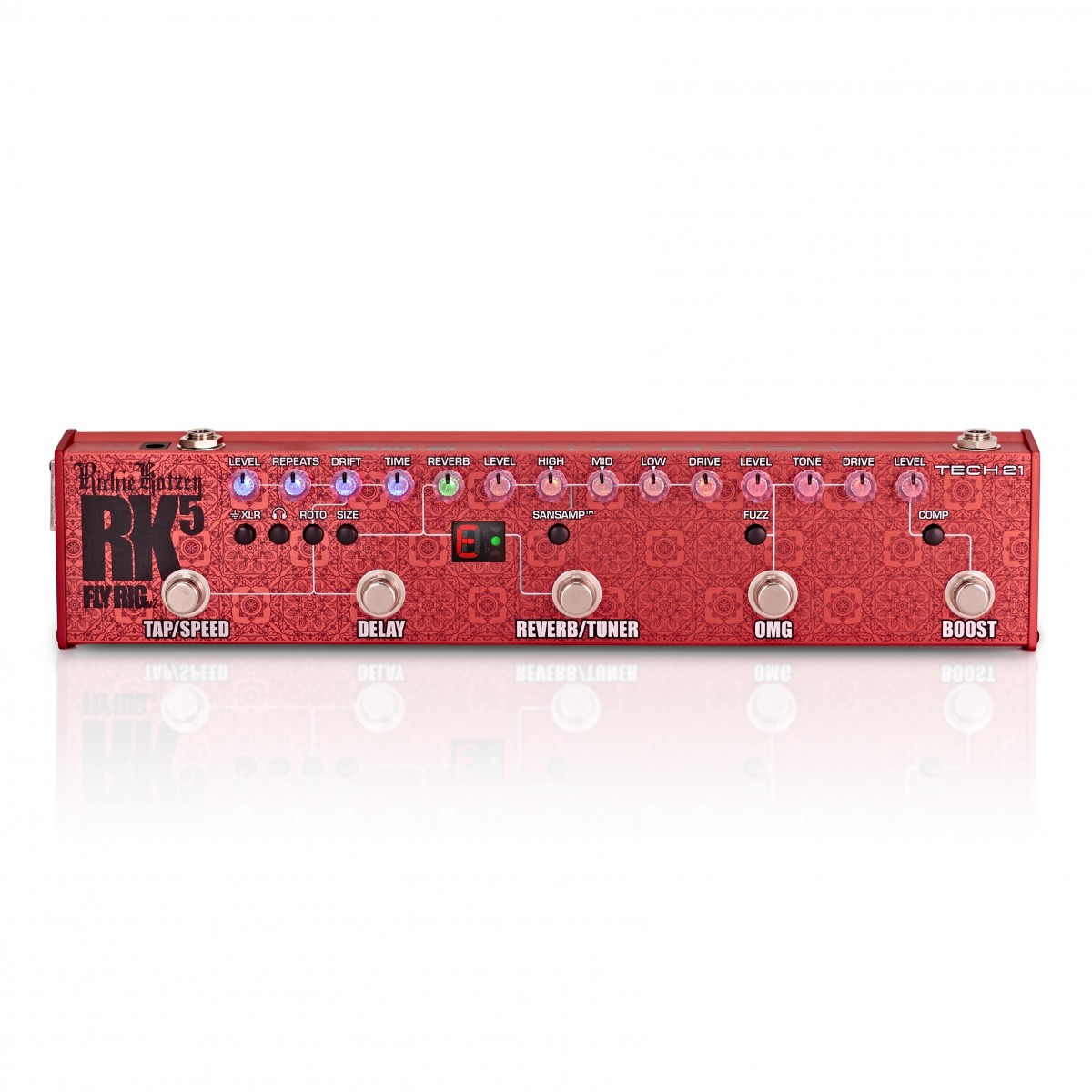
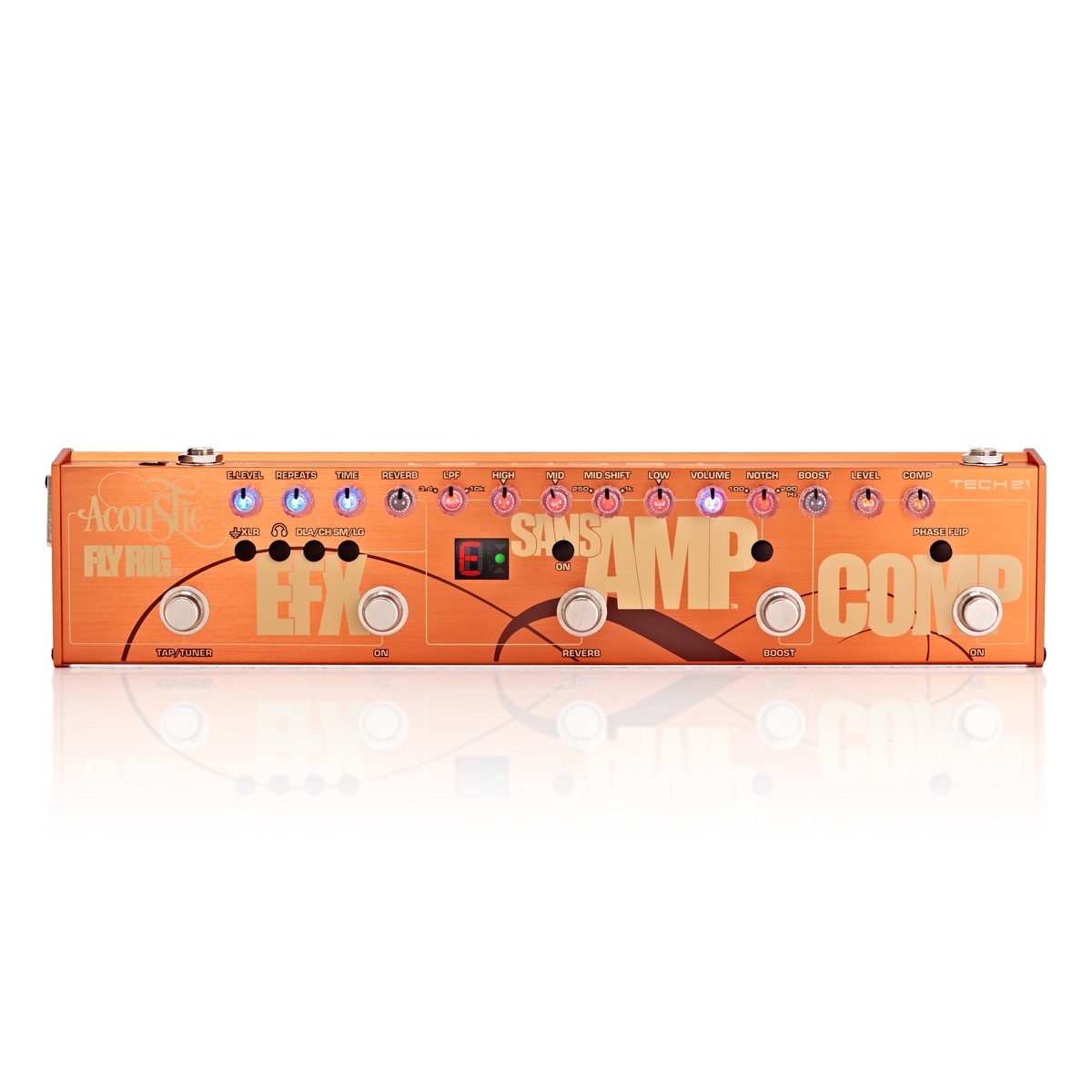
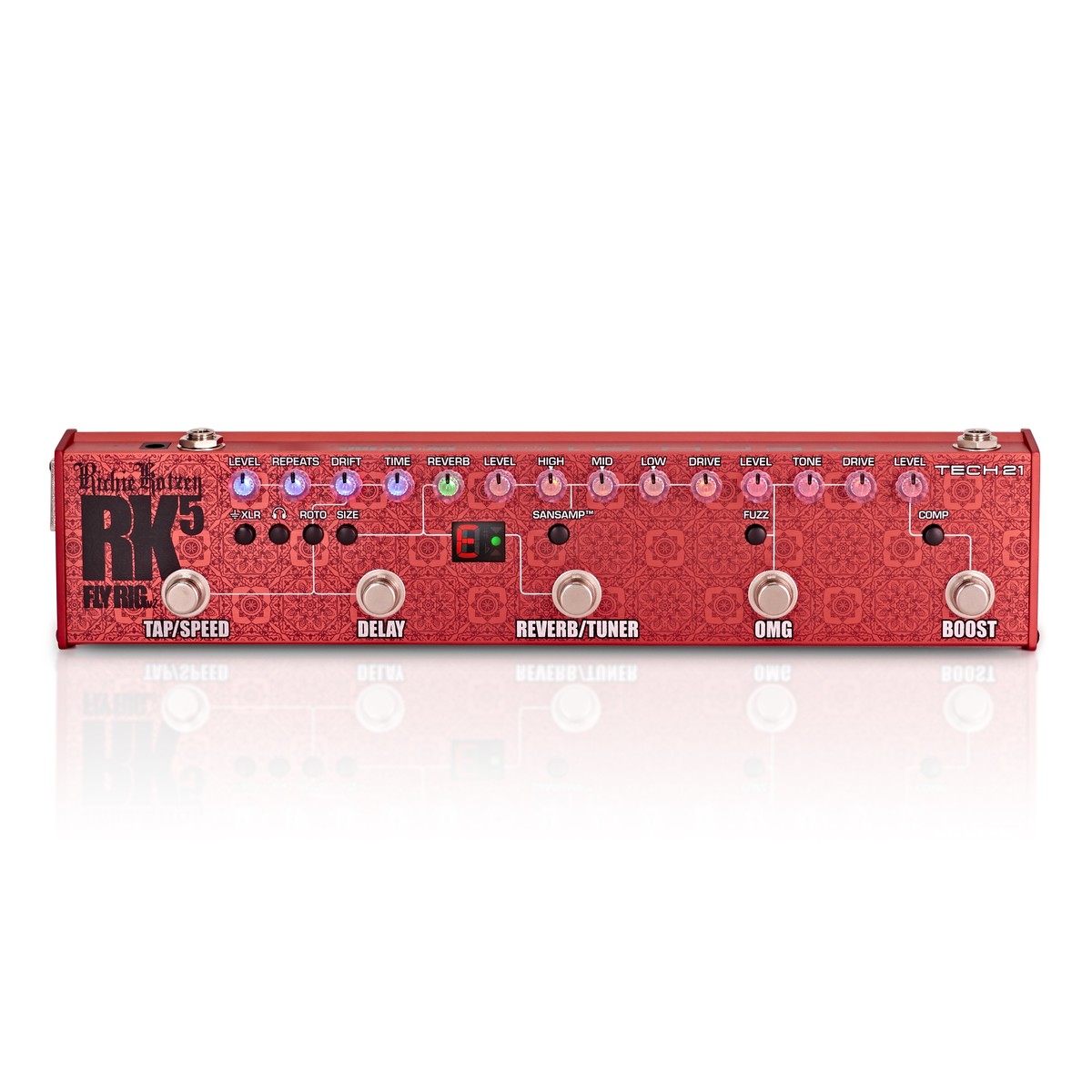
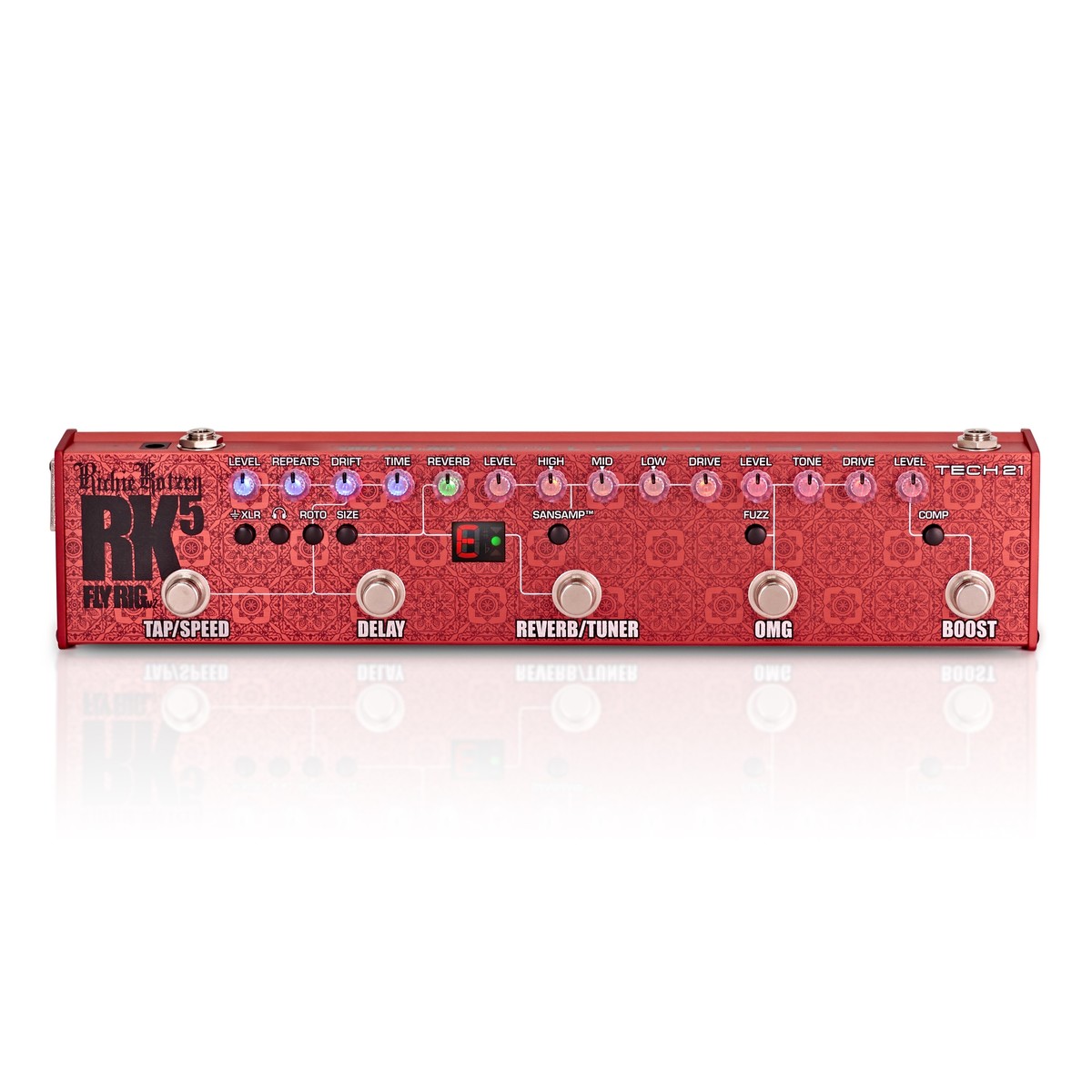
One of the key aspects of Tech 21’s success is its commitment to analogue technology, which many musicians prefer for its warmth and responsiveness. The company’s product line includes popular pedals such as the Fly Rig series, which combines multiple effects into a compact, travel-friendly unit, and the Bass Driver DI, a favourite among bassists for its ability to enhance tone and provide DI capabilities for live and studio applications.
Tech 21’s dedication to innovation and quality has made it a favourite among professional musicians across different genres, including notable artists like Geddy Lee of Rush, who has collaborated with the company to create signature models. With a focus on both practicality and exceptional sound quality, Tech 21 continues to be a leader in the world of guitar effects and amplification.
Category
Tags
A boost pedal does one simple thing brilliantly — it makes your signal louder, stronger, and more alive. Whether you’re pushing a valve amp into natural breakup, lifting a solo above the band, or adding a touch more presence to your core tone, a clean boost gives you extra headroom without changing your character.
Use it at the front of your chain to drive other pedals harder, or after your gain stages to raise volume without adding distortion. Subtle or powerful, transparent or slightly coloured, a boost is one of the most useful tools on any pedalboard — small box, big difference.
A delay pedal records your signal and plays it back after a set time, creating echoes that can range from tight, slapback repeats to long, atmospheric trails. It’s one of the most versatile effects, used to thicken tones, add rhythmic depth, or build spacious, ambient layers. Analogue delays offer warm, decaying repeats that blend naturally with your tone, while digital units provide pristine echoes with precise control over time, feedback, and mix levels.
From classic rockabilly and tape-style echoes to modern looping and shimmer effects, delay pedals have become essential tools for shaping sound. They can make solos soar, rhythms pulse, or transform simple chord progressions into cinematic textures. Whether used subtly to add dimension or boldly to create soundscapes, a good delay pedal can completely redefine the feel and atmosphere of your music.
Distortion pedals take your clean guitar signal and transform it into something bigger, bolder, and full of attitude. By clipping the waveform, they add sustain, bite, and aggression, creating that thick, compressed tone that’s powered rock music for decades. From the growling crunch of classic hard rock to the tight, saturated roar of modern metal, distortion is all about energy and presence. It gives every note weight and authority, pushing your amp to its limits and beyond.
There are countless flavours of distortion, each with its own texture and edge. Some sound smooth and creamy, others raw and gnarly like tearing fabric. It’s the sonic equivalent of turning up the heat until the sound cooks — rich, sizzling, and perfectly seasoned to taste. Whether used for rhythm muscle or soaring leads, a good distortion pedal doesn’t just add volume; it adds personality, grit, and that unmistakable sense of power under your fingers.
While Ed Sheeran primarily relies on the natural sound of his acoustic guitar and vocals, he occasionally uses EQ (Equalization) to shape and enhance his tone during live performances or in the studio. EQ pedals or onboard preamps can allow him to adjust the frequency response of his guitar signal to suit the acoustics of different venues or to achieve specific tonal characteristics. Here’s how EQ might be utilized in Ed Sheeran’s setup:
1. **Tonal Shaping**: EQ can be used to adjust the balance of frequencies in the guitar signal, allowing Ed Sheeran to shape his tone to his liking. For example, he might boost the midrange frequencies to bring out the warmth and presence of his acoustic guitar, or cut certain frequencies to reduce any harshness or mud in the sound.
2. **Feedback Control**: In a live setting, EQ can help control feedback by notching out problematic frequencies that might cause the guitar signal to feed back through the amplification system. This can be particularly useful when performing in venues with challenging acoustics or high volume levels.
3. **Room Correction**: In situations where the venue’s acoustics are less than ideal, EQ can be used to compensate for any deficiencies in the sound. By adjusting the EQ settings, Ed Sheeran can tailor the guitar tone to sound more balanced and natural, regardless of the room’s acoustic properties.
4. **Matching Gear**: EQ can also be used to match the tone of Ed Sheeran’s guitar to the sound of other instruments or equipment in his setup. For example, he might adjust the EQ to complement the tonal characteristics of his vocal microphone or to blend seamlessly with backing tracks or other instruments.
Overall, while EQ may not be a central component of Ed Sheeran’s guitar effects setup, it can still play a valuable role in shaping his tone and ensuring that he achieves the desired sound in different performance environments. Whether used subtly for tonal shaping or more aggressively for feedback control, EQ allows Ed Sheeran to tailor his guitar tone to suit his musical vision and performance needs.
A fuzz pedal is one of the earliest and most aggressive forms of distortion, turning your clean guitar signal into a thick, saturated wall of sound. It works by clipping the waveform almost flat, creating a compressed, gritty tone full of harmonic overtones. The result is raw, unruly, and unmistakable — from the sputtering breakup of vintage germanium circuits to the searing sustain of modern silicon designs. Fuzz pedals react strongly to your guitar’s volume and pickup choice, making them dynamic tools for expressive players.
Whether you’re chasing the classic tones of Hendrix and the Smashing Pumpkins or exploring heavy, experimental textures, fuzz remains a favourite for its personality and unpredictability. It can sound smooth and sustaining, or wild and velcro-like, depending on how it’s set up. A good fuzz pedal cuts through the mix while adding thickness and attitude, turning any riff or lead line into something bold and unmistakably alive.
Your pedal is like a signature dish for your sound — a flavour-packed creation that transforms the bland ingredients of your guitar into something unforgettable. Each one adds its own seasoning, texture, and heat, turning a simple meal into a feast of tone.
These tasty little boxes sit in a row, like plates on a buffet, letting you mix and match flavours as you play. With one tap of your foot, you can swap sweet for spicy, subtle for smoky, and serve up something completely new. From the comfort food of warm overdrive to the fiery kick of fuzz, from smooth jazz sauce to heavy-metal spice, pedals give players a full menu of options to express their taste. And just like with food, once you’ve tried one dish, you’ll want to sample them all.
Collecting, trading, and discovering new flavours soon becomes part of the joy of being a tone-loving gourmet geek with a guitar.
Like a golden layer of melted cheese — warm, gooey, and just put it all over. It adds just the right amount of richness and grit, turning a clean signal into something smooth and savoury. Designed to mimic the natural breakup of a tube amp pushed to its sweet spot, overdrive delivers the flavour of classic rock and blues in every bite. From creamy mid-gain warmth to crisp edge-of-breakup sparkle, it’s the comfort food of guitar tone — simple, satisfying, and endlessly versatile. Whether it’s a mild crunch or a full-bodied roar, overdrive is where good taste begins.
A reverb pedal is like the rich sauce that ties every flavour on the plate into one smooth experience. It adds depth, warmth, and atmosphere — the sonic equivalent of a perfectly reduced glaze that lingers on the tongue. Whether you’re after the subtle ambience of a cosy café (spring or plate reverb) or the grand echoes of a cathedral (hall or shimmer reverb), this is where your tone breathes and expands. A touch of reverb can turn a dry sound into something lush and inviting — but pour on too much, and it’s all you can taste. Used with finesse, it’s the finishing touch that transforms your tone from plain to unforgettable.
Wah refers to an expressive filter effect that sweeps through a range of frequencies, creating a vocal-like “wah” sound. Controlled in real time with a foot-operated treadle, it allows players to emphasise different parts of the frequency spectrum as they play. Wah pedals are commonly used for lead guitar, funk rhythm work, and expressive solos, responding closely to picking dynamics and foot movement.