A studio staple. Reimagined for the modern musician. The Tech 21 SansAmp PSA 2.0 Preamp presents the second incarnation of the original 1993 SansAmp PSA-1 rackmount. Except now Tech 21 have implemented all of its hailed tones into a convenient pedal format with more flexibility more usability and more possibilities. Its digital programmability gifts you with an easy-to-use modern interface with three preset locations and a “performance” mode. Its also MIDI compatible letting you call up programs and store data. But thats not to say that your tone wont sound as organic as the original PSA-1. Because Tech 21 have ensured its signal path remains 100 analog preserving your tones authentic flair. And with a range of different controls including a dual-band EQ drive and crunch – you can shape your sound to perfection. Once youve found that killer tone you can store it in one of 77 memory locations for easy access to your favourite sounds. Whether youre on stage or in the studio the PSA 2.0 guarantees exquisite tone and remarkable functionality in every musical situation. All in one place.
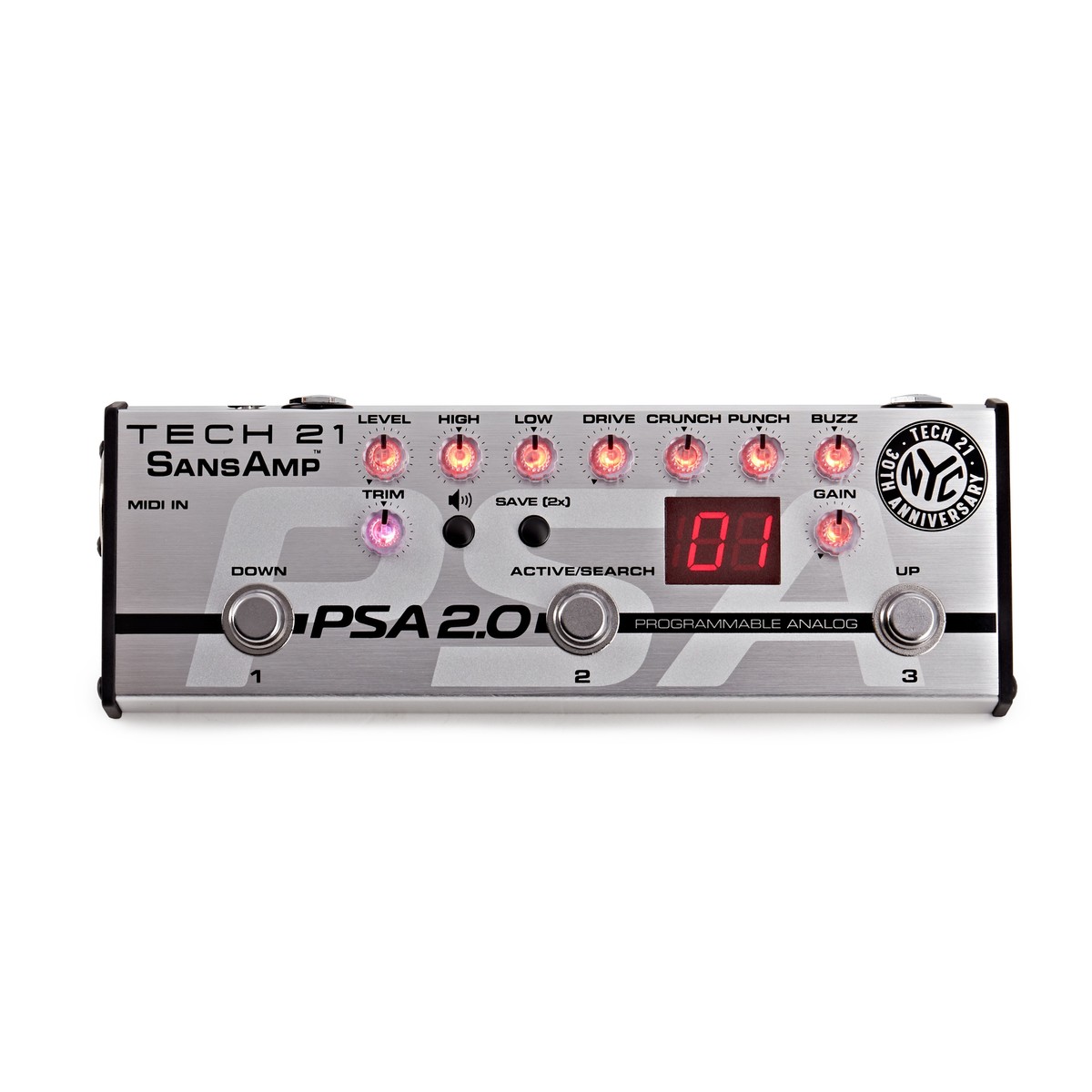
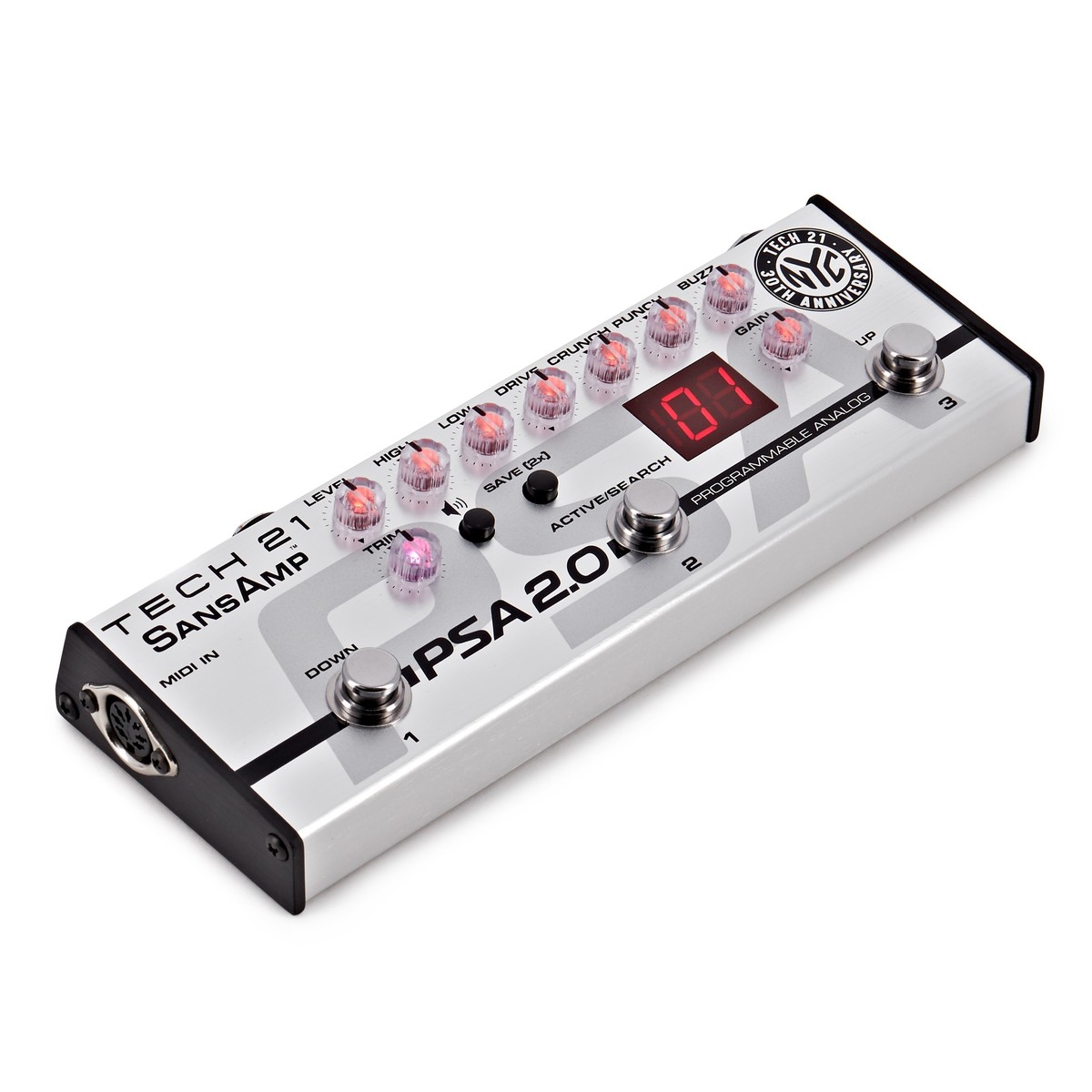
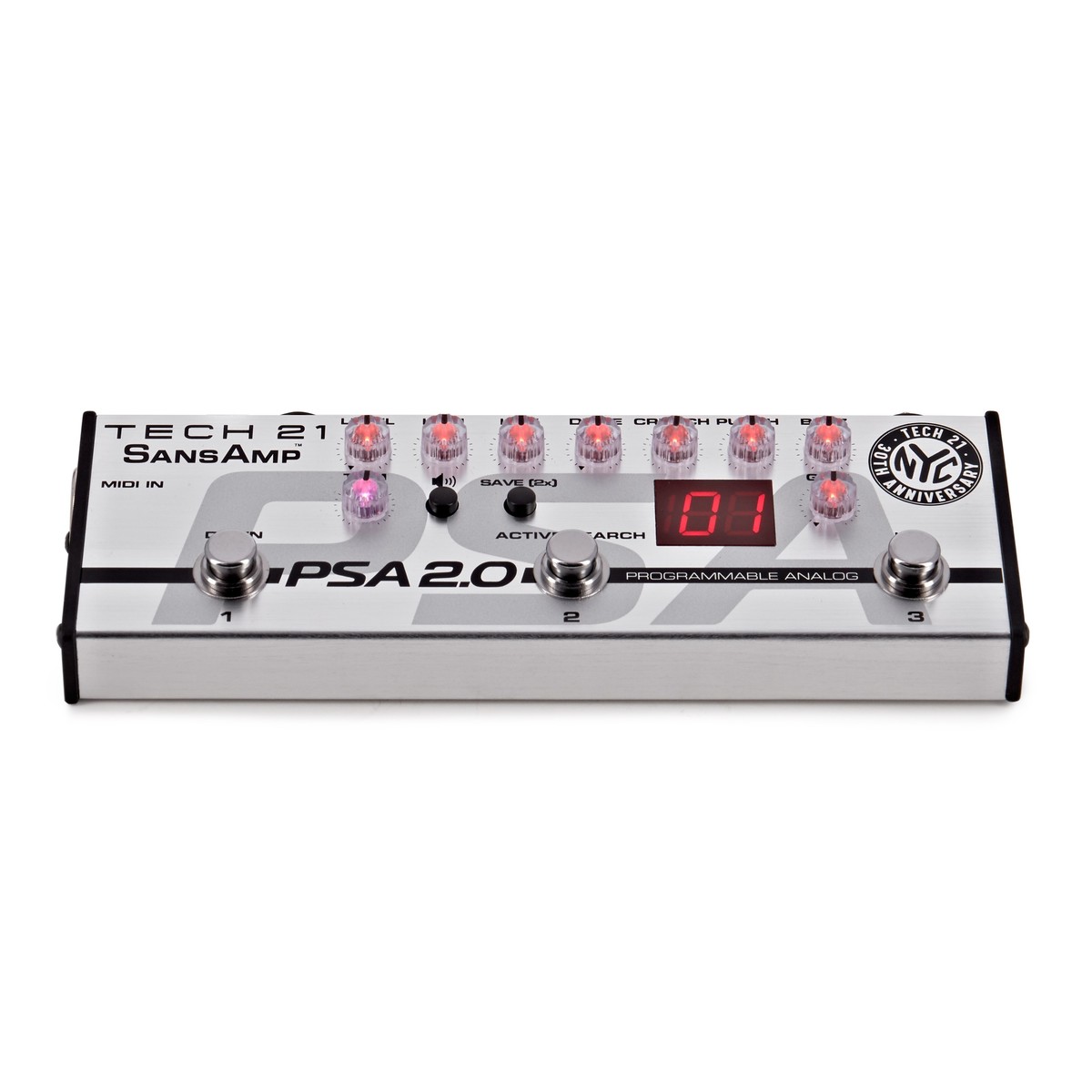
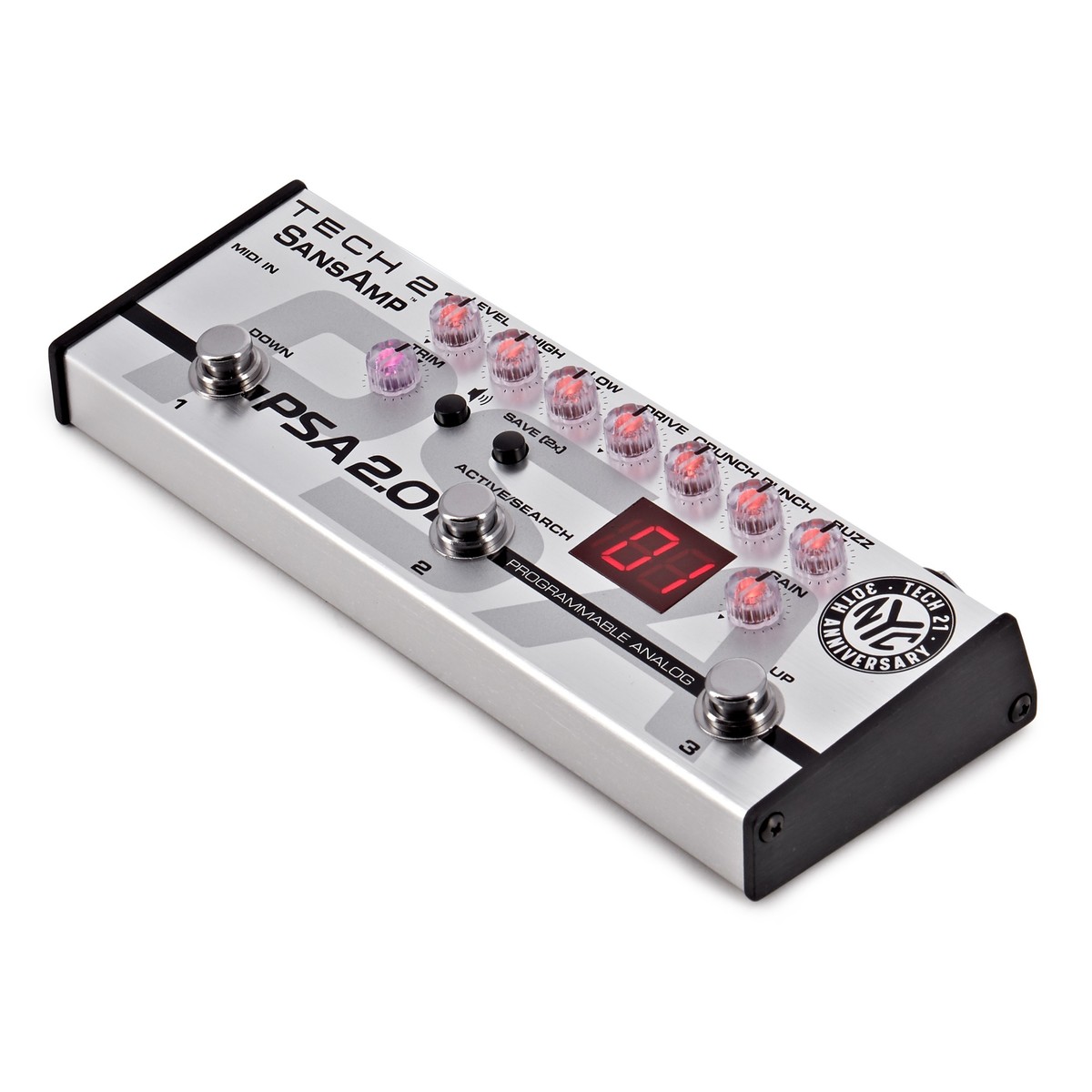
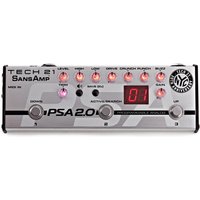
Tech 21 SansAmp PSA 2.0
This is a New Tech 21 SansAmp PSA 2.0 from Tech 21, listed in Specialist Effects Pedals on Just Pedals. Read More below.
As an affiliate partner, we may earn a small commission when you buy through our links — at no extra cost to you.
Related videos
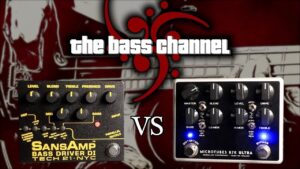

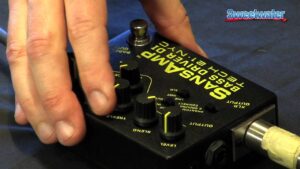
Brand
Tech 21
Tech 21 began in Manhattan in 1989 when designer Andrew Barta introduced SansAmp, an all-analogue amplifier and speaker-emulation circuit for direct recording. SansAmp remains central to the company’s guitar and bass range, appearing in standalone preamps, DI pedals, rack units and Fly Rig products. JustPedals listings include the GT2, Programmable Bass Driver DI, Para Driver DI and Character Series VT Bass DI, as well as the MIDI Mouse. These products shape or send a direct instrument signal, rather than providing only conventional modulation or ambience; compare instrument voicing and output connections.
Category
Specialist Effects Pedals
Specialist effects alter the signal in ways that do not sit cleanly inside one established family. They may use granular processing, frequency shifting, resonators, freeze or sustain, bit reduction, ring modulation, feedback networks or combinations of several techniques. The relevant distinction is the underlying process, its tracking or latency, and how completely the dry signal can be blended or replaced.
Tags
Analogue
The signal is shaped by continuously varying electronic circuitry rather than being converted into a digital effect algorithm. Component choice, operating voltage and circuit tolerances influence headroom, noise, clipping texture and the small variations in response between designs.
Digital
Converts the signal or control process into numerical data for algorithmic processing. Digital designs can provide precise timing, long memory, complex routing and repeatable presets; sample rate, conversion, internal resolution and latency influence fidelity and response.
MIDI
Sends, receives or responds to Musical Instrument Digital Interface messages rather than carrying the instrument audio itself. Program changes recall presets, continuous controllers move parameters, and MIDI clock or transport messages synchronise timing between devices.
Presets
Stores complete groups of parameter values for later recall. The number of locations, switching time, spillover behaviour and whether presets include routing, expression and MIDI assignments determine how completely one sound can change into another.
Others Just Ordered :
- Mooer Meta FX – Review
- MOOER META FX Review: 3 Effects in 1—but Here’s the Problem

- I Wasn’t Expecting To Be Impressed – But What Is The Mooer Meta FX?

- Mooer // META FX Stereo Multi-Effect Platform (Demo)
- A NEW GENERATION OF PEDALS IS HERE – Mooer Meta FX Reverb Review

- Mooer META FX | All the REVERBS from subtle to WILD!