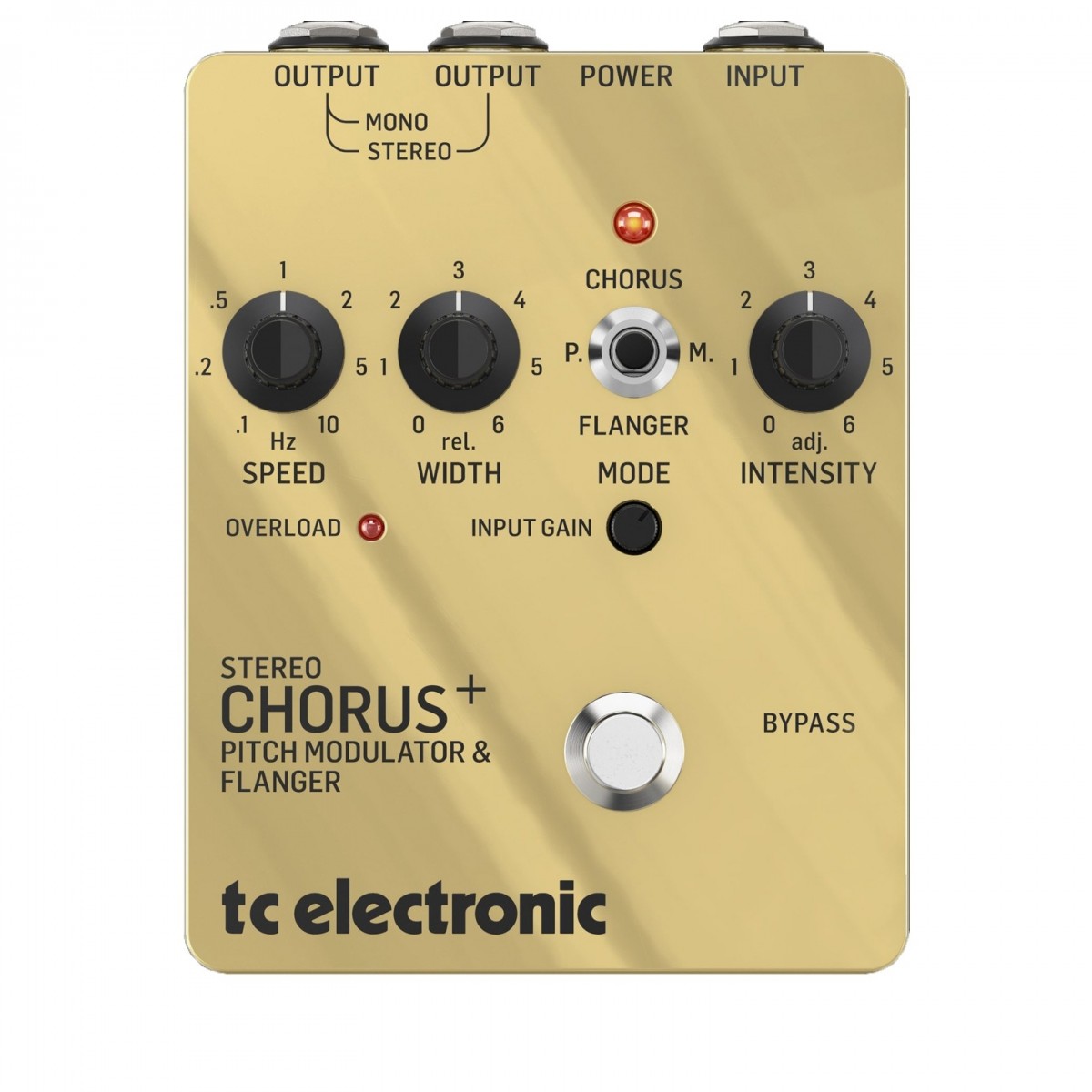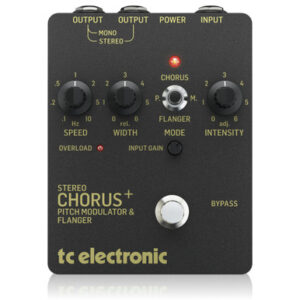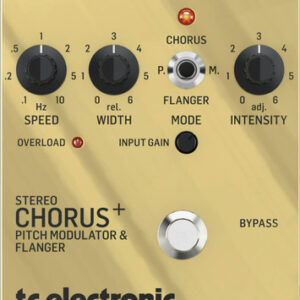
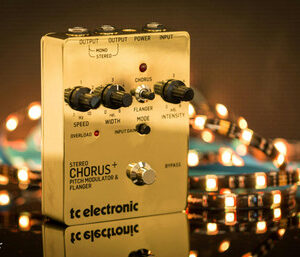
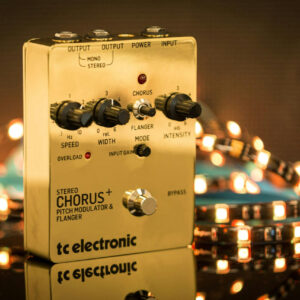
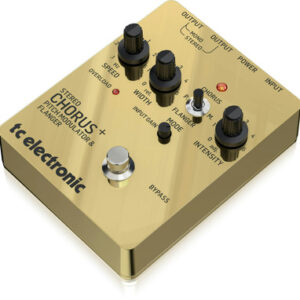
TC Electronic SCF Stereo Chorus Flanger Pedal Gold Special Edition

£89.99

This is a New TC Electronic SCF Stereo Chorus Flanger Pedal Gold Special Edition from TC Electronic, listed in Chorus Pedals on Just Pedals. Read More below.

View Just
more
and , ,

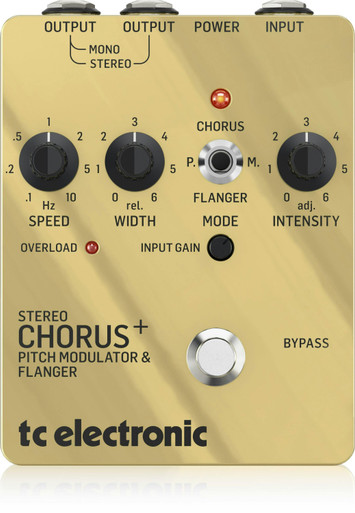
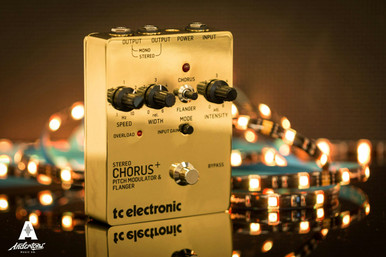
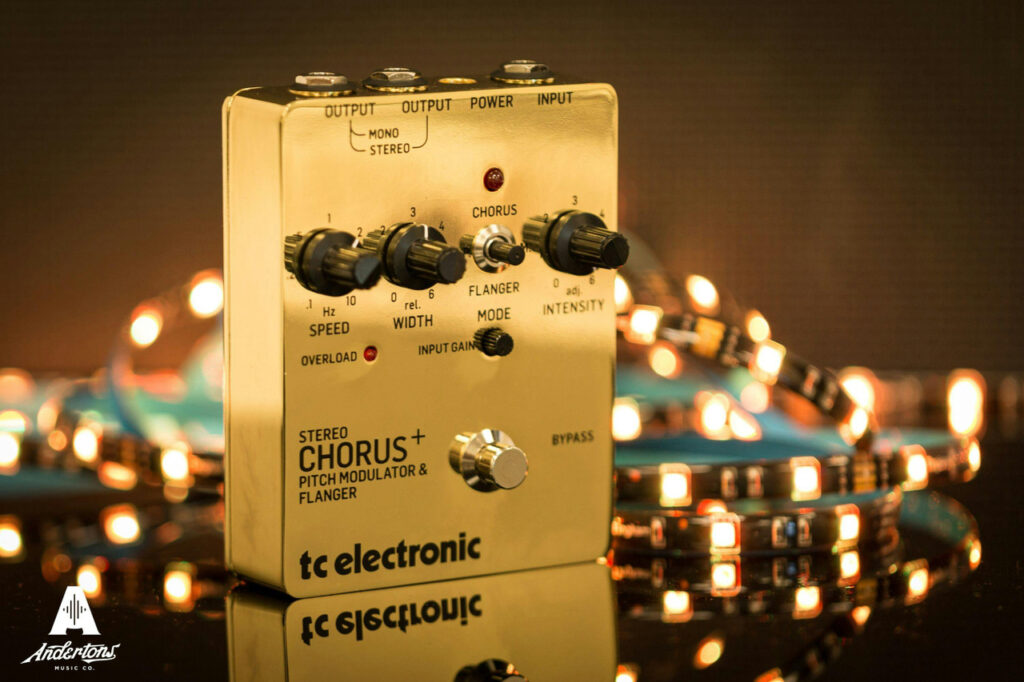
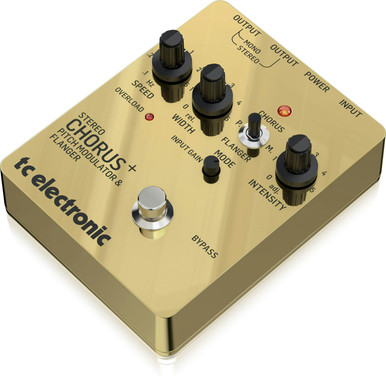
TC Electronic has reissued the first effects pedal they ever made — the legendary Stereo Chorus Flanger! Introduced all the way back in 1976, the original SCF was adored for its rich, watery modulation sounds and low-noise design; enjoying an astounding 40 years of production. Now, the iconic stompbox is back and better than ever before in a stunning special edition gold finish to celebrate TC Electronic’s 45th anniversary.

The new SCF Gold is faithful to the original; retaining the unique chassis design and, more crucially, the all-analogue BBD circuity that yields the crisp chorus and flavourful flanger tones that made the effects unit so famous. However, a number of improvements make this reissued version a much easier pedal to integrate into your setup — now boasting a standard 9V power input for use with most modern pedal power supplies!

Key Features

  • Legendary analogue modulation pedal with chorus, flange and pitch modes.
  • Original BBD (bucket-brigade device) circuit used by world-renowned artists.
  • Updated with a standard 9V DC power socket for convenient use with your pedalboard PSU.
  • High-fidelity analogue preamp with increased headroom and improved low-frequency response.
  • Adjustable input gain with clip indicator provides versatility for use with any instrument.
  • Mind-blowing signal-to-noise ratio. SCF is completely quiet in regards to unwanted noise!
  • Dual outputs split your signal, providing a huge stereo spread and unique spacial dimension.

Specifications

  • Power: Standard 9V DC, Center Negative (PSU not included)
  • Current Draw: 150 mA
  • Dimensions: 126 x 95 x 49 mm (5.0 x 3.7 x 1.9″)
  • Weight: 0.34 kg / 0.75 lbs

Related videos

Brand

TC Electronic

In the current JustPedals catalogue, TC Electronic is represented by Delay Pedals, Reverb Pedals and Looper Pedals. Current listings include DC30 Preamp, Plethora X1 and V550 Pre-Amp. That makes the range relevant to players looking for drive, gain and clipping, plus time-based effects and ambience. Check each model for its exact circuit or processing platform, controls, power requirements and connections, particularly where the catalogue includes both pedals and supporting gear.

Category

Chorus Pedals

Chorus pedals mix the dry signal with one or more short, modulated delays to create movement, width and gentle pitch variation. Rate controls the speed of the modulation; depth controls its excursion; blend, tone and stereo routing determine how prominent the effect becomes. Slower, shallow settings can add width without obscuring the note, while deeper settings move towards a seasick or synthetic wobble. Analogue bucket-brigade and digital designs can behave differently, so check mono compatibility, headroom and the placement of the pedal after drives or before a mixer.

Tags

Analogue

Analogue products use continuous audio circuitry for some or all of the signal path, so clipping, filtering or modulation arises from physical components rather than sampled algorithms. The label does not guarantee a particular tone; component choice, headroom, bias, noise and the surrounding gain stages still matter. Check whether the switching, presets, control section or cabinet stage is digital when the exact signal path is important.

Flanger

Flanger combines the dry signal with a very short, modulated delay and feedback, producing a moving comb-filter effect. Slow rate and shallow depth add width; higher feedback and depth create a strong jet-like sweep. Manual, regeneration, mix and filter controls change how the notches interact with the playing transient. Check mono or stereo routing, headroom, bypass and the position around drive and time-based effects when choosing a flanger.

Stereo

Stereo products provide separate left and right audio paths, which may widen modulation, preserve independent delays or route a pedalboard into two amplifiers or a mixer. Input and output behaviour is not always symmetrical: some units sum a stereo input, while others create stereo from a mono source. Check whether the effect collapses safely to mono, how the dry signal is routed, the socket format and the destination’s panning and phase requirements.