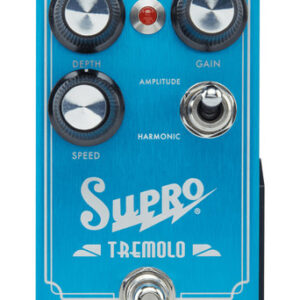
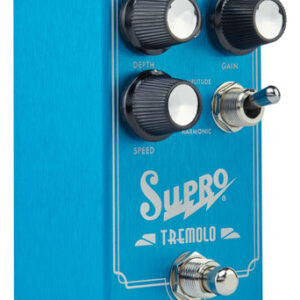
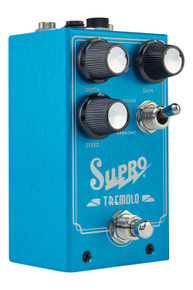

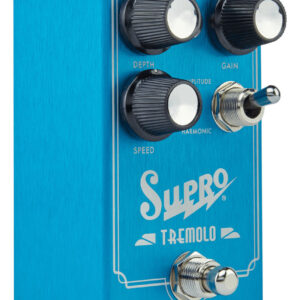
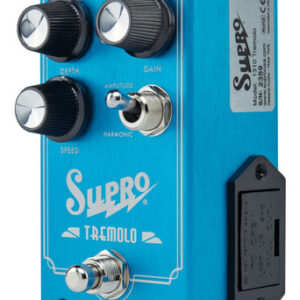
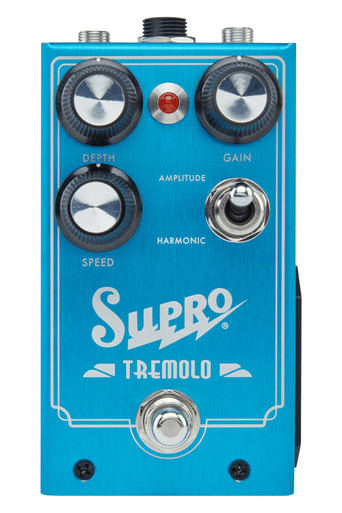
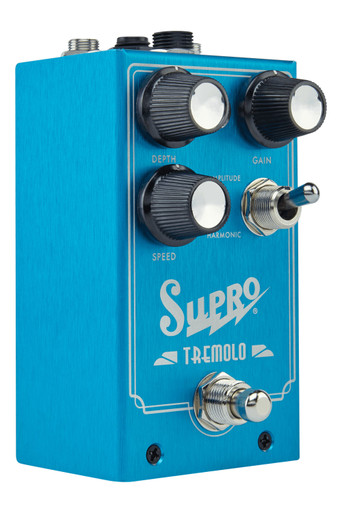
Here's what Supro say about the Analog Tremolo:
The Supro Tremolo accurately recreates the iconic modulation effects found in iconic amplifiers of the 1960s. With both Amplitude and Harmonic modes, the all-analog Supro Tremolo allows players to switch between swampy tremolo sounds and psychedelic modulating tones.
The Supro Tremolo features preamp and power amp sections, including an actual output transformer deployed to recreate the magnetic saturation characteristic of historic Supro amps. Along with modulation controls for Speed and Depth, the Supro Tremolo provides Gain control with automatic output level compensation. Additionally, the pedal features an assignable Expression pedal control to adjust the Speed function. Runs on 9-18VDC.
KNOB-BY-KNOB
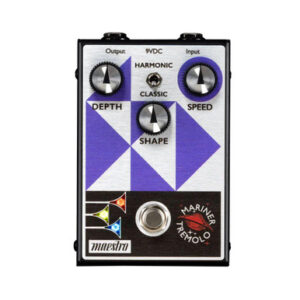
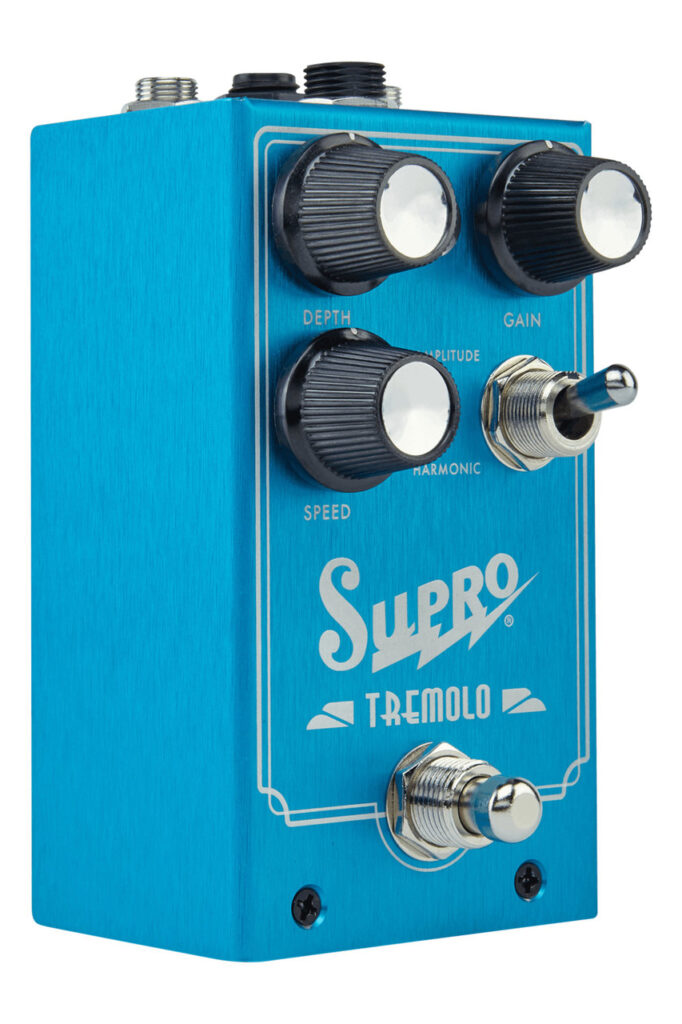
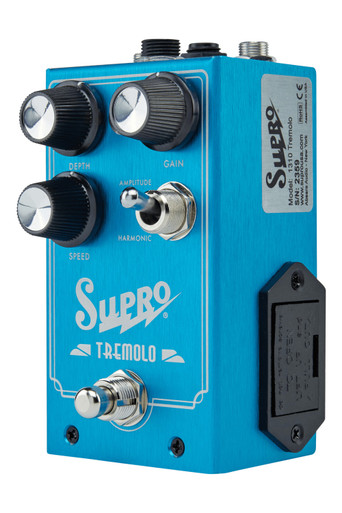
- Depth: Sets the amount of modulation
- Speed: Sets the rate of modulation
- Gain: Sets the amount of overdrive
- Amplitude / Harmonic: Selects between Supro-style volume modulation and crossfading filters effect of the early 60’s
ICONIC DESIGN
Referencing the forefathers of American amp design, including the legendary tremolo circuit built into original Supro amps, the Supro Tremolo features the absolute most authentic tremolo effect ever offered in pedal form.
Specifications
- POWER: 9-18VDC
- CURRENT DRAW: 100mA
- INPUT IMPEDANCE: 1M
- OUTPUT IMPEDANCE: 150ohms