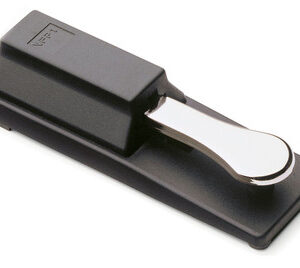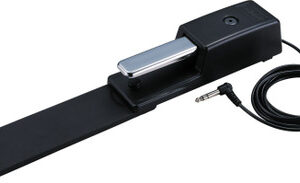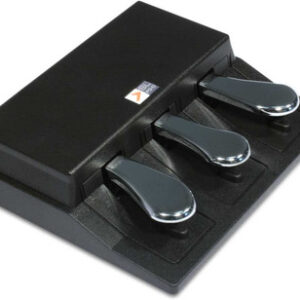
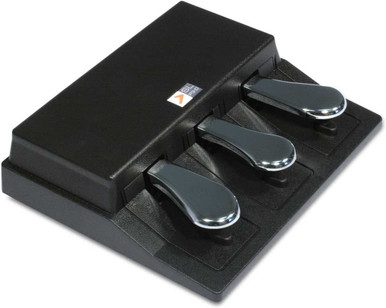
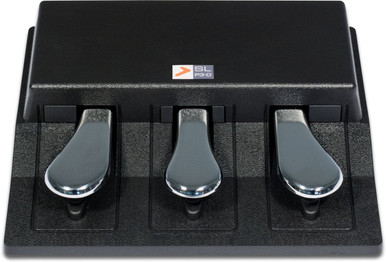
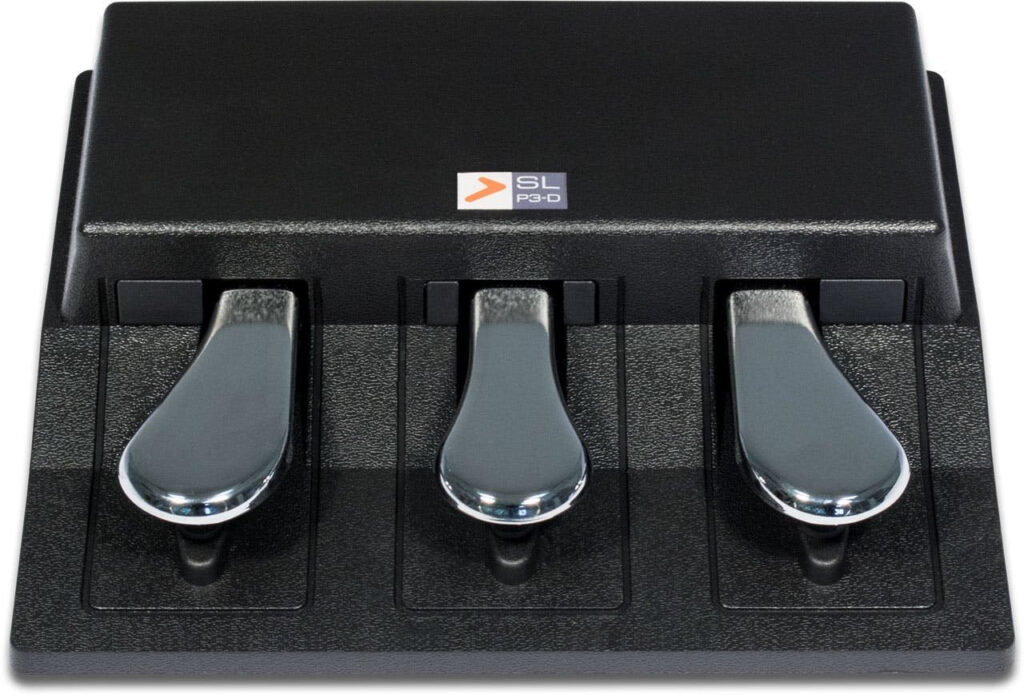
Studiologic SLP3-D Solid Piano Style Sustain Pedal

£75.00

This is the Studiologic SLP3-D Solid Piano Style Sustain Pedal from Studiologic, listed in Specialist Effects Pedals on Just Pedals. Read More below.

View Just
more
and ,

Here's What Studiologic Say About the SLP3-D

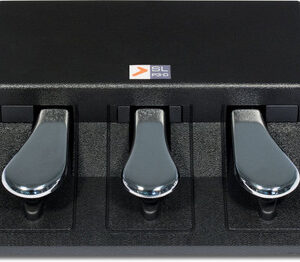
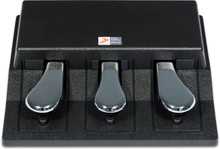
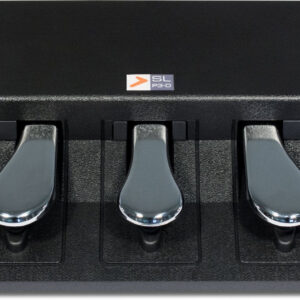
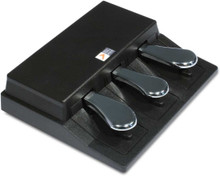
The SLP3-D is a new triple pedal, that allows to have 2 switch controls (left and center pedals) and 1 continuous control (right pedal) connected only with one standard stereo jack and a single cable. The simplified connection avoids the need of multiple cables or plugs and the 3 pedals are perfect controllers for pianists and keyboardists, looking for a reliable and total musical expression.

A typical application of this special SLP3-D multi-pedal could be to control the "Soft" function (Una corda) with the left pedal, the "Sostenuto" function with the middle pedal and the "Half Damper" function (Half Pedaling) with the right pedal, providing that the sound-generator (VST) or musical instrument, played by a midi controller equipped with the SLP3-D, would implement these functions.

Specifications

Connections

  • Connector: 1x TRS Jack 6,3 mm (1/4')
  • Cable length: 2 m

Dimensions

  • Width: 26.2 cm / 10.3"
  • Depth: 22 cm / 8.66"
  • Height: 6.5 cm / 2.56"
  • Weight: 2 Kg / 4.4 lbs

Brand

Studiologic

Category

Specialist Effects Pedals

Specialist effects alter the signal in ways that do not sit cleanly inside one established family. They may use granular processing, frequency shifting, resonators, freeze or sustain, bit reduction, ring modulation, feedback networks or combinations of several techniques. The relevant distinction is the underlying process, its tracking or latency, and how completely the dry signal can be blended or replaced.

Tags

MIDI

Sends, receives or responds to Musical Instrument Digital Interface messages rather than carrying the instrument audio itself. Program changes recall presets, continuous controllers move parameters, and MIDI clock or transport messages synchronise timing between devices.

Stereo

Processes, creates or passes two audio channels. True stereo preserves separate left and right inputs, while mono-to-stereo effects generate spatial differences internally; routing, phase behaviour and whether trails remain stereo determine the resulting image. Some outputs sum to mono when only one socket is connected, which can change level or modulation depth.