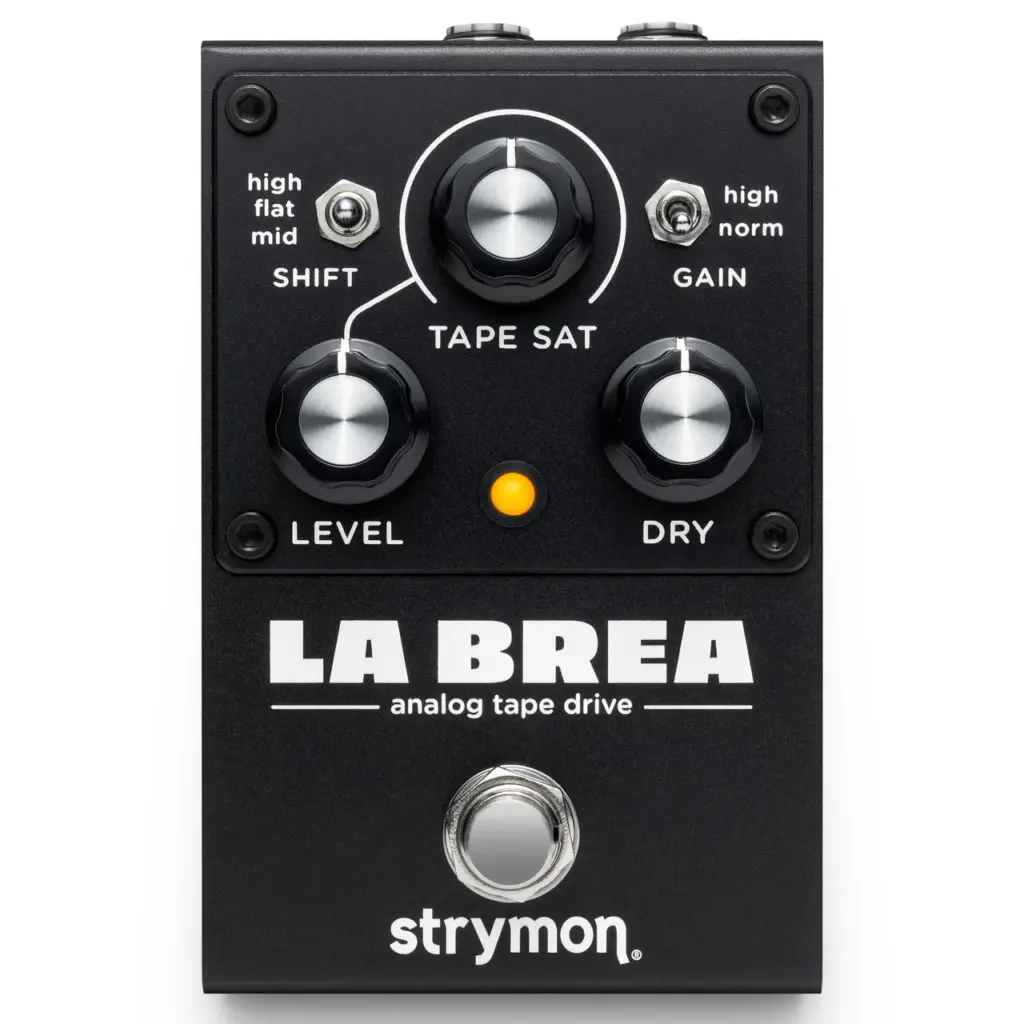
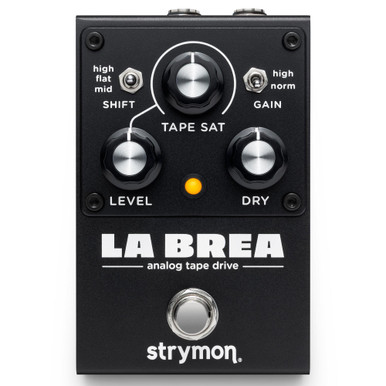



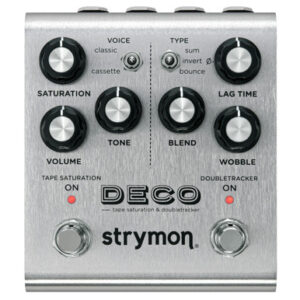
Strymon’s Senior Analogue Design Engineer, Josh Forbes, has been obsessed with recreating authentic tape-style saturation in the analogue domain ever since reading Pete Celi’s original Deco pedal whitepaper a decade ago. The result of that pursuit is the La Brea Tape Drive, a stompbox born from years of research into the behaviour, character and feel of magnetic tape. Tape-inspired drive tones An all-analogue design, the Strymon La Brea uses multi-stage tape saturation techniques to deliver everything from edge-of-breakup warmth to snarling fuzz. It also features high-frequency filtering and a fully variable Dry control, letting you blend your unaffected signal while keeping everything perfectly in phase with the pedal’s output. A saturation station Whether you’re looking for a touch of warm, tape-like compression and sweetening or high-octane drive, the La Brea has plenty up its sleeve. Fans of the Deco’s famous saturation circuit will feel right at home, while newcomers to tape-style gain sounds are in for a real treat. Inside the Strymon Series A Strymon may be best known for its world-class DSP effects, but killer digital code only shines when it’s built on a great analogue foundation. That’s where Strymon’s equally talented analogue team comes in. Series A exists to give those designers a blank canvas — no MIDI, no USB, no firmware updates and zero digital processing. Just pure analogue goodness! With La Brea joining the Canoga and Fairfax as the third pedal in the lineup, Series A is shaping up to be something very special.Key Features Tape saturation drive: Inspired by the beloved Saturation side of Strymon’s Deco, La Brea serves up everything from subtle warmth to full-bodied, gritty drive. Pure analogue signal path: No converters, no DSP and no digital processing. Just a fully analogue design focused on feel, responsiveness and great tone. Gain switch: Lets you tailor the range of the Tape Saturation control, making it easy to dial in anything from low-gain crunch to aggressive, fuzz-like textures. Shift switch: Offers extra voicing options, adding either a focused treble boost or extra mids alongside enhanced highs for increased clarity and punch. Variable Dry path control: Lets you mix your clean signal back in, helping retain articulation and low-end definition even at extreme saturation settings. Runs at 24V internally: Gives the La Brea exceptional headroom, a wide gain range and ultra-low noise performance, even when pushed hard. Specifications Fully Analogue Circuit: Yes True Bypass: Yes Connectors: 1/4″ mono input & output Dimensions (D x W x H): 4.53” x 2.83” x 2.33” / 11.51 x 7.19 x 5.92 cm Power Requirements: 9V DC, 2.1 mm, centre-negative (PSU not included) Current Draw: 500mA (minimum)



Strymon La Brea Analogue Tape Drive Pedal
This is a New Strymon La Brea Analogue Tape Drive Pedal from Strymon its found in our Specialist Effects Pedals on the Just Pedals menu. Read More below.
As an affiliate partner, we may earn a small commission when you buy through our links — at no extra cost to you.
Related videos

Brand
Strymon
Strymon specialises in detailed digital effects and amp tools designed for pedalboard, studio and direct-recording setups. The company grew from the Damage Control team and is known for deep delay and reverb processing, alongside modulation, amp modelling and tape-inspired effects. JustPedals listings include the TimeLine delay, BigSky reverb, Iridium amp and cabinet simulator, Deco tape-saturation pedal, DIG dual delay and Flint tremolo and reverb. Strymon states its products are designed and built in the USA, in the Los Angeles area. Check MIDI, preset storage, stereo I/O and expression options when comparing its larger-format pedals.
Category
Specialist Effects Pedals
Specialist effects alter the signal in ways that do not sit cleanly inside one established family. They may use granular processing, frequency shifting, resonators, freeze or sustain, bit reduction, ring modulation, feedback networks or combinations of several techniques. The relevant distinction is the underlying process, its tracking or latency, and how completely the dry signal can be blended or replaced.
Tags
Analogue
The signal is shaped by continuously varying electronic circuitry rather than being converted into a digital effect algorithm. Component choice, operating voltage and circuit tolerances influence headroom, noise, clipping texture and the small variations in response between designs.
Digital
Converts the signal or control process into numerical data for algorithmic processing. Digital designs can provide precise timing, long memory, complex routing and repeatable presets; sample rate, conversion, internal resolution and latency influence fidelity and response.
MIDI
Sends, receives or responds to Musical Instrument Digital Interface messages rather than carrying the instrument audio itself. Program changes recall presets, continuous controllers move parameters, and MIDI clock or transport messages synchronise timing between devices.
USB
Provides a Universal Serial Bus connection for power, audio, MIDI, firmware or editing data. The supported USB class and connector do not by themselves show its purpose; channel count, sample format, host compatibility and power demand define the actual function.
Others Just Ordered :
- I Love A Happy Accident… – Animals Pedal

- Animals Pedal Vintage Van Driving is Very Fun Overdrive

- Animals Pedal Sunday Afternoon Is Infinity Bender

- Ninevolt Pedals | Bath Time Reverb (Animals Pedal)

- This Fuzz Pedal Makes No Sense… But It Sounds Incredible

- ANIME Pedals | Animals Pedal Custom Illustrated Series