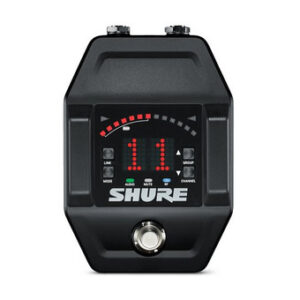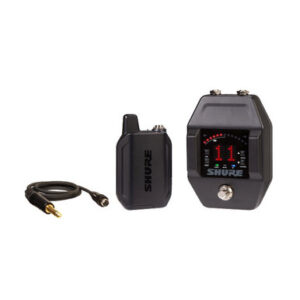
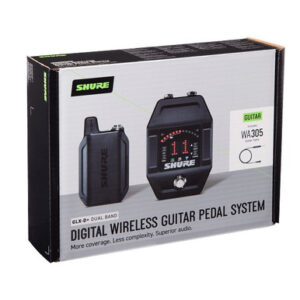

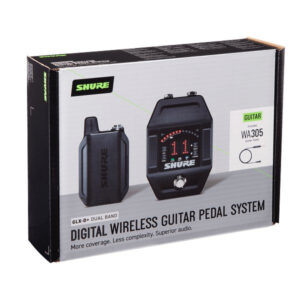
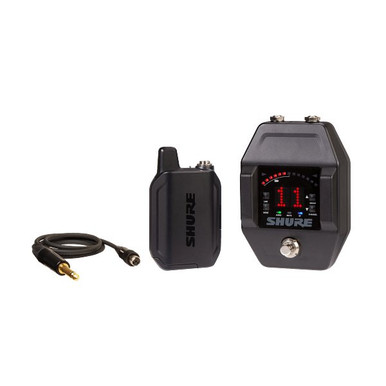
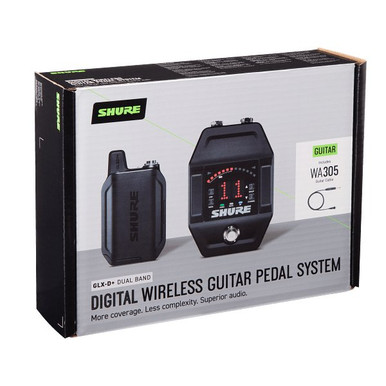
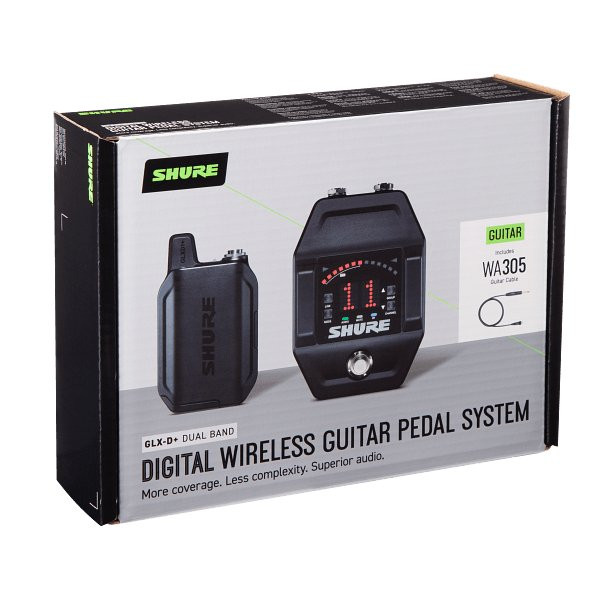
GLX-D+ Dual Band Digital Wireless is the perfect solution for musicians and presenters who want to go wireless with confidence, and without complexity. Every aspect of its operation is managed automatically and with complete reliability, allowing you to focus on your performance.
With new Dual Band Wireless Technology, GLX-D+ can operate in both 2.4 and 5.8GHz, more than doubling the available bandwidth while also intelligently avoiding interference for reliable, dropout-free audio.
Featuring smart rechargeability with up to 12 hours of runtime (improved from prior generation GLX-D), the included lithium-ion battery can be charged multiple ways and offers quick charge capabilities.
Available with multiple legendary microphone options (including the SM58) in tabletop, half-rack and guitar pedal system configurations.
When combined with Frequency Manager and directional antenna accessories (both sold separately), the rack-mount receiver systems are ideal for small and medium installations where a larger number of channels is needed.
Features & Specs
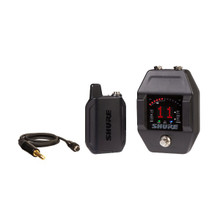
- Guitar Pedal GLXD+ Dual Band receiver + bodypack transmitter.
- Dual Frequency operation (2.4GHz and 5.8GHz).
- Similar look and features of prior GLX-D6 version.
- Tuner included.
- WA305 Premium Guitar Cable included.
- New ¼” guitar input allows user to practice and use the tuner without the need of a transmitter turned on and connected.
- Bodypack system includes WA305 Premium instrument cable.
WHAT’S NEW VERSUS PRIOR VERSION
- Dual frequency band operation (2.4GHz and 5.8GHz).
- NEW Guitar ¼” input in the receiver.
- Battery now lasts ~12 hours.